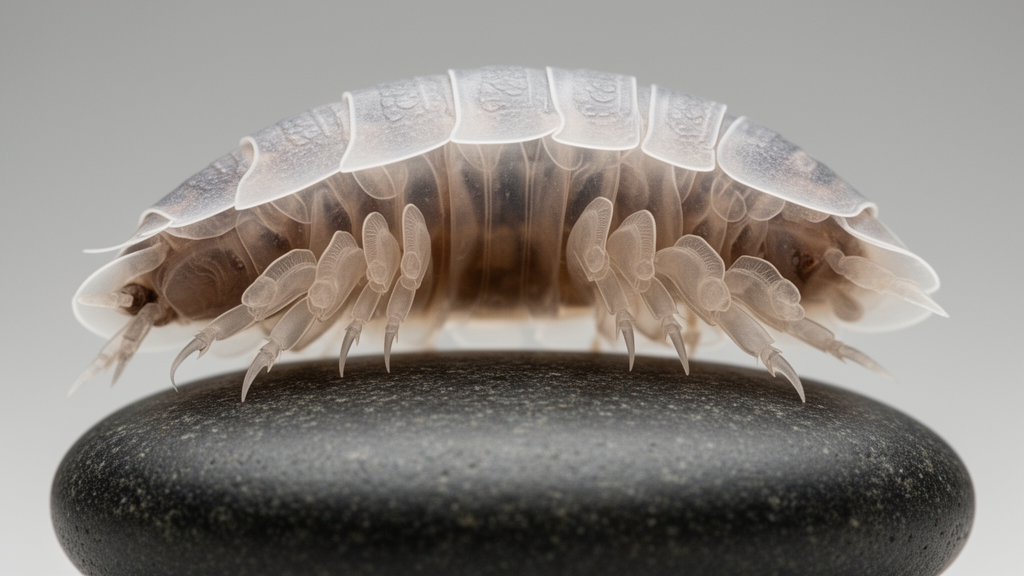
A comparative developmental study of terrestrial isopods shows that air-breathing structures across lineages arise from fundamentally distinct epithelial regions rather than differences in the degree of tissue maturation. Published in EvoDevo by researchers Naoto Inui and Toru Miura, the investigation details the histomorphological development of respiratory organs in three crustacean species, uncovering unexpected developmental divergences that challenge assumptions about how land-dwelling isopods adapted to terrestrial respiration. By examining the postembryonic development of specialized breathing structures alongside ancestral-like appendages, the authors demonstrate that respiratory adaptations did not follow a single linear sequence of tissue enlargement. Instead, different isopod groups recruited distinct epithelial zones on their abdominal appendages to form breathing organs. Inui and Miura tracked anatomical changes from early juvenile stages immediately following hatching through to reproductive adulthood. Their comparative framework clarifies the developmental transitions occurring across the suborder Oniscidea, offering empirical evidence regarding the origins and structural diversification of terrestrial respiratory novelties.
The transition of animals from aquatic environments to land represents a key macroevolutionary innovation. While major land-colonizing lineages such as vertebrates, arthropods, and mollusks independently acquired specialized respiratory adaptations to breathe air, tracing intermediate stages has remained difficult due to the extinction of transitional species. Terrestrial isopods of the suborder Oniscidea provide an informative system for investigating respiratory evolution because extant species represent successive stages of the water-to-land transition. Within the derived isopod lineage Crinocheta, species have evolved diverse air-breathing structures inside their abdominal appendages, called pleopods. Comparative anatomy traditionally classified these respiratory organs into three principal types: dorsal respiratory fields, uncovered lungs, and complex covered lungs. Because dorsal respiratory fields occur in basal lineages inhabiting wet environments, while covered lungs appear in derived groups in arid conditions, earlier evolutionary models hypothesized that these three forms shared a single origin, evolving progressively from dorsal fields to uncovered lungs and finally to covered lungs.
To test whether these respiratory structures share a common origin, Inui and Miura examined three isopod species displaying distinct anatomical states across Crinocheta. The researchers selected Nagurus okinawaensis, a trachelipodid species possessing uncovered lungs, and Alloniscus balssi, an alloniscid species exhibiting dorsal respiratory fields. To evaluate ancestral states, the team examined Armadilloniscus cf. ellipticus from the basal family Detonidae, which lacks specialized respiratory structures. Field specimens of Nagurus okinawaensis were collected from soil, leaf litter, and roadside plantings in Naha City and around the University of the Ryukyus campus on Okinawa Island, Japan, in November 2022. Specimens of Alloniscus balssi and Armadilloniscus cf. ellipticus were collected along the seashore near the Misaki Marine Biological Station between 2021 and 2023. Taxonomic assignments followed established keys, noting that seashore populations at Misaki previously identified as Armadilloniscus japonicus were treated as Armadilloniscus cf. ellipticus following recent morphological assessments.
To observe postembryonic development through adulthood, the authors maintained collected isopods in plastic cases filled with moistened fallen leaves, successfully obtaining ovigerous females. Newly hatched mancae, post-manca juveniles, and mature adults were staged under an Olympus SZX16 stereomicroscope equipped with an Olympus DP50 digital camera. Because post-manca juvenile stages lack discrete morphological boundary markers, head width was measured as a proxy for approximate body size. Analyses of post-manca juveniles and adults were restricted to female specimens due to sexual dimorphism in pleopods. External structures of first, second, and third pleopodal exopods were examined using a JEOL JSM-5510LV scanning electron microscope. For histological analysis, specimens were fixed in Bouin solution, preserved in ethanol, dehydrated, cleared in xylene, and embedded in paraffin. Serial transverse sections were cut at eight micrometers using a Spencer Lens microtome, stained with hematoxylin and eosin, and observed with an Olympus BX51 microscope and DP74 camera.
Adult specimens of Nagurus okinawaensis possessed highly wrinkled respiratory structures on the proximal lateral margins of exopods across all pleopods. Scanning electron microscopy showed that on the third to fifth pleopods, these wrinkled surfaces were adjacent to swollen cuticular ridges. Histological sections revealed that while the dorsal cuticle of the pleopodal exopod was thickened compared to the ventral side, the respiratory structures were covered by a finely furrowed epithelium and thin cuticle. Furrows within these structures invaginated deeply to form tubular channels contacting internal hemolymph sinuses. These sinuses were partially stained with eosin, confirming their vascular nature. In first and second pleopods, parts of the respiratory structures were covered by dorsal epithelium, whereas in the third through fifth pleopods the structures remained uncovered and continuous with swollen ridges corresponding to the hemolymph sinuses.
Tracing developmental stages in Nagurus okinawaensis revealed that respiratory structures appear only late in postembryonic ontogeny. Scanning electron microscopy confirmed that no respiratory structures were present on the second and third pleopods during manca stages. The first pleopod appeared at the third manca stage without respiratory structures. In post-manca juveniles, a swollen ridge formed on the proximal lateral margin of the third pleopod. Subsequently, wrinkled surface structures with grooves appeared on the proximal margins of all pleopods, increasing in groove number with body size. Histological sections showed that a cell-dense region occupied the proximal margin of first and second pleopods during manca stages. In post-manca juveniles, this area formed a proximal hemolymph sinus surrounded by invaginating epithelium. In the third pleopod, the hemolymph sinus was already present in manca stages, with epithelial invagination and dorsal cuticular thickening developing later during post-manca juvenile growth.
In Alloniscus balssi, respiratory organ morphogenesis followed a different timing and developmental mode. Adult Alloniscus balssi exhibited slightly wrinkled dorsal respiratory fields on the proximal lateral margins of all pleopods, bounded on the third through fifth pleopods by swollen ridges. These structures contained three internal hemolymph sinuses beneath a thin cuticle, while the ventral surface consisted of columnar epithelial cells. Scanning electron microscopy and histology revealed that primordial respiratory regions were already present at the first manca stage immediately after hatching. Unlike the invaginations seen in Nagurus, the respiratory structures in Alloniscus balssi formed by lateral protrusion of the ventral columnar epithelium. This protruding tissue expanded during growth, forming surface wrinkles and housing additional hemolymph sinuses. Proximal hemolymph sinuses appeared during post-manca stages in first pleopods and during manca stages in second and third pleopods without major epithelial regressions.
To establish the baseline pleopodal morphology, the researchers examined adult and first-manca specimens of Armadilloniscus cf. ellipticus. Adults lacked specialized respiratory structures on their pleopods, though exopods of the third through fifth pleopods displayed fine scale-like surface ornamentation and swollen ridges. Histological sections showed proximal hemolymph sinuses in all pleopods and a thicker cuticle on the dorsal surface compared to the ventral epithelium. At the first manca stage, pleopods possessed smooth cuticular surfaces lacking scale-like patterns. Transverse sections revealed a dense cellular aggregation where the adult hemolymph sinus later appears, with no difference in thickness between dorsal and ventral cuticles. These observations indicate that in species lacking specialized breathing organs, postembryonic development involves only the formation of a proximal hemolymph sinus and thickening of the dorsal cuticle, defining the ancestral developmental sequence for isopod pleopodal exopods.
Comparing developmental processes across the three species revealed shared baseline features alongside critical structural divergences. All three species shared the postembryonic development of a proximal hemolymph sinus, thickening of the dorsal cuticle, and formation of swollen ridges on the third through fifth pleopods. These swollen ridges likely function to maintain moisture and fluids around the respiratory endopods. However, the anatomical origins of the specialized respiratory surfaces differed fundamentally between the two air-breathing species. In Nagurus okinawaensis, the uncovered lung developed through folding and invagination of the lateral surface epithelium surrounding the proximal hemolymph sinus. In Alloniscus balssi, the dorsal respiratory field originated from a lateral protrusion of the ventral epithelium rather than the lateral sinus epithelium. Because these structures develop from distinct epithelial positions, they cannot be explained by simple differences in the degree or duration of development.
These developmental differences carry significant implications for the evolutionary history of crustacean air-breathing organs. The distinct epithelial origins of dorsal respiratory fields and uncovered lungs suggest that these structures arose either through heterotopic developmental changes or via completely independent evolutionary origins. Although covered lungs in Porcellio scaber also form early in postembryonic development, the close phylogenetic relationship between Porcellionidae and Trachelipodidae suggests that covered and uncovered lungs may share a common origin distinct from alloniscid respiratory fields. The authors note parallels with terrestrial amphipods, where molecular developmental alterations drove gill thickening during montane colonization without evolving invaginated lungs. Inui and Miura conclude that determining whether isopod respiratory organs arose through evolutionary convergence or heterotopic shifts will require future molecular analyses, including gene expression studies and cell-tracking experiments across broader isopod lineages to clarify the genetic mechanisms underlying terrestrial adaptation.
Subject of Research: Comparative postembryonic development and evolutionary origins of air-breathing organs in terrestrial isopods
Article Title: Comparisons of developmental processes of air-breathing organs among terrestrial isopods (Crustacea, Oniscidea): implications for their evolutionary origins
Article References: Inui, N., & Miura, T. (2024). Comparisons of developmental processes of air-breathing organs among terrestrial isopods (Crustacea, Oniscidea): implications for their evolutionary origins. EvoDevo, 15(1), Article 9. https://doi.org/10.1186/s13227-024-00229-z
Image Credits: AI Generated
DOI: 10.1186/s13227-024-00229-z
Keywords: terrestrial isopods, Oniscidea, Crinocheta, air-breathing organs, uncovered lungs, dorsal respiratory fields, Nagurus okinawaensis, Alloniscus balssi, Armadilloniscus cf. ellipticus, pleopod morphology, exopod development, postembryonic development, hemolymph sinus, epithelial invagination, manca stages, heterotopy, evolutionary morphology
News Source: Drew Townsend. (November 13, 2026). Isopod Breathing Organs Evolved Through Distinct Developmental Pathways Across Species. Scienmag.