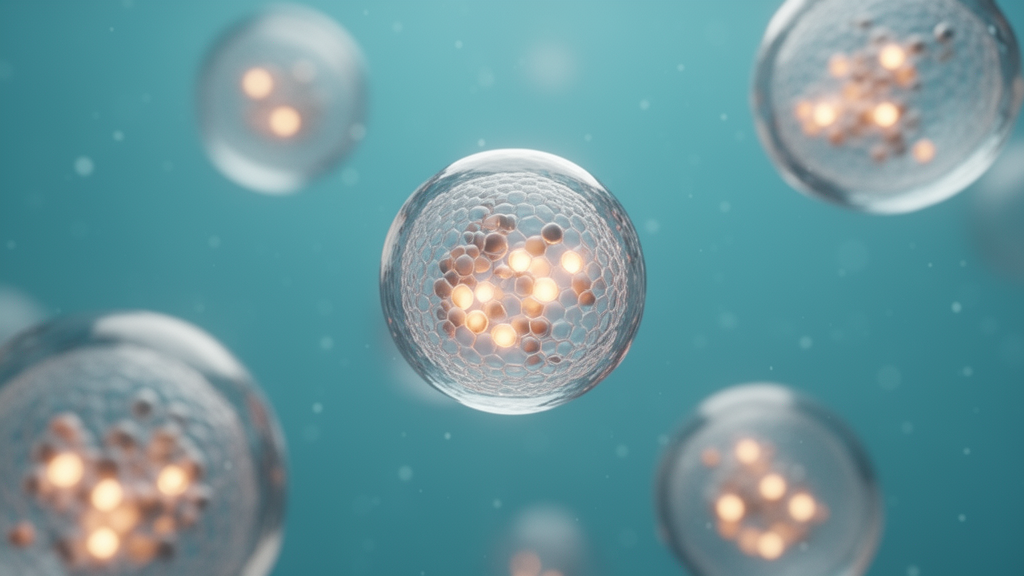
In an extensive evaluation published in Discover Molecules, researchers have synthesized the principles governing the encapsulation of functional biomolecules within bioinspired polymeric architectures, establishing a comprehensive biomimetic framework that links material selection, processing techniques, structural integrity, and biological efficacy. The review, authored by Dipak S. Thorat, Shubhangi Thorat, Lois C. Nwabor, Yogesh V. Ushir, and Sudarshan Singh, identifies microencapsulation as an indispensable methodology for stabilizing labile active agents against physiological degradation. By examining how natural polymer matrices emulate the hierarchical organization of native extracellular environments, the authors demonstrate that bioinspired encapsulation directly addresses longstanding pharmacokinetic hurdles, including premature enzymatic deactivation, burst release kinetics, and localized cytotoxic side effects across biomedical and pharmaceutical delivery platforms.
The fundamental necessity for controlled delivery systems stems from the inherent vulnerability of therapeutic biomolecules when exposed to systemic environments. Macromolecular drugs, peptides, enzymes, and bioactive lipids regularly encounter physiological barriers such as fluctuating pH gradients, oxidative stress, rapid clearance mechanisms, and aggressive enzymatic breakdown, which severely diminish their clinical bioavailability. Microencapsulation overcomes these biological constraints by sequestering active pharmaceutical ingredients within protective polymeric barriers ranging typically from 1 to 100 micrometers in diameter. These protective structures provide sustained, programmable release profiles that mitigate the plasma concentration peaks and troughs characteristic of standard single-unit formulations, thereby preventing dose dumping and maintaining therapeutic efficacy over extended intervals.
Central to the review is a critical comparison of five widely utilized naturally derived polymers: alginate, chitosan, gelatin, cellulose, and collagen. Alginate, a polyanionic polysaccharide composed of β-(1→4)-linked L-guluronic and D-mannuronic acid residues, occurs naturally in brown seaweeds and bacterial strains, serving as an environmentally benign, non-immunogenic, and water-soluble carrier that readily forms gels through ionic crosslinking. Chitosan, obtained via the deacetylation of chitin harvested from fungal cell walls and crustacean exoskeletons, carries a polycationic charge that facilitates strong interactions with negatively charged cell membranes, enzymes, and tissue surfaces. This charge-mediated behavior endows chitosan with notable mucoadhesive, antimicrobial, and permeation-enhancing characteristics, rendering it exceptionally suitable for hydrogels, aerogels, and electrospun fibrous carriers.
Proteinaceous and fibrous biomaterials offer distinct biomimetic advantages in stabilizing sensitive therapeutics. Gelatin, derived through the controlled thermal and chemical hydrolysis of animal collagen, behaves as an amphoteric protein exhibiting functional acidic and alkaline amino acid side chains that promote cell adhesion while preventing oxidative and hydrolytic breakdown of entrapped payloads. Cellulose, an abundant structural polymer composed of repeating glucose units joined by β-(1→4) glycosidic bonds, provides a robust, insoluble diffusion barrier when formulated into derivatives such as ethyl cellulose. This hydrophobic polymer remains stable against rapid biological breakdown, enabling consistent diffusion-limited release kinetics in reservoir microcapsules. Collagen, the structural foundation of mammalian connective tissues, provides an ideal scaffold for cell adherence, migration, and extracellular matrix remodeling, particularly when prepared as purified type I collagen sponges and hydrogels for topical tissue repair.
The evaluation of carrier matrices depends on defined physical and biological performance metrics, beginning with encapsulation efficiency and loading capacity. While encapsulation efficiency quantifies the percentage of initial active payload entrapped within the polymer matrix, loading capacity measures the proportion of active compound relative to the total carrier mass. Matrices must also maintain adequate structural integrity under severe mechanical forces encountered in vivo, such as hemodynamic shear stress, compressive tissue loads, and aqueous swelling. To combine natural biocompatibility with tunable mechanical stability, composite systems like gelatin methacryloyl hydrogels have emerged, pairing native cell-binding and matrix metalloproteinase-cleavable motifs with light-induced crosslinking capacity to mimic the structural resilience of natural tissues.
Microencapsulation techniques dictate particle morphology, internal architecture, and biomolecule survival during processing. Emulsion-based methods, which disperse a polymer-containing solution within an immiscible continuous fluid phase, accommodate both hydrophilic and lipophilic molecules through water-in-oil, oil-in-water, and complex double-emulsion water-in-oil-in-water configurations. Nevertheless, single emulsions often demonstrate poor retention of hydrophilic payloads due to rapid partitioning into external aqueous environments, leaving drug crystals on capsule surfaces that trigger unwanted burst release. Additionally, high-temperature processing and organic solvent evaporation steps can cause the thermal denaturation of delicate biomolecules and pose residual solvent clearance challenges during pharmaceutical scale-up.
Drying and jet-based encapsulation strategies present distinct technological trade-offs between thermal efficiency, processing duration, and structural integrity. Spray drying remains a high-throughput, industrially mature encapsulation technique that disperses aqueous core-wall feeds into drying chambers operating at temperatures between 100 and 300 degrees Celsius to rapidly evaporate moisture. While 30 to 50 times less costly than sublimation-based methods, its elevated inlet temperatures frequently degrade heat-sensitive proteins and probiotics, while generating hygroscopic powders prone to wall adhesion. Conversely, freeze drying preserves heat-labile therapeutics by operating at sub-ambient temperatures through vacuum sublimation and desorption stages, though it requires prolonged processing cycles and often yields low-density, fragile microstructures prone to rehydration collapse and oxidation.
Alternative low-temperature processing platforms, notably electrospraying and supercritical fluid processing, offer refined structural control over microcapsule geometries. Electrospraying employs high-voltage electrostatic fields to atomize conductive polymer solutions into uniform droplets ranging from tens of nanometers to approximately 100 micrometers without relying on elevated thermal energy. However, low solution conductivity and high electrical potential can induce jet instabilities or localized oxidative damage in sensitive payloads. Supercritical fluid encapsulation, predominantly utilizing supercritical carbon dioxide above its critical point of 31 degrees Celsius and 73.8 bar, exploits rapid expansion or antisolvent phase separation to precipitate microcapsules without toxic organic solvent residues, though the high capital cost of pressure-rated equipment and restricted core solubility constrain broader adoption.
The characterization of microencapsulated systems requires multimodal analytical techniques to evaluate internal architecture, mass transport dynamics, and powder flow. Scanning electron microscopy and transmission electron microscopy reveal both external shell morphology and sub-micron wall thicknesses, while confocal laser scanning microscopy reconstructs three-dimensional internal distributions of fluorescently labeled biomolecules. Porosity parameters, specifically pore diameter, connectivity, and distribution across the matrix, serve as primary mechanistic determinants of drug diffusion rates, with smaller, tortuous pores restricting molecular movement to prolong therapeutic elution. Furthermore, bulk density, tapped density, and powder compressibility dictate the mechanical handling, storage stability, packaging efficiency, and dosing accuracy of dry microcapsule formulations.
In oncology, microencapsulation addresses the off-target toxicity, poor bioavailability, and rapid systemic clearance associated with conventional chemotherapy and radiation. Enclosing active molecules within polymeric matrices prevents premature destruction and supports localized gastrointestinal release or targeted uptake. For instance, oral administration of microencapsulated Lactobacillus acidophilus within targeted yogurt delivery matrices significantly reduced colon tumor incidence, multiplicity, and lesion size in an APC-mutated murine colorectal cancer model, while stabilizing body weight and decreasing systemic bile acid secretion. Similarly, pH-responsive microparticles combining Eudragit S100 and poly(lactic-co-glycolic acid) demonstrated drug loading exceeding 80 percent, preventing stomach release while achieving sustained therapeutic efficacy in murine models of ulcerative colitis.
In regenerative medicine and wound repair, microencapsulated cell therapies and bioactive extracts overcome the severe foreign-body reactions and immune rejections that typically undermine tissue transplantation. Semi-permeable polymeric shells isolate encapsulated allogeneic or stem cells from host immune surveillance while permitting bidirectional diffusion of vital nutrients, oxygen, and therapeutic secretomes. In experimental diabetic wound healing models, microencapsulated insulin-secreting cells and topical chitosan-gelatin formulations accelerated epithelialization, collagen deposition, and hydroxyproline synthesis. Concurrently, composite scaffolds incorporating sodium alginate hydrogels, mesenchymal stem cell-derived exosomes, and cell-free fat extracts successfully sustained the regeneration of hyaline cartilage and repaired bone defects in preclinical defect models.
Beyond clinical therapeutics, bioinspired microencapsulation provides robust preservation mechanisms across functional food systems, where sensitive nutraceuticals like polyphenols, carotenoids, and essential fatty acids are vulnerable to environmental degradation. Encapsulating botanical extracts within polysaccharide matrices such as sodium alginate and carboxymethyl cellulose shields active compounds against light, moisture, and oxidation, preserving their antioxidant capacity and antimicrobial potency against common foodborne pathogens. This dual utility demonstrates how mimicking nature’s protective barriers bridges sustainable industrial preservation with advanced pharmaceutical delivery, providing a rational framework for future responsive biomaterials.
Subject of Research: Bioinspired polymeric microencapsulation of functional biomolecules
Article Title: Bioinspired materials-based encapsulation of functional biomolecules for improved biomimetic attributes: a review
Article References: Thorat, D. S., Thorat, S., Nwabor, L. C., Ushir, Y. V., & Singh, S. (2026). Bioinspired materials-based encapsulation of functional biomolecules for improved biomimetic attributes: a review. Discover Molecules, 3(1), Article 11. https://doi.org/10.1007/s44345-026-00054-y
Image Credits: AI Generated
DOI: 10.1007/s44345-026-00054-y
Keywords: microencapsulation, bioinspired materials, natural polymers, alginate, chitosan, gelatin, cellulose, collagen, drug delivery, controlled release, tissue engineering, spray drying, freeze drying, electrospraying, supercritical fluid, regenerative medicine, biomimetic systems, biocompatibility
News Source: Bethany Barker. (November 13, 2026). Bioinspired Microencapsulation Framework Evaluates Natural Polymers for Targeted Biomolecule Delivery. Scienmag.