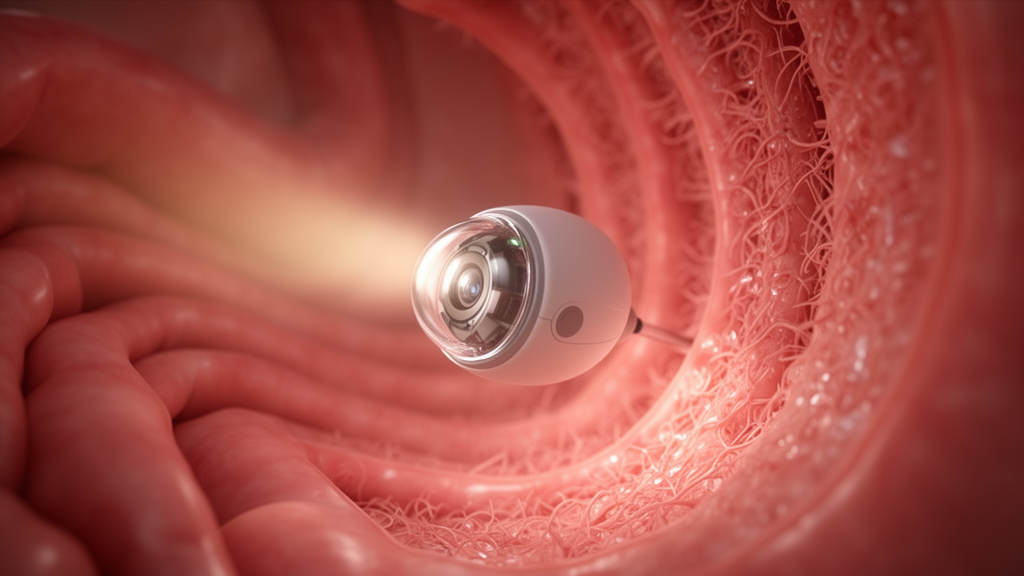
A retrospective cohort study has revealed that patients with surgically altered proximal small-bowel anatomy experience significantly longer capsule transit times and more frequent suboptimal visualization during video capsule endoscopy compared to individuals with unaltered anatomy. The investigation evaluated outcomes among adult patients undergoing evaluation to understand how surgical reconstructions affect technical performance and diagnostic utility. Video capsule endoscopy serves as an effective, noninvasive diagnostic modality designed for direct small bowel visualization, yet comparative data regarding its performance in patients with surgically modified upper gastrointestinal anatomy have historically remained limited.
To investigate these clinical performance characteristics, researchers retrospectively analyzed prospectively documented data recorded in standardized electronic video capsule endoscopy intake forms and formal examination reports. The study cohort comprised consecutive adult patients aged 18 years and older who underwent examinations between March 2018 and February 2022. The primary research aim was to evaluate and compare diagnostic yield, visualization quality, completion rates, safety profiles, and transit times across defined anatomical categories, explicitly comparing individuals with surgically altered small bowel configurations against surgical and non-surgical control groups.
The study specifically classified patients with reconstructed or bypassed tracts into an altered-anatomy group consisting of 21 patients. This cohort included individuals who had undergone anatomical alterations such as Roux-en-Y gastric bypass, one-anastomosis gastric bypass, pancreaticoduodenectomy, and Billroth II gastrojejunostomy reconstructions. For comparative evaluation, the investigators evaluated two distinct control cohorts: a surgical control group comprising 51 patients who had undergone other small bowel resections, and a larger non-surgical control group consisting of 932 patients undergoing standard capsule endoscopy evaluations.
An analysis of diagnostic efficacy showed that clinically significant video capsule endoscopy findings were detected in 5 out of 21 examinations among altered-anatomy patients, representing a diagnostic yield of 23.8 percent. In contrast, clinically significant findings were identified in 30 of 50 evaluated surgical controls, reflecting a 60.0 percent detection rate that was significantly higher than that observed in the altered-anatomy cohort (p = 0.009). Among the non-surgical controls, clinically significant findings were documented in 357 of 926 examinations, representing 38.6 percent, a rate that did not differ significantly from the altered-anatomy group (p = 0.255).
Visualization quality emerged as a notable challenge within the reconstructed anatomy cohort. Inadequate small bowel visualization was documented in 11 of 21 examinations in the altered-anatomy group, corresponding to 52.4 percent of cases. This rate of suboptimal mucosal visibility was substantially higher than the 23.2 percent recorded among non-surgical controls, where 215 of 926 examinations exhibited inadequate visualization, demonstrating a statistically significant disparity (p = 0.004). Among the surgical controls with other resections, inadequate visualization was observed in 13 of 50 examinations, or 26.0 percent, which trended toward significance when compared to the altered cohort (p = 0.053).
Assessment of procedural completion indicated high success rates across all evaluated patient groups despite structural differences. Complete small bowel examination was achieved in 20 of 21 patients with altered anatomy, yielding a completion rate of 95.2 percent. Similarly, the procedure was successfully completed in 47 of 51 surgical controls, representing 92.2 percent, and in 912 of 932 non-surgical controls, reflecting a 97.9 percent completion rate. Furthermore, the procedure demonstrated a favorable safety profile across the entire cohort, with investigators reporting no observed adverse events during capsule administration and monitoring.
Measurements of procedural duration demonstrated meaningful differences in transit dynamics through the digestive tract. The median small bowel transit time was markedly longer among patients with altered anatomy, reaching 338 minutes with an interquartile range extending from 210.3 to 391.3 minutes. In comparison, the non-surgical control group exhibited a significantly faster median transit time of 241 minutes with an interquartile range of 193.0 to 290.0 minutes (p = 0.013). The surgical control group displayed an intermediate median transit time of 247 minutes with an interquartile range of 187.0 to 334.0 minutes, differing from the altered group with marginal statistical significance (p = 0.053).
The study authors concluded that while complete small bowel visualization remains achievable in a high proportion of patients with altered anatomy without procedural complications, the presence of slower transit and elevated rates of inadequate visualization highlights important clinical considerations. These technical observations emphasize the need for continued investigation into how distinct surgical configurations and specific capsule delivery methods influence mucosal inspection and overall examination adequacy in this specialized surgical population.
Subject of Research: Video capsule endoscopy performance in patients with surgically altered proximal small-bowel anatomy
Article Title: Video capsule endoscopy in patients with altered proximal small-bowel anatomy: longer transit time and more frequent suboptimal visualization – a retrospective cohort study
Article References: Thurm, T., Akerman, N., Meron Eldar, S., Shnell, M., Shibolet, O., & Deutsch, L. (2026). Video capsule endoscopy in patients with altered proximal small-bowel anatomy: longer transit time and more frequent suboptimal visualization – a retrospective cohort study. BMC Gastroenterology. https://doi.org/10.1186/s12876-026-05581-z
Image Credits: AI Generated
DOI: 10.1186/s12876-026-05581-z
Keywords: video capsule endoscopy, small bowel, altered anatomy, gastric bypass, pancreaticoduodenectomy, Billroth II gastrojejunostomy, small bowel transit time, diagnostic yield, visualization quality, endoscopy completion rate, gastroenterology, retrospective cohort study, mucosal visualization, digestive system surgery, gastrointestinal endoscopy
News Source: Ophelia Keating. (November 13, 2026). Capsule Endoscopy Shows Slower Transit in Altered Small Bowel Anatomy. Scienmag.