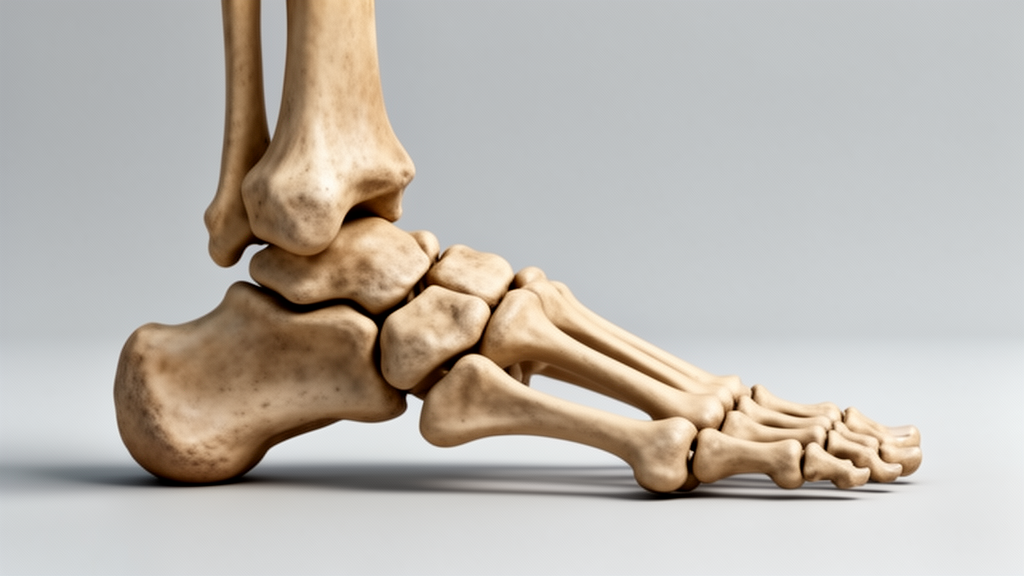
A study published in the Journal of Human Evolution has provided the first detailed three-dimensional analysis of the external shape of the Neanderthal heel. The research reveals that Neanderthals likely possessed flat feet, a trait that was not a defect but a precise functional strategy. This anatomical configuration served to reduce impact stress under heavy loads and maximize stability on mountainous or rough terrain. The study, coordinated by Professor Maria Giovanna Belcastro of the University of Bologna, compared the heels of seven Neanderthal individuals with those of 64 modern humans. The modern human sample ranged from Pleistocene hunter-gatherers to farmers of the Iron Age, up to a post-industrial urban population preserved in the Documented Human Osteological Collection of the Certosa Cemetery of Bologna. By applying advanced 3D geometric morphometry techniques to digital models obtained via laser scans and computed tomography, the team highlighted a distinct biomechanical adaptation in Neanderthals that contrasts with the foot morphology of contemporary humans.
The results demonstrate clear differences between the two groups. Compared to modern humans, Neanderthal heels were shorter, wider, and taller. Geometric analysis indicates that the foot posture of Neanderthals habitually showed pronation. Furthermore, the study highlights a lower lateral longitudinal arch in Neanderthals, which offered greater flexibility and mobility in the central part of the foot. In essence, Neanderthals utilized this flat-footed posture to maximize stability and reduce impact stress. This was a crucial advantage for a species characterized by a remarkable muscular and bone mass and an extremely intense level of physical activity. Professor Belcastro explains that the robustness of the heel reflects the overall body structure of Neanderthals. These physical characteristics indicate an adaptation aimed at promoting a greater load-bearing capacity on the back of the foot and high mobility on uneven ground.
Professor Belcastro notes that the human foot is one of the anatomical structures that best demonstrates our complex evolutionary history. Among the bones composing the foot, the heel plays a crucial role as it is the first structure to touch the ground when walking. It cushions the impact and transmits the forces necessary to push the body forward. The 3D analysis of the fossil heels allowed the researchers to highlight both an extraordinary biomechanical adaptation in Neanderthals to withstand heavy loads and rough terrains, and the significant impact of modern life and footwear on the feet of Homo sapiens. The study underscores that the morphology of the human skeleton is not only the product of a strict genetic program but also the consequence of physical stimuli and daily life habits.
When examining the evolutionary trajectory of Homo sapiens, the researchers observed distinct differences between prehistoric and modern populations. Prehistoric hunter-gatherers of Homo sapiens, who travelled long distances barefoot or with soft footwear, showed heels with characteristics of robustness more similar to those of Neanderthals than to modern post-industrial populations. However, individuals who have lived in the last centuries exhibit heels that are much weaker. This change is attributed to a sedentary lifestyle and the habitual use of rigid and closed footwear. The use of shoes with rigid soles tends to limit the inversion and eversion movements of the foot, effectively tightening the ankle.
The multidisciplinary team behind the study included scholars from the University of Bologna and the IRCCS Rizzoli Orthopaedic Institute. The research was led by Rita Sorrentino, who was active at the University of Bologna from 2015 to 2026, and coordinated by Professor Maria Giovanna Belcastro from the Department of Biological, Geological, and Environmental Sciences. Collaborators included Professor Stefano Benazzi, Carla Figus, and Teresa Nicolosi from the Department of Cultural Heritage, as well as professors Michele Conconi and Nicola Sancisi from the Department of Industrial Engineering. Additionally, Claudio Belvedere and Alberto Leardini from the laboratory of motion analysis and functional evaluation of prostheses at the IRCCS Rizzoli Orthopaedic Institute contributed to the project.
The findings open prospects for dialogue between evolutionary anthropology and clinical orthopaedics. The study highlights that the flat foot of Neanderthals was a successful adaptation to their specific ecological and lifestyle demands, rather than a pathological condition.
Subject of Research: Heels and flat feet, from Neanderthals to Homo sapiens
Article Title: Heels and flat feet, from Neanderthals to Homo sapiens
Article References: Heels and flat feet, from Neanderthals to Homo sapiens. Original publication (Bibliographic details unavailable.)
Image Credits: AI Generated
DOI: Not provided
Keywords: Heels, flat, feet, Neanderthals, Homo, sapiens, scientific research
News Source: Drew Townsend. (November 13, 2026). Neanderthal Heels Showed Flat Feet Adapted for Stability. Scienmag.