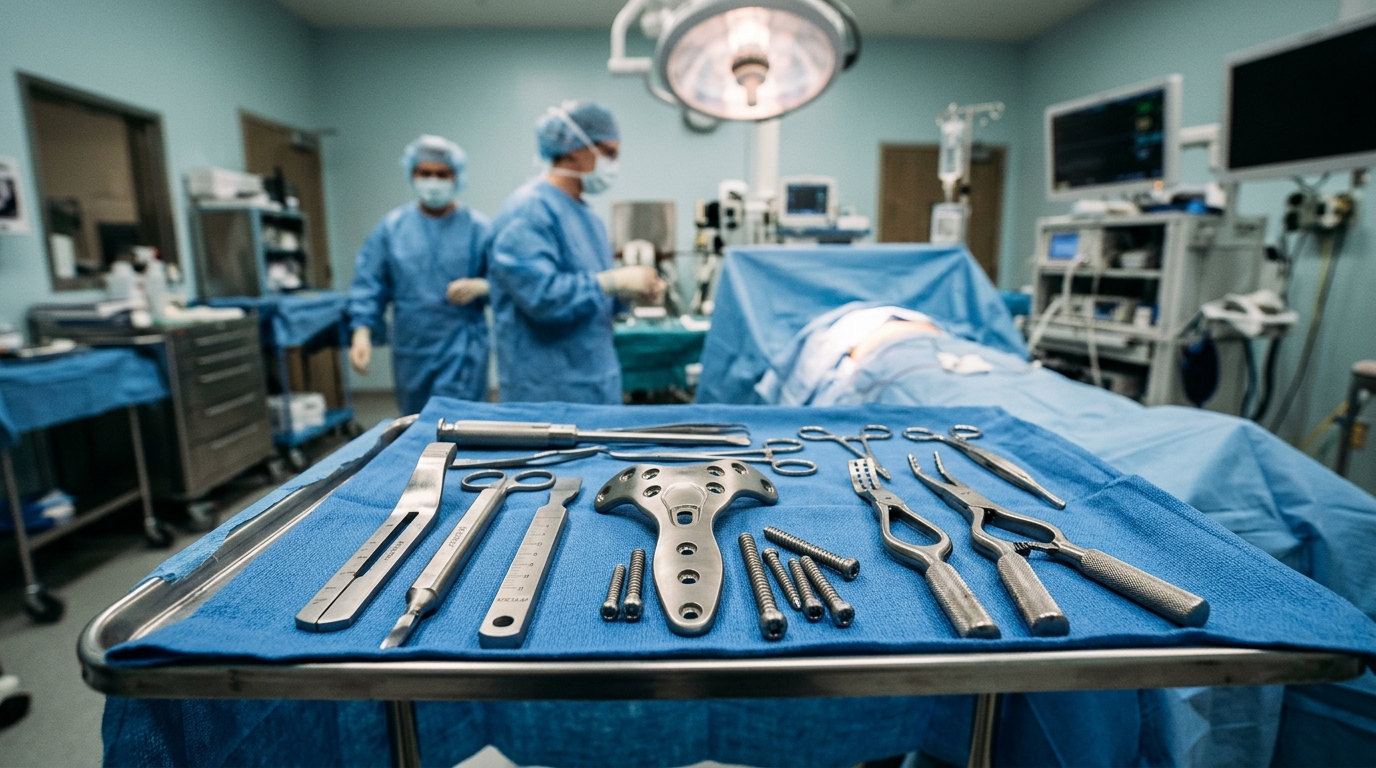
A retrospective cohort study evaluating patients treated for pelvic chondrosarcoma at a single tertiary musculoskeletal oncology center has identified age and tumor grade as independent prognostic factors associated with overall survival. The research, which analyzed clinical records from individuals treated between 2007 and 2020, outlines the significant oncological challenges, high revision rates, and postoperative functional impairments associated with the surgical management of this rare malignant bone tumor.
Pelvic chondrosarcoma represents a rare malignancy characterized by demanding surgical interventions, elevated morbidity, and variable oncological trajectories. Because the condition occurs infrequently, prognostic indicators and long-term functional consequences have historically remained insufficiently characterized in surgical literature. To address these evidence gaps, investigators designed a single-center investigation to evaluate survival rates, identify prognostic markers, document post-surgical complications, and record functional outcomes.
The study cohort comprised 54 consecutive patients who underwent surgical resection for either primary pelvic chondrosarcoma (37 individuals) or locally recurrent disease (17 individuals). To maintain a well-defined cohort, patients who received surgery specifically for metastatic pelvic lesions were excluded from the analysis. The surgical cohort was tracked over a mean clinical follow-up duration of 31.7 months, during which 22 patient deaths were recorded across the observation window.
Survival probabilities were calculated using the Kaplan–Meier method. Based on these estimates, the overall survival rate stood at 80.3% at 1 year, with a 95% confidence interval ranging from 65.4% to 89.3%. Survival dropped to 65.1% at 3 years, with a confidence interval between 48.6% and 77.4%. By the 5-year postoperative mark, estimated overall survival reached 48.8%, accompanied by a 95% confidence interval spanning from 30.6% to 64.8%.
To investigate specific mortality drivers, the researchers performed univariable Cox regression analyses alongside an exploratory multivariable regression model that incorporated patient age and histological tumor grade. Within this multivariable framework, increasing chronological age demonstrated an independent association with a higher hazard of mortality, yielding an adjusted hazard ratio of 1.048 per year (95% CI, 1.014–1.083; p = 0.0052).
Histological tumor grade also exhibited a significant statistical relationship with survival in the exploratory model. Patients presenting with higher tumor grades experienced increased mortality hazards, reflecting an adjusted hazard ratio of 1.802 per grade increase (95% CI, 1.006–3.228; p = 0.0476). These regression findings delineate specific clinical variables linked to post-resection survival duration within this cohort.
Surgical morbidity among the treated patients was substantial, as demonstrated by secondary intervention requirements. Across the entire cohort of 54 individuals, revision surgery was documented in 38 patients, representing 70.4% of the analyzed group.
Functional performance was evaluated using the Musculoskeletal Tumor Society (MSTS) scoring system, with post-treatment assessments available for 27 patients. Within this subpopulation, the mean MSTS score was recorded at 11.6 ± 5.8 points, documenting substantial functional impairment among evaluated individuals following operative intervention.
The investigators concluded that the surgical management of pelvic chondrosarcoma carries considerable procedural morbidity, frequently necessitates revision procedures, and results in diminished functional outcomes. The authors noted that their conclusions regarding survival associations should be interpreted cautiously in light of the retrospective framework, the limited single-center cohort size, and the relatively short follow-up period.
Subject of Research: Surgical and survival outcomes in pelvic chondrosarcoma
Article Title: Survival and functional outcomes in surgically treated pelvic chondrosarcoma: a retrospective single-center cohort study
Article References: Deventer, N., Theil, J. C., Gosheger, G., Deventer, N., de Vaal, M., Rachbauer, A., Schulze, M., & Budny, T. (2026). Survival and functional outcomes in surgically treated pelvic chondrosarcoma: a retrospective single-center cohort study. BMC Musculoskeletal Disorders. https://doi.org/10.1186/s12891-026-10726-y
Image Credits: AI Generated
DOI: 10.1186/s12891-026-10726-y
Keywords: pelvic chondrosarcoma, chondrosarcoma, bone oncology, orthopedic surgery, musculoskeletal tumor society, msts score, overall survival, prognostic factors, tumor grade, cox regression, revision surgery, surgical morbidity, retrospective study, single-center study, bone cancer, oncological outcomes, kaplan-meier survival, locally recurrent disease
News Source: Nathaniel Bowman. (November 13, 2026). Study Evaluates Pelvic Chondrosarcoma Survival and Surgical Morbidity. Scienmag.