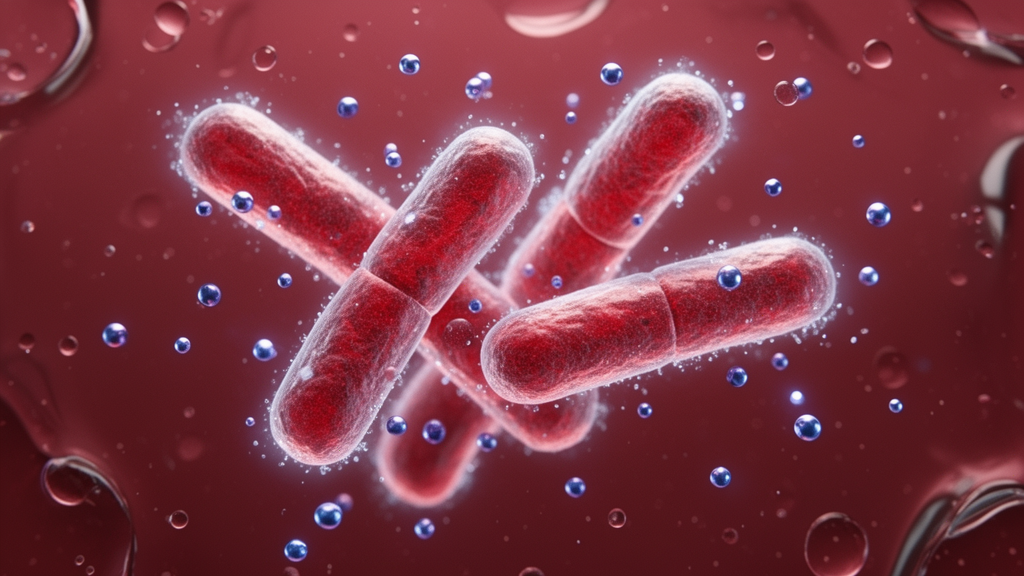
A defined bacterial consortium successfully achieved 98.0 percent decolorization of the synthetic cobalt-complex monoazo dye Acid Red 182 while removing more than 90 percent of its coordinated metal under statistically optimized laboratory conditions, according to research published in Frontiers in Microbiomes. Conducted by researchers from Gujarat University and the M.G. Science Institute in Ahmedabad, India, the investigation examined the biological transformation of a persistent textile pollutant that has historically resisted conventional industrial remediation.
Metal-complex monoazo dyes present significant ecological concerns due to their chemical persistence, toxicity, and intrinsic resistance to standard biological wastewater treatment facilities. Acid Red 182, characterized structurally as a 1:2 cobalt-complex monoazo dye, incorporates heavy metal coordination that stabilizes the chromophore against typical microbial attack, leaving textile processors reliant on costly or energy-intensive physicochemical methods. To evaluate whether biological transformation could provide an alternative route, the research team designed an experimental investigation to determine whether specialized bacteria could destabilize the azo linkage, alter the dye’s molecular architecture, and simultaneously separate the coordinated heavy metal from liquid media.
The biological platform developed for the study, designated Consortium-G, consisted of three defined bacterial strains: Exiguobacterium mexicanum RA-19, Alcaligenes faecalis RA-26, and Bacillus licheniformis RA-39. Rather than relying on uncharacterized environmental consortia, the investigators assembled this specific tripartite community to assess how defined bacterial combinations handle high dye loading and toxic metal coordination.
To maximize the dye-degrading capacity of Consortium-G, the researchers implemented a multistep statistical optimization framework rather than relying on static incubation conditions. The team initially screened operational parameters using a one-variable-at-a-time approach, subsequently applied a Plackett–Burman design to identify key influencing variables, and refined culture parameters through response surface methodology utilizing a central composite design. This systematic sequence identified fructose and yeast extract as the principal nutrient supplements necessary to accelerate microbial growth and drive the catalytic breakdown of the target pollutant.
Optimization substantially improved the rate and extent of dye decolorization in experimental trials. Under these optimized growth conditions, Consortium-G removed 98.0 percent, with an experimental uncertainty of plus or minus 0.75 percent, of Acid Red 182 from a solution containing 500 milligrams per liter within 48 hours. This performance represented a 2.17-fold improvement over unoptimized culture conditions, which required 72 hours to achieve just 45.46 percent decolorization. Alongside chromophore breakdown, the consortium removed more than 90 percent of the coordinated cobalt from the synthetic dye solution, demonstrating concurrent dye degradation and heavy metal management within a single operational treatment period.
Enzymatic assays revealed that the breakdown of Acid Red 182 involved a coordinated network of intracellular and extracellular oxidoreductases. Azoreductase activity exhibited significant induction, reaching 63.86 units per liter at the 48-hour mark, while NADH–dichlorophenolindophenol (NADH–DCIP) reductase, laccase, and tyrosinase displayed concurrent activation. The simultaneous presence of these catalytic activities points toward a coupled reductive and oxidative degradation mechanism, wherein initial reductive cleavage of the azo bond is complemented by oxidative transformation of downstream intermediates. Structural degradation was independently confirmed through a battery of analytical methodologies, including ultraviolet-visible spectroscopy, Fourier-transform infrared spectroscopy, high-performance liquid chromatography, gas chromatography, and liquid chromatography–mass spectrometry.
Analytical profiling enabled the identification of tentative degradation intermediates, which the authors organized into a proposed breakdown pathway. The spectroscopic and chromatographic profiles indicated that downstream dye transformation proceeded through cis,cis-muconic acid into the beta-ketoadipate pathway, suggesting that the bacterial consortium achieved partial mineralization of the synthetic monoazo structure.
Despite these positive laboratory outcomes, the investigators emphasized several explicit experimental limitations regarding the scope of their findings. The reported degradation pathway remains a hypothesis derived from tentative metabolite annotations that require rigorous chemical confirmation. In addition, the research did not establish complete mineralization of the dye molecules, detailed cobalt speciation following removal, or definitive toxicological detoxification of the treated effluent. Finally, because all experiments were conducted using formulated synthetic dye solutions in laboratory settings, the authors concluded that extensive validation using complex, real-world textile industrial effluents will be necessary before Consortium-G can be translated into practical industrial wastewater treatment applications.
Subject of Research: Bacterial biodegradation of cobalt-complex azo dye Acid Red 182
Article Title: Mechanistic insights into the biodegradation of the cobalt-complex azo dye Acid Red 182 by a defined bacterial consortium
Article References: Kathrotiya, R. M., Raval, S. V., Raval, B., & Raval, V. H. (2026). Mechanistic insights into the biodegradation of the cobalt-complex azo dye Acid Red 182 by a defined bacterial consortium. Frontiers in Microbiomes, 5, Article 1966118. https://doi.org/10.3389/frmbi.2026.1966118
Image Credits: AI Generated
DOI: 10.3389/frmbi.2026.1966118
Keywords: Acid Red 182, Consortium-G, cobalt removal, metal-complex azo dye, Exiguobacterium mexicanum, Alcaligenes faecalis, Bacillus licheniformis, azoreductase, NADH-DCIP reductase, laccase, tyrosinase, beta-ketoadipate pathway, cis,cis-muconic acid, central composite design, Plackett-Burman design, textile dye biodegradation, response surface methodology, fructose, yeast extract
News Source: Drew Townsend. (November 12, 2026). Bacterial Consortium Decolorizes Acid Red 182 Dye and Removes Coordinated Cobalt. Scienmag.