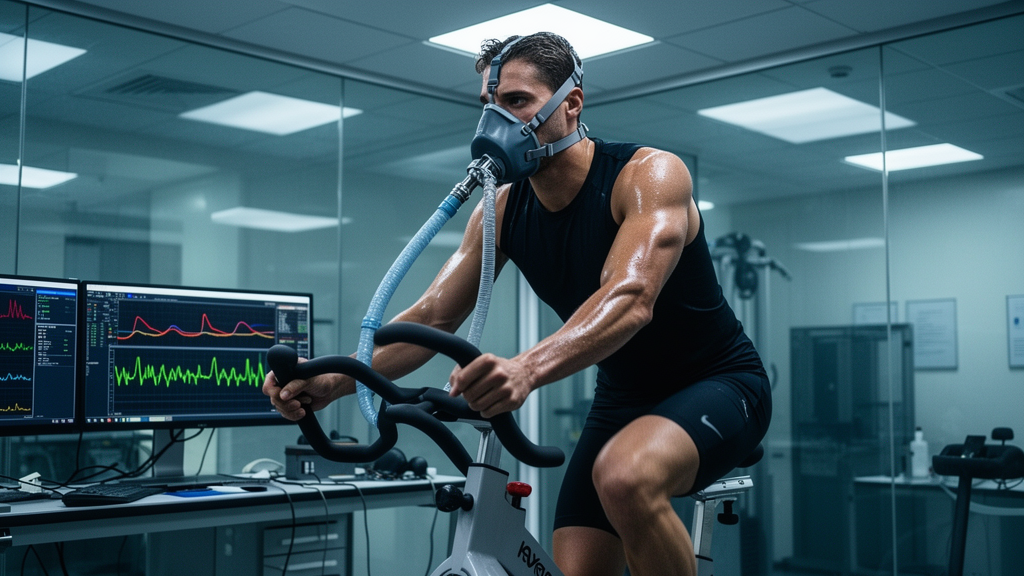
A comprehensive systematic review investigating how environmental oxygen restriction influences short-duration maximal exercise performance has established that acute oxygen deprivation does not inherently diminish anaerobic power outputs during standard cycle ergometer testing. The assessment, led by researchers evaluating physiological responses across diverse training regimens, demonstrated that athletes executing a single thirty-second all-out Wingate Anaerobic Test generally preserve their peak power output and mean power output under mild to moderate hypoxia. Performance degradation emerged consistently only when individuals encountered severe hypoxia equivalent to altitudes at or above five thousand meters, or when sprinting was carried out repeatedly in an acutely fatigued state.
The investigation implemented a structured search across three major online literature databases, namely PubMed/MEDLINE, Scopus, and Web of Science, identifying English-language peer-reviewed articles published up to July 2025. Following the Preferred Reporting Items for Systematic Reviews and Meta-Analyses guidelines and the established Population, Intervention, Comparison, Outcome, and Study Design framework, the investigators screened two hundred and ten candidate records. After removing duplicates and reviewing titles and abstracts through systematic screening software, fifty-five full-text articles underwent detailed methodological assessment. Ultimately, forty-three experimental studies met all eligibility criteria, comprising sixteen investigations dedicated to acute hypoxic exposure, six focused on chronic altitude exposure, and twenty-one examining intermittent hypoxic exposure-based training regimens. Each included investigation reported objective measurements derived from the Wingate Anaerobic Test, focusing on peak power output, mean power output, fatigue index, or total work performed across the testing duration.
Across the forty-three analyzed investigations, the aggregate participant sample encompassed six hundred and twenty-five male and sixty-nine female participants, representing a notable sex imbalance in the existing literature. The acute exposure studies included one hundred and forty-four men and eighteen women presenting an average age of 22.6 ± 3.0 years, an average height of 173.5 ± 4.5 centimeters, and an average body mass of 70.5 ± 7.8 kilograms. The chronic altitude investigations evaluated fifty-eight men and sixteen women with a mean age of nearly twenty-nine years, an average height of 176.8 centimeters, and a mean body mass of 73.3 kilograms. The intermittent hypoxic training literature comprised four hundred and twenty-three men and thirty-five women averaging twenty-five years of age, 178.0 centimeters in height, and 73.2 kilograms in body mass. Athletic conditioning across these cohorts spanned the full developmental spectrum, ranging from completely untrained or recreationally active individuals designated as Tier 0 to elite national and international competitors classified as Tier 4.
Within the acute exposure category, seven of the sixteen included studies identified statistically significant performance impairments in hypoxia relative to normoxic baseline conditions, whereas the remaining nine investigations observed no measurable differences between environments. Among the seven studies demonstrating performance decrements, six documented reductions in mean power output between three and seven percent, one reported a four percent reduction in total work, and another recorded an eight percent elevation in fatigue index. Close examination of the experimental protocols revealed that single all-out cycling bouts remained largely uncompromised at simulated altitudes below five thousand meters. Detrimental effects on single sprints were documented almost exclusively when inspired oxygen fractions dropped to approximately 0.104, reflecting simulated elevations between 5300 and 5500 meters.
The remaining acute studies reporting performance decrements involved repeated Wingate bouts rather than single isolated sprints, highlighting the physiological role of aerobic metabolism during repeated maximal efforts. Although a single thirty-second sprint relies overwhelmingly on phosphocreatine degradation and anaerobic glycolysis, successive sprints separated by short recovery intervals place progressively greater demands on oxidative phosphorylation. Consequently, when repeated maximal bouts occurred under hypobaric or normobaric hypoxia at three to four thousand meters, restricted oxygen availability exacerbated power output loss across four to six repetitions. Conversely, protocols employing fewer repetitions or longer recovery intervals between four and eight minutes maintained peripheral muscle oxygenation and sustained power outputs through elevated muscle glycogen depletion.
Chronic hypoxic exposure demonstrated distinct mechanical outcomes governed primarily by cumulative altitude dose and physiological acclimatization timelines. Among the four chronic studies reporting decreased performance, three showed approximately three to eight percent reduced peak power output, three reported approximately two to eight percent decreased mean power output, and two observed approximately six to eight percent reduced total work. Dual-energy X-ray absorptiometry analysis in mountaineering cohorts confirmed significant loss of lean body mass in both upper and lower limbs following long expeditions.
In marked contrast to extended high-altitude mountaineering expeditions, shorter continuous altitude camps conducted at moderate elevations did not impair Wingate sprint performance. Investigations evaluating a three-week live-high train-high camp at 2320 meters in elite badminton competitors and an eleven-day camp at 1850 meters in trained adolescent distance runners reported fully preserved power metrics upon return to sea level. These contrasting outcomes reflect substantial differences in cumulative hypoxic dose, calculated as the product of elevation in kilometers and exposure duration in hours.
The evaluation of intermittent hypoxic exposure-based training protocols yielded nuanced outcomes across twenty-one separate interventions spanning one to seven weeks. Seven of these studies reported statistically significant performance advantages following training in hypoxia compared to identical training conducted in normoxia. Most notably, four of the successful interventions involved relatively long exercise training lasting one to two hours at low to moderate intensities, such as prolonged cycling or boxing-specific training, conducted at simulated altitudes between 2500 and 4400 meters. Triathletes and endurance athletes completing ten consecutive daily sessions under these conditions achieved three to five percent greater gains in mean power output during post-intervention sea-level testing than counterparts completing identical normoxic workouts.
Among the remaining fourteen intermittent training studies, nine documented equivalent improvements in Wingate performance across both hypoxic and normoxic training groups, while four found no significant gains under either condition. The nine studies exhibiting similar bilateral improvements overwhelmingly utilized high-intensity interval training, sprint interval training, or repeated-sprint training in hypoxia. Although several molecular investigations identified unique cellular adaptations following repeated sprints in hypoxia—such as augmented glucose transporter 4 protein levels, upregulated glycolytic enzymes, and enhanced total hemoglobin responses measured via near-infrared spectroscopy—these localized muscular changes did not consistently translate into superior sea-level Wingate power compared to normoxic sprint interval training.
Methodological quality assessments conducted using the Physiotherapy Evidence Database scale revealed systematic disparities across the three literature domains that temper definitive clinical and athletic conclusions. Acute hypoxic investigations exhibited moderate to high methodological rigor, with scores ranging from five to eight out of ten possible points, demonstrating comparable quality between studies that identified sprint decrements and those that reported no environmental effect. In contrast, five of the six chronic altitude investigations received low-quality scores of three points, primarily due to the logistical absence of unexposed control groups and the impossibility of participant or investigator blinding during natural mountain expeditions. Intermittent hypoxic training studies presented a wider distribution of methodological scores, with eight rated high, eleven rated moderate, and two rated low. Notably, studies demonstrating superior anaerobic gains from hypoxia were generally rated moderate, whereas studies reporting equivalent outcomes between environments demonstrated higher average methodological quality.
The synthesis of current evidence provides actionable guidelines for athletic conditioning while highlighting critical boundaries in scientific understanding. When designing repeated-sprint protocols in moderate hypoxia, limiting consecutive repetitions to four or fewer helps avoid uncoupling anaerobic performance from intended training velocities. Furthermore, chronic altitude exposure is not recommended when the primary aim is to improve anaerobic performance, though adverse effects can be alleviated by shorter stays at moderate altitudes or including high-intensity training. Future investigations must address the pronounced underrepresentation of female athletes and directly contrast normobaric and hypobaric modalities to clarify optimal hypoxic conditioning paradigms.
Subject of Research: Systematic review examining the effects of acute, chronic, and intermittent hypoxia on Wingate Anaerobic Test performance
Article Title: Effects of Hypoxic Exposure and Training Methods on Wingate Test Performance: A Systematic Review
Article References: Yamagishi, T., Précart, C., Bouten, J., Yamashita, D., Mujika, I., Slawinski, J., & Brocherie, F. (2026). Effects of Hypoxic Exposure and Training Methods on Wingate Test Performance: A Systematic Review. Sports Medicine – Open, 12(1), Article 174. https://doi.org/10.1186/s40798-026-01125-7
Image Credits: AI Generated
DOI: 10.1186/s40798-026-01125-7
Keywords: Wingate Anaerobic Test, acute hypoxia, chronic altitude exposure, intermittent hypoxic training, peak power output, mean power output, fatigue index, total work, repeated sprint training in hypoxia, sprint interval training, hypobaric hypoxia, normobaric hypoxia, glycolytic metabolism, muscle oxygenation, PEDro scale, sports physiology
News Source: Ophelia Keating. (November 12, 2026). Hypoxia Impairs Wingate Sprint Performance During Severe, Repeated, or Prolonged Exposure. Scienmag.