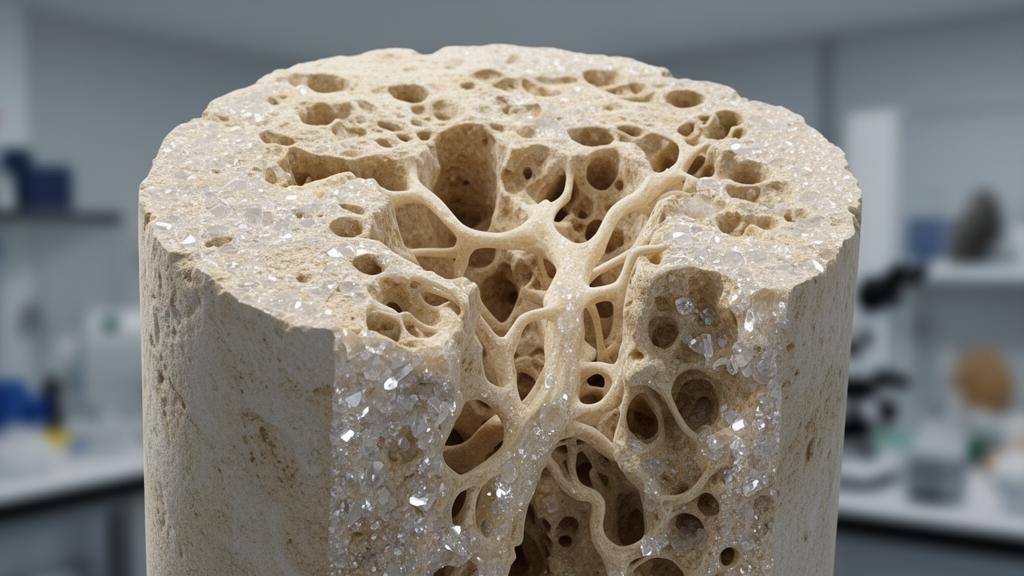
Researchers developing computational methods for subsurface characterization have established that ensemble machine learning models and mechanism-data fusion approaches can predict fluid permeability in highly heterogeneous carbonate rocks using basic pore geometry parameters. By leveraging data gathered from 669 carbonate rock samples that encompassed diverse geological fabrics and pore types, the investigative team demonstrated that modern computational architectures offer clear predictive advantages over traditional empirical formulations.
The study specifically addressed the long-standing limitation of conventional reservoir characterization tools, including classical Kozeny’s equation and the Winland model. To resolve these challenges, the investigators integrated seven distinct machine learning sub-models using the Technique for Order Preference by Similarity to an Ideal Solution, known as TOPSIS, while simultaneously constructing hybrid mechanism-data fusion frameworks to systematically evaluate predictive reliability across different modeling strategies.
To build the mechanism-data fusion systems, the authors implemented two distinct technical workflows: input variable constraints and parameter optimization.
Direct comparative analyses revealed that purely data-driven machine learning models achieved significantly higher estimation accuracy than classical Kozeny’s equation and the standard Winland model.
Applying input variable constraints further boosted model precision beyond baseline data-driven methods. Among the tested architectures, a modified Winland model constraint paired with the XGBoost algorithm delivered the most pronounced gains across the entire dataset. This configuration elevated the coefficient of determination, or R2, to 0.770 with an uncertainty interval of ± 0.047 on the testing set, while yielding R2 values of 0.554 and 0.637 across two distinct validation sets.
Conversely, the researchers discovered that parameter optimization modeling failed to match the effectiveness of input variable constraints. Neither Kozeny’s factor optimization nor FZI optimization succeeded in outperforming the purely data-driven machine learning baselines.
The TOPSIS ensemble model operating under a purely data-driven mode also demonstrated robust predictive capabilities without relying on underlying physical equations. This ensemble configuration attained a testing-set R2 of 0.775 with a margin of ± 0.041, alongside validation-set R2 values of 0.486 and 0.601. Although its validation performance settled slightly below the top-performing constrained XGBoost hybrid model, the purely data-driven ensemble proved to be a dependable alternative for scenarios where prior mechanistic domain knowledge is incomplete or unavailable.
Because these newly established modeling pipelines require only a few simple pore structure parameters, they provide a practical technical pathway for substituting expensive and labor-intensive laboratory permeability measurements with digital image analysis.
Subject of Research: Machine learning modeling for permeability prediction in heterogeneous carbonate rocks
Article Title: Permeability prediction in heterogeneous carbonate rocks using simple pore structure parameters: A comparative study of multiple machine learning modeling approaches
Article References: Zhang, Z., Zhang, H., Li, J., & Liu, T. (2026). Permeability prediction in heterogeneous carbonate rocks using simple pore structure parameters: A comparative study of multiple machine learning modeling approaches. Earth Science Informatics, 19(12), Article 244. https://doi.org/10.1007/s12145-026-02301-9
Image Credits: AI Generated
DOI: 10.1007/s12145-026-02301-9
Keywords: carbonate rocks, permeability prediction, heterogeneous carbonates, pore structure parameters, ensemble machine learning, mechanism-data fusion, TOPSIS, XGBoost, Winland model, Kozeny equation, digital image analysis, flow zone indicator, reservoir characterization, rock physics, data-driven modeling, input variable constraints
News Source: Teresa Odom. (November 12, 2026). Machine Learning Models Predict Carbonate Rock Permeability Using Simple Pore Parameters. Scienmag.