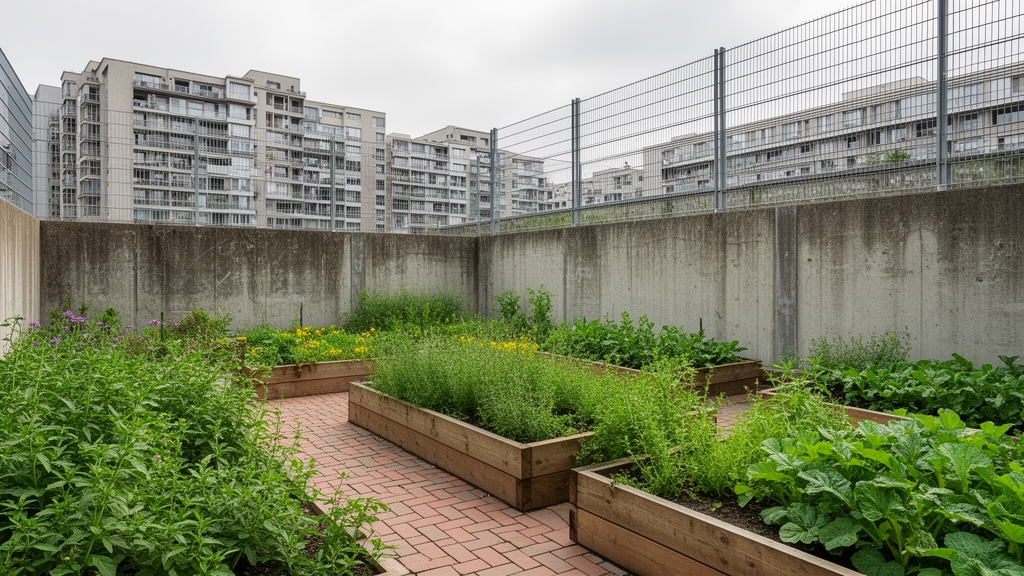
A new qualitative study examining the landscape of nature-based health prevention in Germany indicates that structural fragmentation, institutional skepticism, and pervasive funding deficits significantly hinder the formal integration of nature-guided interventions into municipal public health strategies. Investigating the highly urbanized Ruhr region as a regional case study, researchers determined that although community-level initiatives such as therapeutic gardening and ecological rehabilitation projects exist, they remain largely disconnected from statutory health frameworks and professional medical discourse. The findings reveal that while professional practitioners and regional planners express substantial enthusiasm for utilizing natural spaces to bolster psychological resilience, the broader concept of Green Care lacks formal regulatory embedding, secure long-term financing, and standardized professional recognition. Consequently, nature-supported health promotion operates in an administrative and strategic void, rarely recognized as a structured preventive discipline by healthcare authorities or public municipal administrations.
This institutional marginalization persists despite Germany maintaining some of Europe’s highest healthcare expenditures, spending approximately 6,444 euros per capita in 2024, which exceeds the European Union average by roughly 50 percent. Even with this substantial capital allocation, national investments remain disproportionately skewed toward curative treatments and pharmaceutical therapies rather than proactive prevention. Data cited by the researchers indicate that Germany placed 17th out of 18 European nations in the Public Health Index 2025, lagging behind international peers like the United Kingdom, Finland, and Ireland that have established comprehensive national prevention frameworks. Furthermore, Germany recorded the highest pharmaceutical consumption spending in pharmacies across the entire European Union in 2023, reaching 743 euros per capita. This pronounced dependence on clinical and pharmacological solutions creates rigid structural path dependencies within welfare institutions, making statutory health insurance bodies and medical associations hesitant to reimburse or systematically incorporate non-pharmacological, nature-based preventive measures.
Within public health and spatial planning literature, Green Care serves as a broad umbrella concept encompassing interventions that deliberately harness natural elements to advance physical health, mental wellbeing, social cohesion, and ecological sustainability. As conceptualized by the researchers and the European Union-funded GreenME research consortium, Green Care functions across a three-stage continuum. This spectrum extends from informal everyday encounters with green and blue infrastructure to structured nature-based health promotion, and ultimately to formal therapeutic interventions such as clinical garden therapy, care farming, and guided forest therapy. Empirical literature associates exposure to green and blue spaces with diminished psychological distress, reduced anxiety and depressive symptoms, and decreased rumination, while offering vital physical benefits including lower heart rates and reduced chronic disease risks. However, the study authors emphasize that exposure to natural environments is neither automatically risk-free nor inherently therapeutic; context-dependent factors such as urban noise, environmental pollutants, allergens, and inadequate accessibility heavily influence health outcomes.
To assess how these theoretical dynamics translate into real-world practice, the research team focused on the Ruhr region located in the federal state of North Rhine-Westphalia, recognized as one of the largest contiguous polycentric conurbations in Europe. Covering approximately 4,400 square kilometers and home to roughly 5 million residents across more than a dozen densely clustered medium-sized cities, the region exhibits an average population density of around 1,150 inhabitants per square kilometer. Historically shaped by intensive coal mining and steel manufacturing since the nineteenth century, the region underwent severe socioeconomic transformations following the closure of industrial plants from the 1960s onward. This legacy prompted extensive ecological restoration programs that repurposed former slag heaps, industrial wastelands, and canalized river corridors like the Emscher and Ruhr into revitalized green corridors. These regenerated urban spaces provide an expansive spatial asset for preventive health, offering a critical environment to counteract the urban health penalties that frequently elevate mental disorder risks among city dwellers.
The empirical investigation employed a sequential mixed-methods research design carried out between 2024 and 2025, pairing individual stakeholder interviews with an interactive co-creation workshop. During the initial empirical phase, investigators conducted 12 semi-structured interviews between April and May 2024, gathering detailed perspectives from professionals categorized into three functional groups: six operational implementers delivering practical interventions, three supporters facilitating research and educational initiatives, and three policy and decision-makers governing administrative or municipal bodies. The interview transcripts were systematically examined using the web-based annotation platform CATMA under a standardized qualitative content analysis framework established by the GreenME project. This deductive framework encompassed nine primary operational categories and 45 subcodes covering themes such as cooperative networks, equity and justice, provision guidelines, and implementation barriers, allowing the research team to map recurring viewpoints across disparate professional domains.
To deepen and validate these qualitative insights, the researchers conducted a three-hour participatory co-creation workshop at the City Hall of Herne in February 2025. Facilitated by municipal project partners, the hybrid session convened ten professional delegates representing clinical practice, urban planning, academic research, and municipal administration, including four returning interview participants and six newly recruited sectoral representatives. Following introductory presentations summarizing preliminary interview outputs, attendees completed an open brainstorming exercise to delineate necessary preconditions for establishing Green Care. Each participant submitted prioritized suggestions, which were subsequently refined through a formal voting exercise where participants allocated star points to establish priority targets. This collaborative prioritization yielded nine central preconditions, termed PC1 through PC9, which guided structured plenary discussions regarding the specific operational resources and institutional obstacles associated with expanding nature-based health programs across metropolitan areas.
Synthesizing the qualitative and quantitative data across both collection phases revealed ten distinct structural barriers that were repeatedly cited by participating stakeholders. The most prominent barrier, highlighted by all twelve interview respondents, centered on socially unequal access to Green Care offerings. Participants noted that low-income populations, socially disadvantaged households, ethnic minorities, and persons with disabilities face compounded socioeconomic hurdles, including transport deficits, site admission fees, and language barriers that restrict regular participation. Spatial planning inequalities exacerbate this divide, as wealthier demographics typically inhabit greener neighborhoods with private gardens, whereas high-density inner-city sectors remain deficient in proximate, high-quality public nature. Stakeholders cautioned that without intentional safeguards, urban greening risks accelerating green gentrification, wherein rising real estate valuations displace vulnerable populations and inadvertently transform therapeutic nature programs into exclusionary amenities tailored exclusively to educated, affluent demographics.
The second and third most prevalent obstacles involved low social and institutional awareness, identified by 11 respondents, and pervasive funding deficits, reported by 10 contributors. Stakeholders observed that statutory health insurers and public ministries rarely acknowledge Green Care within strategic programming, frequently dismissing structured outdoor therapies as peripheral leisure activities or informal gardening rather than valid medical modalities. This perceptual disconnect fuels severe fiscal instability among providers, who must navigate an opaque administrative jungle characterized by short-term, project-based financing and conflicting institutional jurisdictions. Implementers emphasized that while substantial capital is frequently channeled into conventional pharmaceuticals, non-clinical nature programs struggle to secure basic operating funds. This financial precariousness leaves providers unable to cover essential upfront costs for specialized equipment, ongoing physical maintenance of green and blue spaces, or dedicated coordinating staff, thereby restricting most initiatives to fragile, small-scale pilot undertakings.
Operational delivery is further constrained by severe staff shortages and capacity bottlenecks, cited by nine participants and underscored by every interviewed implementer. Specialists working in demanding environments like nursing, social work, and early childhood education reported that acute labor shortages force institutions to cancel nature-based excursions to maintain mandatory core care services. Furthermore, seven respondents highlighted a critical lack of formal professional expertise, noting the absence of standardized educational curricula, accredited qualification criteria, or certified billing codes for garden therapists and nature practitioners. Intersectoral frictions also create substantial impediments; seven contributors documented contradictory requirements between environmental conservation authorities and healthcare providers, where rigid conservation restrictions and municipal signage prohibiting lawn access collide directly with therapeutic use claims. Additionally, four respondents underscored urban land scarcity, explaining that intense municipal competition for residential construction frequently overrides the preservation of open natural spaces.
Despite these extensive systemic constraints, the analysis uncovered seven prominent potential opportunities for advancing Green Care across the Ruhr conurbation. Nearly all interviewed stakeholders, accounting for 11 respondents, affirmed that viable pilot projects already operate within the region, citing established clinical horticulture at the Community Hospital Herdecke, therapeutic programs at the Vitrea Rehabilitation Clinic Hattingen, and community urban gardens. Furthermore, ten participants pointed to resilient professional networks that facilitate knowledge exchange and interdisciplinary collaboration across agricultural, educational, and healthcare boundaries. Seven contributors highlighted the presence of nascent funding mechanisms, though this awareness was restricted entirely to implementers and supporters, demonstrating an information asymmetry between frontline practitioners and administrative municipal officers. Additional recognized potentials included the Ruhr’s extensive interconnected network of restored riverbanks and slag heaps, expanding public awareness spurred by the pandemic, and the cost-effective multifunctionality of public spaces acting simultaneously as recreational zones and therapeutic settings.
Comparing these regional findings to international frameworks, the researchers noted that Germany remains classified as an implementation follower country compared to frontrunners like the United Kingdom and Sweden. While programs such as the British Green Social Prescribing scheme have established institutional referral mechanisms and quality assurance benchmarks, German initiatives remain trapped within isolated sectoral silos. The study authors acknowledged several methodological limitations, noting that their qualitative sample deliberately prioritized institutional and professional actors, thereby omitting the lived experiences of vulnerable end-users and municipal park directors. Furthermore, because participants were introduced to the study through the overarching goals of the GreenME project, potential self-selection bias among nature-friendly professionals cannot be entirely excluded. The researchers conclude that transforming urban green infrastructure into an equitable public health asset will require decisive policy reforms, including statutory insurance integration, standardized practitioner accreditation, and targeted environmental justice interventions designed to bridge socioeconomic disparities across expanding cities.
Subject of Research: Stakeholder perceptions and structural barriers to implementing urban Green Care initiatives in Germany
Article Title: Bringing nature-based health prevention into cities: the role and perception of Green Care in Germany
Article References: Iodice-Kraft, C. C., Specht, K., Otsuka, N., Gutjahr, M., Schätte, E., Moonga, L., Xu, S., Michael, B., Neuberger, K., Giedych, R., & Gawryszewska, B. (2026). Bringing nature-based health prevention into cities: the role and perception of Green Care in Germany. Frontiers in Sustainable Cities, 8, Article 1858698. https://doi.org/10.3389/frsc.2026.1858698
Image Credits: AI Generated
DOI: 10.3389/frsc.2026.1858698
Keywords: Green Care, urban health, nature-based interventions, Ruhr region, green prescribing, mental health prevention, green and blue infrastructure, environmental justice, public health policy, therapeutic horticulture, healthcare expenditure, social prescribing, urban planning, green gentrification, preventive healthcare, co-creation workshop, stakeholder analysis, post-industrial transformation
News Source: Denise Maddox. (November 12, 2026). Study Identifies Structural Barriers Hindering Urban Green Care Across Germany. Scienmag.