A comprehensive study published in EPJ Research Infrastructures demonstrates that Big Science facilities can systematically embed environmental, financial, and societal sustainability into their foundational architecture rather than treating ecological constraints as ex-post operational burdens. Authors Johannes Gutleber and Leslie Alix examine evidence from premier international research infrastructures to show how multi-decade scientific undertakings can balance substantial public expenditures against durable societal assets. Modern Big Science is defined by immense financial commitments, specialized physical or digital assets, extensive spatial footprints, long construction timelines, and unprecedented scales of multinational collaboration. Prominent examples span high-energy particle physics, such as CERN’s Large Hadron Collider with its ALICE, ATLAS, CMS, and LHCb experiments, as well as global multidisciplinary consortia including the Human Genome Project, the Human Brain Project, the Square Kilometre Array, and the Copernicus Earth Observation Programme. By conceptualizing these technological complexes as Open Science and Open Innovation platforms, scientific institutions can generate a dynamic equilibrium between public investments, club goods, and widespread socio-economic returns.
The imperative for structural sustainability arises amid climate change, environmental degradation, geopolitical instability, and competing demands on public budgets, which challenge the legitimacy of massive expenditures on fundamental exploration. Decision-makers and taxpayers increasingly question whether billions allocated to pure science missions—often perceived as distant from urgent societal challenges—can be justified over decades. To resolve this friction, the authors conceptualize Big Science infrastructures as dual producers of club goods and public goods. Club goods represent benefits accessible primarily through institutional membership or direct participation, such as privileged experimental access, specialized hardware, or governing influence. Conversely, public goods encompass freely published discoveries, open databases, open-source software, and broadly diffused technical skills that flow into the wider economy. This structural dichotomy allows research facilities to transcend narrow experimental mandates, embedding proactive environmental stewardship, industrial co-development, and educational capacity directly into their organizational designs from inception.
Securing long-term financial and institutional viability represents a foundational pillar of the proposed sustainability model. Gutleber and Alix emphasize that Big Science missions pursue fundamental knowledge without generating direct commercial revenues, leaving them reliant on sustained governmental commitments rather than private capital. Historical experience proves that one-off funding allocations cannot support multi-decade life cycles. Instead, successful initiatives rely on formal multilateral intergovernmental agreements that distribute costs across international partner states, as demonstrated by the Large Electron-Positron Collider, the International Space Station, the James Webb Space Telescope, ITER, and EuroHPC. Spreading capital investments across millions of contributing taxpayers keeps individual financial contributions modest—often matching the cost of a single public transport ticket per person annually, which falls substantially below willingness-to-pay thresholds in medium- and high-income nations. To insulate missions from shifting political priorities within individual states, facilities must preserve governance independence and depend upon a committed core consortium.
Evaluating the full life-cycle performance of large research facilities requires rigorous methodological frameworks capable of quantifying direct and indirect externalities. Traditionally, science project appraisals focused almost exclusively on capital expenditures, operational budgets, and direct academic citations, leaving greenhouse gas emissions, air pollution, noise, land use, and resource depletion unquantified. Gutleber and Alix advocate for standardized life-cycle assessment (LCA) methodologies conforming to international benchmarks, including ISO/EN 14040, ISO/EN 14044, EN 15804+A2, and EN 17472 for civil engineering greenhouse gas accounting. Analysts should prioritize verified Environmental Product Declarations (EPDs) or the French FDES standard, falling back on recognized national databases such as Swiss KBOB, German ÖKOBAUDAT, or French INIES when proprietary declarations are unavailable. Recent advances in environmental economics permit the systematic monetization of externalities previously dismissed as intangible, utilizing European Investment Bank carbon shadow costs, Électricité de France’s man-Sievert radiation valuations, and value-transfer techniques for local ecosystem preservation.
Because traditional commercial profitability metrics are inapplicable to basic science facilities, public project appraisal must rely on comprehensive socio-economic cost-benefit analysis. This analytical approach evaluates alternative infrastructure scenarios using standard indicators, including net present value (NPV), benefit-cost ratio (BCR), and internal rate of return (IRR). However, the researchers emphasize that these monetized figures cannot serve as standalone determinants of project validity. Instead, they must be interpreted within a strong sustainability framework that acknowledges critical natural and institutional capital as inherently non-substitutable. Consequently, non-monetizable ecological constraints, local community impacts, and distributional equity must be reported alongside financial tallies rather than collapsed into an aggregated net figure. Utilizing a structured Theory-of-Change framework, aligned with ISO 14007 and ISO 14008 standards, enables project planners to trace logical pathways from initial inputs and specialized activities through concrete scientific outputs, mid-term outcomes, and ultimate long-term societal transformations.
Human capital formation and advanced technical training constitute one of the most robust and quantifiable value-generation pathways documented in Big Science. Technology-intensive research environments serve as open industrial training grounds that cultivate specialized skills across disciplines extending far beyond fundamental physics, including software engineering, cryogenics, project management, and legal administration. In 2024, research and technical activities at CERN engaged over 17,000 personnel from 110 nations. Longitudinal cohort analyses comparing participating researchers with peers possessing comparable baseline educational credentials demonstrate an estimated lifetime salary premium of 5 to 10 percent attributable to Big Science participation. When aggregated across entire working careers, this human-capital premium yields substantial economic dividends, accounting for roughly 37 percent of total project costs for the Large Hadron Collider and High-Luminosity LHC, and approximately 25 percent for the proposed Future Circular Collider, generating intergenerational labor market benefits lasting until the final trained cohorts retire.
The production of scientific knowledge represents another core sustainability driver, though evaluating its societal return requires conservative and realistic accounting methods. Ex-ante impact assessments increasingly adopt a marginal-cost-of-production proxy that monetizes first-tier research outputs—such as peer-reviewed journal articles, books, and shared datasets—based on researcher salaries, working hours, author contribution fractions, and multi-project productivity adjustments. Rather than relying on unpredictable publication spikes associated with landmark discoveries, sustainable appraisal focuses on steady, incremental knowledge production. The authors observe that while the confirmation of the Higgs boson gathered 14,000 citations by 2025, the detector simulation software toolkit Geant4 accumulated 20,500 citations over the same period, illustrating how reusable research tools generate sustained value. In the baseline socio-economic evaluation for the proposed Future Circular Collider electron-positron stage (FCC-ee), accounted scientific publications across four experiments represent approximately 3 billion euros in discounted value over 59 years, equivalent to 14 percent of total project costs.
Industrial spillovers generated through high-technology co-development provide a third primary pathway for converting public investment into tangible economic growth. Big Science procurement demands non-standard components at the frontier of technical feasibility, stimulating private suppliers in fields such as superconducting magnets, precision mechanics, advanced optics, electronics, and quantum devices. Empirical econometric studies of CERN supplier relationships indicate that every euro invested in high-tech procurement contracts generates approximately 1 to 3 euros in follow-on incremental earnings before interest and taxes (EBIT) for participating firms. Spillovers represent an estimated 45 percent of High-Luminosity LHC expenditures and 49 percent of projected Future Circular Collider costs. A hypothetical 25-year science initiative investing 1.1 billion euros with 50 percent high-tech co-development and a sales-utility multiplier of 3 is projected to yield 1.65 billion euros undiscounted, or 1.22 billion euros discounted at a 3 percent social discount rate, though small- and medium-sized enterprises require careful risk management.
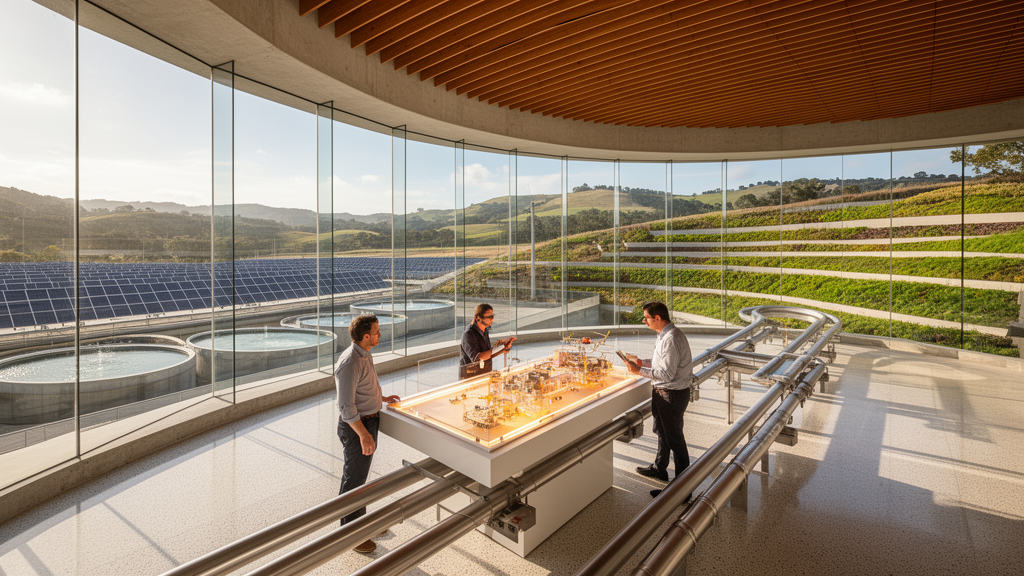
Beyond these core economic drivers, large scientific complexes generate wide-ranging secondary benefits while deploying targeted ecological innovations to mitigate environmental footprints. Digital research assets, including open-source platforms such as Indico, Zenodo, Invenio, FLUKA, and embedded artificial intelligence architectures, achieve massive global reuse with minimal marginal dissemination costs. Cultural engagement and public science tourism also create substantial regional economic value; for example, visits to CERN’s Science Gateway generate estimated annual regional economic use values exceeding 350 million Swiss francs. Simultaneously, infrastructures are integrating circular resource strategies to protect natural ecosystems. Facilities increasingly substitute treated municipal wastewater for fresh water in cooling systems, capture residual thermal energy for district heating networks, and install dedicated renewable energy systems. Examples include the CSIRO Murchison Radio-astronomy Observatory’s 1.85-megawatt solar farm and battery storage in Australia, EMBL Heidelberg’s rooftop photovoltaic array, ESO’s 9-megawatt solar facility in the Atacama Desert, and MedAustron’s solar installation saving 332 tonnes of carbon dioxide annually.
To embed these principles systematically across the research landscape, the authors highlight collaborative guidance developed by the Lab Directors Group (LDG) sustainability working group, representing premier institutions including CEA/Irfu, CIEMAT, CERN, DESY, IJCLab, LNF, LNGS, Nikhef, PSI, and STFC. The group advocates establishing empirical sustainability baselines, conducting external ex-ante evaluations to mitigate appraisal bias, and institutionalizing iterative plan-do-check-act management cycles. Long-term operational continuity also demands deliberate human-capital strategies; evidence from the Marie Skłodowska-Curie Actions indicates that structured, time-limited personnel exchanges help maintain international networks, with 80 percent of fellows continuing active collaboration two years after project completion. Facilities are urged to align ongoing reporting with international frameworks, such as the Global Reporting Initiative, the European Sustainability Reporting Standards, EMAS, and certified management standards including ISO 50001, ISO 20400, and ISO 14001, alongside voluntary targets mapped to the UN Sustainable Development Goals. Ultimately, integrating sustainability by design allows Big Science to fulfill ambitious scientific frontiers while maintaining robust public legitimacy and enduring societal value.
Subject of Research: Frameworks and methodologies for embedding environmental, social, and economic sustainability into the design and governance of Big Science research infrastructures
Article Title: Sustainability by Design in Big Science
Article References: Gutleber, J., & Alix, L. (2026). Sustainability by Design in Big Science. EPJ Research Infrastructures, 10(1), Article 41. https://doi.org/10.1007/s41781-026-00197-0
Image Credits: AI Generated
DOI: 10.1007/s41781-026-00197-0
Keywords: Big Science, Research Infrastructures, Sustainability by Design, Life Cycle Assessment, Socio-Economic Impact, CERN, Large Hadron Collider, Future Circular Collider, Open Science, Open Innovation, Human Capital Formation, Industrial Spillovers, Environmental Externalities, Theory of Change, Lab Directors Group, Renewable Energy Integration, Scientific Knowledge Production, Multilateral Science Governance
News Source: Sloane Callahan. (November 12, 2026). Designing Big Science Facilities with Embedded Sustainability Balances Multidecade Societal Value. Scienmag.