In a transcriptome sequencing investigation of Rosa hybrida ‘J. F. Kennedy’, researchers identified 60 differentially expressed genes tied to starch aerobic decomposition metabolism during organogenesis-like plantlet regeneration from somatic embryos, comprising 18 up-regulated and 42 down-regulated genes in regenerated tissues compared with initial explants.
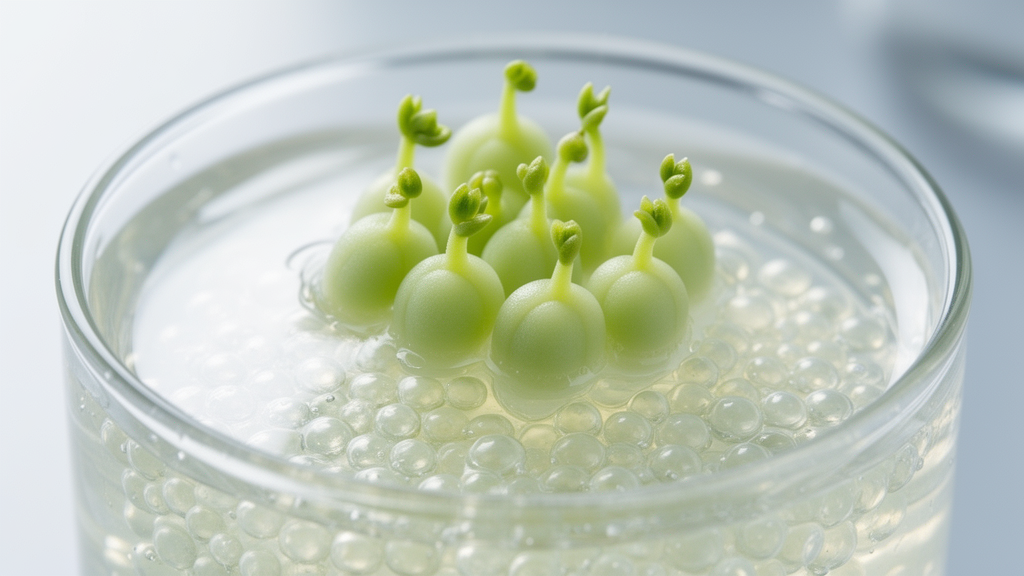
The experimental design utilized single-piece cotyledonary somatic embryos, designated as SPC explants, as the initial plant material. Regenerated multiple buds formed along the horizontal axis, referred to as RMBHA buds and derived via an organogenesis-like pathway, were collected as test samples to profile the expression of genes involved in starch hydrolysis, glycolysis, and the tricarboxylic acid cycle.
Gene expression profiling within the RMBHA versus SPC comparison revealed that key enzymes responsible for starch hydrolysis, including ISA3, α-AMYs, BAM3s, and AGIs, were significantly up-regulated in RMBHA buds. In contrast, essential glycolysis-related genes, including HXK1, PFKs, PKs, GPIs, GAPDHs, and PGK, showed up-regulation in the initial SPC explants, while tricarboxylic acid cycle genes, including CSs, IDH, α-KGDH, and FH1, displayed mixed differential expression patterns.
The study further contrasted the organogenesis-like regeneration approach with a seed-like germination approach using the same somatic embryo system. In the organogenesis-like pathway, researchers identified 13 starch hydrolysis-related differentially expressed genes and 18 up-regulated tricarboxylic acid cycle genes in somatic embryo cells, compared with 9 starch hydrolysis genes and 14 tricarboxylic acid cycle genes observed under the seed-like germination protocol.
These comparative results illustrate that although both developmental pathways share common energy metabolic features, specifically elevated starch hydrolysis activity in regenerated tissues paired with more active glycolysis in somatic embryo cells, the organogenesis-like pathway exhibits distinct operational demands. The researchers noted that the OR approach may be associated with a greater need for glucose mobilization and may rely on different carbon allocation strategies. Such differences possibly reflect the specialized energy and metabolic requirements necessary for multiple bud formation along the horizontal axis, providing evidence of metabolic flexibility when identical somatic embryos undergo distinct plantlet regeneration programs.
Subject of Research: Starch aerobic decomposition metabolism during plantlet regeneration from rose somatic embryos
Article Title: Expression patterns for starch metabolism during organogenesis-like plantlet regeneration from somatic embryos of Rosa hybrida ‘J. F. Kennedy’: insights from the seed-like germination approach
Article References: Ding, C., Hu, X., Kang, X., Weng, S., & Du, L. (2026). Expression patterns for starch metabolism during organogenesis-like plantlet regeneration from somatic embryos of Rosa hybrida ‘J. F. Kennedy’: insights from the seed-like germination approach. BMC Genomics. https://doi.org/10.1186/s12864-026-13534-9
Image Credits: AI Generated
DOI: 10.1186/s12864-026-13534-9
Keywords: Rosa hybrida, J. F. Kennedy, Somatic embryos, SPC explants, RMBHA buds, Organogenesis-like regeneration, Seed-like germination, Starch metabolism, Transcriptome sequencing, Starch hydrolysis, Glycolysis, TCA cycle, Differentially expressed genes, ISA3, α-AMYs, BAM3s, HXK1, Glucose mobilization
News Source: Juliet Wilcox. (November 12, 2026). Rose Somatic Embryos Shift Starch Metabolism Genes During Multiple Bud Regeneration. Scienmag.