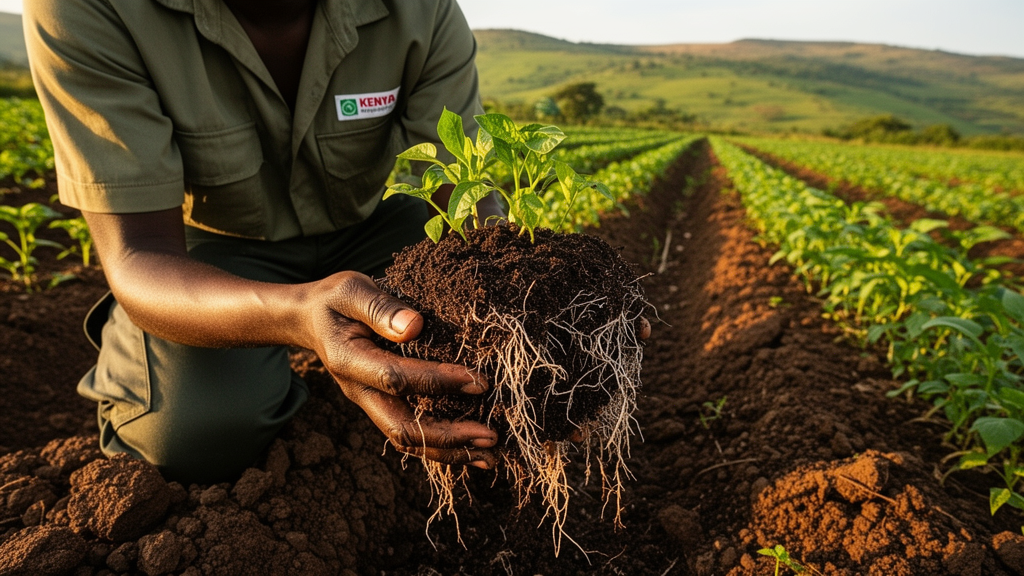
Published in the Annals of Microbiology, the study provides rare long-term evidence from Sub-Saharan Africa, showing that soil fungal diversity and community structure vary according to farming system type, input intensity, crop development stage, and specific site conditions. The work addresses a critical knowledge gap, as the responses of soil fungi to contrasting farming systems in tropical regions have remained insufficiently documented compared to bacterial communities.
The investigation was conducted within the Farming Systems Comparison in the Tropics (SysCom) trial, a long-term experiment established in 2007. The study focused on two distinct sites in the central highlands of Kenya: Chuka, a humid highland site, and Thika, a semi-arid site. These locations represent contrasting agroecological conditions, with Chuka situated in the Upper Midland 2 zone at an elevation of 1,458 meters and Thika in the Upper Midland 3 zone at 1,500 meters. Both sites experience bimodal rainfall patterns, but Chuka receives approximately 1,050 mm of annual rainfall, while Thika receives about 900 mm.
The experimental design evaluated four contrasting farming systems: conventional high input, conventional low input, organic high input, and organic low input. High-input systems represented commercial-scale production with supplemental irrigation, whereas low-input systems mimicked smallholder, rainfed agriculture. Over a period of more than 15 years, the researchers assessed soil fungal diversity and community composition after continuous management under these regimes. The trial utilized a randomized complete block design with four replications, and soil samples were collected across key crop growth stages in cereal- and potato-based rotations during the long and short rainy seasons of 2021.
To characterize the fungal communities, the team employed ITS-based Illumina MiSeq sequencing. Total environmental DNA was extracted from soil samples and analyzed using the DADA2 pipeline to infer amplicon sequence variants (ASVs). Taxonomic assignment was performed using the UNITE ITS database. Prior to diversity analyses, the sequence data were rarefied to an equal sequencing depth to account for uneven sequencing effort, with 17,500 reads per sample for Chuka and 32,300 reads per sample for Thika. This methodological approach allowed for robust comparisons of alpha and beta diversity, ordination, and exploratory differential abundance analyses.
While differences in alpha diversity were generally modest and context-dependent, clearer patterns emerged in community composition. Organic systems were frequently associated with higher relative abundances of specific taxa, including Mortierella, Purpureocillium, Beauveria, Serendipita, and Flammulina. In contrast, conventional systems were more often associated with taxa such as Fusidium, Cladosporium, Alternaria, and Wallemia. These compositional shifts suggest that long-term organic management influences the relative abundance of fungal taxa more strongly than overall diversity metrics.
Site-specific responses were a prominent feature of the findings. At the semi-arid Thika site, canonical correspondence analysis revealed significant associations between fungal community composition and soil chemical variables, particularly ammonium-nitrogen, available phosphorus, and pH. During the long rain season, these variables explained a constrained variance of 9.7%, with the first two canonical axes accounting for 17.30% and 10.98% of the constrained variation, respectively. However, at the humid Chuka site, none of the measured soil chemical variables were significantly associated with fungal community composition in either season. This contrast highlights that climatic and edaphic contexts jointly mediate the impact of management practices on fungal community assembly.
Temporal dynamics also played a crucial role in shaping fungal communities. Exploratory differential abundance analyses using LEfSe identified stage-associated shifts in the relative abundance of specific fungal taxa. At the Chuka site, genera such as Flammulina and Didymella showed enrichment at specific crop growth stages, while at Thika, a broader range of taxa, including Purpureocillium and Beauveria, exhibited variable enrichment across vegetative, reproductive, and maturity stages. These phenology-linked variations underscore the importance of crop development in modifying soil microenvironments and, consequently, fungal community structure.
The study also examined the dominance of specific fungal phyla across the different systems. Ascomycota consistently dominated the fungal communities, accounting for 40 to 80% of total sequences, followed by Basidiomycota, Chytridiomycota, and Mucoromycota. Organic systems generally showed higher proportions of Basidiomycota and Chytridiomycota, whereas Zoopagomycota was primarily detected in the conventional low-input system. These patterns reflect the ecological versatility of these phyla in agricultural soils and their response to different nutrient availability and management regimes.
Alpha diversity metrics, including observed richness, Shannon, and Simpson indices, varied among farming systems but with limited statistical significance. At the Chuka site, observed richness differed significantly among farming systems during the first season, with organic high-input systems showing higher values than conventional high-input systems. However, at the Thika site, no significant differences in alpha diversity were detected among farming systems in either season. This suggests that while management practices can influence fungal richness, the effects are often modest and highly dependent on the specific environmental context.
Beta diversity analyses revealed that fungal communities were primarily separated by site, with additional variation associated with farming system and crop growth stage. Principal coordinates analysis based on Bray-Curtis dissimilarity showed clear separation between the Chuka and Thika sites. Permutational multivariate analysis of variance indicated significant differences in fungal community composition among farming systems at Chuka in both seasons, but not at Thika. Conversely, significant differences among crop growth stages were detected at Thika during the first season, highlighting the complex interplay between management and phenology in different agroecological zones.
The researchers acknowledged several limitations in their study design. The pooling of soil samples for sequencing constrained the assessment of within-plot variability and limited statistical inference at the replicate level. This approach was necessary to generate representative system-level profiles under the resource constraints typical of tropical field research. Consequently, the observed patterns should be interpreted as indicative of system-level trends rather than precise treatment effects. Despite these limitations, the study provides valuable insights into the long-term effects of diversified nutrient management on soil fungal communities.
Overall, the findings underscore the importance of long-term, context-aware research for understanding how agricultural practices influence soil health in tropical regions. The study demonstrates that soil fungal community composition is not static but is dynamically shaped by the interaction of management intensity, crop development, and site-specific environmental conditions. These results have implications for sustainable agricultural practices, suggesting that diversified organic input management may support distinct fungal community patterns that are crucial for ecosystem functioning in tropical agroecosystems.
The research was published in the Annals of Microbiology in April 2026. The mean annual temperature at both locations is approximately 20 degrees Celsius, ranging from 15 to 27 degrees Celsius.
Nutrient management was calibrated to supply comparable nitrogen and phosphorus levels within each input category. In the conventional low-input system, decomposed farmyard manure was supplemented with diammonium phosphate at 50 kg per hectare during the long rains and 100 kg per hectare during the short rains. This supplied 45 kg of nitrogen and 27 kg of phosphorus per hectare during the long rains, and 45 kg of nitrogen and 50 kg of phosphorus per hectare during the short rains. The organic low-input system replaced synthetic fertilizers with decomposed farmyard manure, Tithonia diversifolia mulch, and rock phosphate applied at 100 kg per hectare during the long rains and 200 kg per hectare during the short rains.
The conventional high-input system received decomposed farmyard manure plus 200 kg per hectare of diammonium phosphate and 100 kg per hectare of calcium ammonium nitrate during the long rains. During the short rains, this system received 300 kg per hectare of triple super phosphate with 200 kg per hectare of calcium ammonium nitrate. These applications supplied 113 kg of nitrogen and 60 kg of phosphorus per hectare during the long rains, and 90 kg of nitrogen and 100 kg of phosphorus per hectare during the short rains. The organic high-input system used compost derived from the same farmyard manure quantities as the conventional high-input system, supplemented with Tithonia diversifolia mulch and rock phosphate at 364 kg per hectare during the long rains and 581 kg per hectare during the short rains.
Crop rotations were tailored to the input levels and local farming practices. In the high-input systems, the rotation consisted of baby corn intercropped with greenleaf desmodium during the long rains, followed by potato intercropped with Dolichos beans and desmodium during the short rains. In the low-input systems, maize intercropped with common bean was grown during the long rains, while potato intercropped with Dolichos beans was cultivated during the short rains. Pest and disease management was guided by bi-weekly scouting. Conventional systems used synthetic pesticides and fungicides, whereas organic systems relied on certified biological products available locally.
Subject of Research: Long-term farming systems shape soil fungal diversity and community structure in Kenyan tropical agroecosystems
Article Title: Long-term farming systems shape soil fungal diversity and community structure in Kenyan tropical agroecosystems
Article References: Muriuki, S. W., Mugweru, J., Kambura, A., Mwangi, K., Bautze, D., Dubois, T., Matheri, F., Mwangi, E., Mwende, N., Ngetha, E., & Karanja, E. N. (2026). Long-term farming systems shape soil fungal diversity and community structure in Kenyan tropical agroecosystems. Annals of Microbiology, 76(1), Article 28. https://doi.org/10.1186/s13213-026-01852-y
Image Credits: AI Generated
DOI: 10.1186/s13213-026-01852-y
Keywords: Long-term, farming, systems, shape, soil, fungal, diversity, community, structure, Kenyan, tropical, agroecosystems
News Source: Drew Townsend. (November 12, 2026). Farming Systems Shape Soil Fungal Communities in Kenya. Scienmag.