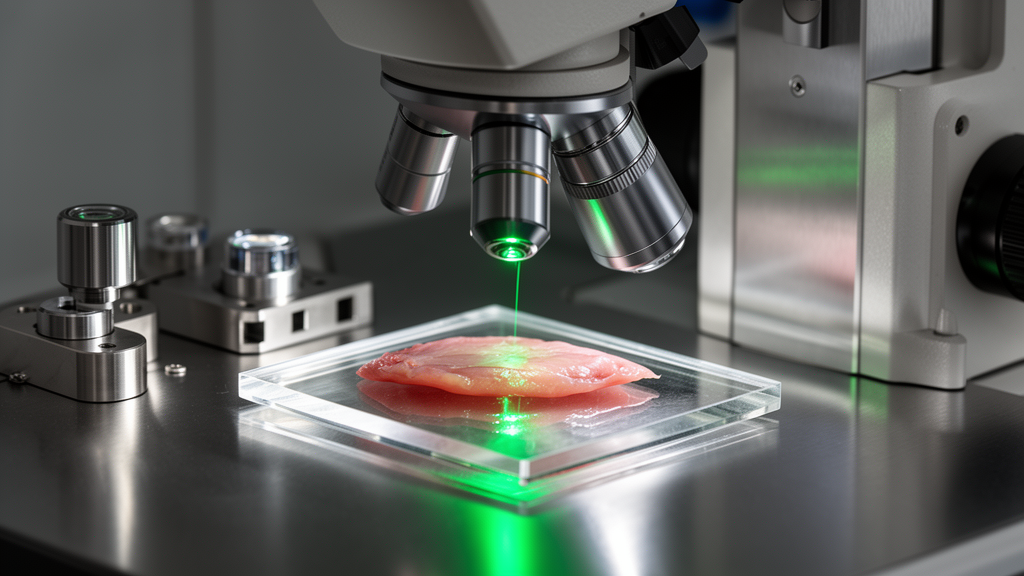
Using transvaginal optical measurements in pregnant mouse models, researchers demonstrated that in vivo Raman spectroscopy tracks dynamic cervical biochemical remodeling to distinguish preterm from term labor with 85.6 percent classification accuracy. Preterm birth, defined as delivery prior to 37 weeks of gestation, affected an estimated 13.4 million pregnancies globally in 2020, representing approximately 4 to 16 percent of births while accounting for 16 percent of pediatric deaths under five and 35 percent of neonatal mortality. Current clinical assessments, including Bishop scoring, cervical length ultrasound, and fetal fibronectin testing, suffer from predictive variability and detect at-risk pregnancies only roughly 50 percent of the time. The cervix functions during pregnancy as a mechanical barrier retaining the fetus, undergoing overlapping remodeling phases comprising softening, ripening, dilation, and postpartum repair. Because molecular alterations in extracellular matrix proteins, lipids, and glycans arise well before structural shortening or softening becomes detectable by physical examination, optical interrogation of molecular bond vibrations offers an objective method for identifying high-risk remodeling pathways before structural failure.
To evaluate whether distinct etiologies of premature labor induce measurable biochemical signatures, investigators examined adult CD-1 wild-type mice across four experimental cohorts under approved animal care protocols. Preterm labor was induced on gestation day 15 using either an intraperitoneal injection of 100 micrograms of lipopolysaccharide to simulate infection-driven inflammation or a subcutaneous injection of 150 micrograms of mifepristone, known as RU486, to trigger progesterone withdrawal. These cohorts were compared against untreated control mice delivering at term on day 19 and negative-control mice receiving phosphate-buffered saline on day 15. Mice exposed to lipopolysaccharide initiated labor within approximately 8 hours post-injection and delivered at a mean time of 11.7 hours, whereas mifepristone-treated animals entered labor around 16 hours and delivered at a mean of 22.3 hours post-treatment. While past inquiries into preterm birth biology relied almost exclusively on post-mortem excised tissues, this comparative experimental design enabled serial, non-destructive optical monitoring across live animals throughout labor progression.
Real-time cervical spectral acquisition was achieved through a custom-engineered transvaginal fiber-optic Raman probe coupled to a portable spectroscopy system comprising a 785-nanometer diode laser, an f/1.8i spectrograph, and a charge-coupled device camera. The probe measured approximately 2.1 millimeters in diameter, incorporating a central optical delivery fiber encircled by seven peripheral collection fibers and capped with a 2-millimeter sapphire ball lens. Optical modeling confirmed that the sapphire ball lens produced compact focal convergence within shallow tissue, yielding an ectocervical penetration depth of approximately 500 micrometers. This specific optical geometry allowed selective interrogation of cervical epithelium and stroma while eliminating spurious fluorescence and Raman scattering from adjacent pelvic adipose tissue that compromised earlier animal probes. During measurements under isoflurane anesthesia, animals were positioned with a speculum tube after saline lavage, and spectral measurements were gathered across 12, 3, 6, and 9 o’clock ectocervical positions using 80 milliwatts of laser power and five-second integration intervals every two hours until delivery.
To isolate true vibrational signatures from experimental noise and baseline shifts, raw Raman spectra underwent systematic processing prior to ratiometric and multivariate modeling. System wavenumber calibration was established using reference emission lines of neon-argon alongside chemical fingerprint spectra from naphthalene and acetaminophen, while absolute spectral response was standardized using a calibrated tungsten lamp. Approximately 10 to 15 percent of acquired spectra were discarded due to ambient room-light contamination or excessive adipose tissue artifacts. The surviving spectral datasets were smoothed with a Savitzky-Golay filter, baseline-corrected for autofluorescence via asymmetric least squares baseline subtraction with lambda equal to 6 and p equal to 0.00005, and normalized across the full wavenumber range using standard normal variate scaling. Longitudinal trajectories of specific Raman band intensity ratios were modeled using restricted cubic spline regression featuring three knots, with temporal rate differences between treatment cohorts statistically evaluated through analysis of variance with significance set at p less than 0.05.
Monitoring the spectral intensity ratio of 817 reciprocal centimeters to 855 reciprocal centimeters revealed profound conformational shifts in extracellular matrix proteins that segregated both preterm labor groups from term controls. The vibrational band at 817 reciprocal centimeters corresponds to the carbon-carbon skeletal backbone stretching mode of structural proteins, whereas the 855 reciprocal centimeters band reflects total protein content, assigned to the tyrosine Fermi doublet, proline side chains, and aromatic deformations. In both lipopolysaccharide and mifepristone cohorts, the 817-to-855 ratio decreased steeply over the course of labor, a trajectory entirely absent in quiescent day-15 control mice. This progressive spectral decrease reflects protein backbone strain and molecular kink straightening as premature cervical tissue experiences high tensile loading under early uterine contractions. Complementary ex vivo biomechanical stress-relaxation testing performed in an organ bath system corroborated these optical observations, demonstrating that total cervical dilation at mechanical failure in both preterm cohorts increased dramatically to catch up with full-term day-19 dimensions.
Although both preterm models exhibited matrix strain, the vibrational ratio of 1251 reciprocal centimeters to 1657 reciprocal centimeters uncovered distinct structural deterioration unique to progesterone withdrawal. The 1657 reciprocal centimeters band arises primarily from carbonyl stretching in the amide I mode, while the 1251 reciprocal centimeters band represents coupled nitrogen-hydrogen bending and carbon-nitrogen stretching in the amide III configuration of fibrillar collagen. This amide III-to-I ratio declined significantly only in mifepristone-treated mice, reflecting rupture of inter-chain hydrogen bonds between adjacent collagen triple helices and severe secondary structural disorganization. Biomechanical testing confirmed this etiology-specific degradation, revealing that mifepristone-treated cervices exhibited the lowest equilibrium stiffness and stored significantly less equilibrium elastic energy before permanent deformation compared with normal term tissue. Multiphoton ex vivo microscopy verified these findings, as second-harmonic generation imaging showed fragmented, clumped collagen fibrils with enlarged pores, while two-photon excited fluorescence revealed a substantial loss of subepithelial elastin fiber density.
Vascular perfusion and lipid-mediated signaling dynamics were simultaneously captured by evaluating characteristic optical peaks at 1209, 1275, 1301, and 1545 reciprocal centimeters. The intensity ratio of the 1209 reciprocal centimeters hemoglobin peak normalized against the stable 1275 reciprocal centimeters reference band, alongside independent monitoring of the 1545 reciprocal centimeters blood marker, demonstrated rapid vascular signal expansion in both preterm models that reached term delivery magnitudes. In lipopolysaccharide-treated animals, cervical hemoglobin signals surged within five hours of administration, consistent with acute inflammatory vasodilation mediated by cyclooxygenase-2 upregulation. Concurrently, the 1301-to-1275 reciprocal centimeters ratio, which tracks vibrational modes of lipids, prostaglandin E2, and related eicosanoid precursors, rose substantially across all three active labor groups relative to day-15 controls. Crucially, term mice displayed stable 1301 reciprocal centimeters lipid signatures between gestation days 15 and 19 before experiencing an abrupt surge exclusively during active labor, matching the known transcriptional timing of cyclooxygenase isoforms during spontaneous parturition.
Optical tracking of cervical glycans and nucleic acids challenged the conventional scientific hypothesis that progesterone withdrawal simply accelerates the standard physiological sequence of term ripening. The carbohydrate-specific band at 884 reciprocal centimeters, corresponding to skeletal carbon-oxygen-carbon stretching and carbon-hydrogen deformations of glycosaminoglycans and mucins, increased progressively only in lipopolysaccharide-induced labor, matching high carbohydrate levels observed at term. Conversely, mifepristone-treated mice showed a downward trend in the 884-to-1275 ratio, an unexpected finding validated by Alcian blue-periodic acid-Schiff histological staining that demonstrated significantly lower epithelial carbohydrate indices than term specimens. Furthermore, the 1574-to-1654 reciprocal centimeters ratio, representing cellular nucleic acids relative to structural proteins, declined markedly in both term and mifepristone-treated cervices approaching delivery. Ex vivo DAPI nuclear area quantification confirmed this loss of cellular density, which reflects extensive cervical tissue hydration, stromal swelling, and extracellular space expansion that dilutes local cell concentrations as tissues ripen.
To synthesize multiple simultaneous molecular alterations into a unified predictive framework, researchers constructed a multivariate linear discriminant analysis model guided by principal component analysis dimensionality reduction. Nineteen diagnostic Raman bands across the fingerprint region—specifically 817, 855, 877, 884, 961, 1080, 1160, 1209, 1251, 1275, 1301, 1321, 1367, 1402, 1447, 1521, 1545, 1574, and 1654 reciprocal centimeters—were integrated into the statistical model. Principal components capturing approximately 95 percent of the cumulative data variance were selected for discriminant analysis, and model robustness was validated using an iterative ten-fold cross-validation scheme reserving ten percent of data per validation fold. In three-dimensional discriminant space, term labor, inflammation-induced preterm labor, and progesterone withdrawal-induced preterm labor formed distinct clusters with minimal class overlap. The multivariate classifier achieved an overall classification accuracy of 85.6 percent, confirming that different underlying triggers of labor establish unique, identifiable trajectories of biochemical remodeling rather than converging onto an identical molecular endpoint.
While demonstrating the diagnostic capability of in vivo optical biopsy, the investigators emphasized several technical boundaries and future translational prerequisites. Murine optical measurements remain vulnerable to surface optical interference from physiological mucus, microvascular blood pooling, and variable probe contact pressure, limitations that researchers propose mitigating through real-time spectral quality-control algorithms and integrated white-light imaging. Furthermore, static ex vivo histological and biomechanical evaluations of cryosectioned tissues cannot reproduce dynamic in vivo physiological parameters such as vascular compliance and pulsed blood flow, highlighting the value of emerging multimodal tools like probe-based second-harmonic generation and Doppler ultrasound. Because clinical studies have already established the safety of transvaginal Raman fiber-optic probes in more than 90 pregnant women without adverse events, future human translational investigations can leverage these murine spectral markers. Pairing non-invasive vibrational spectroscopy with established clinical tests, including cervical length ultrasonography and fetal fibronectin screening, offers a viable pathway toward earlier etiologic stratification and targeted therapeutic interventions for premature labor.
Subject of Research: In vivo Raman spectroscopic monitoring of cervical remodeling during labor
Article Title: Biochemical basis of cervical remodeling in preterm and term labor revealed by Raman spectroscopy
Article References: Gautam, R., O'Brien, C. M., Haugen, E. J., Rogers, J. H., Butler, L. E., Bateman, J. N., Rourke‐Funderburg, A. S., Boatwright, N., Adams, W. R., Thomas, G., Reese, J., Herington, J. L., & Mahadevan‐Jansen, A. (2026). Biochemical basis of cervical remodeling in preterm and term labor revealed by Raman spectroscopy. Bioengineering & Translational Medicine, Article e70193. https://doi.org/10.1002/btm2.70193
Image Credits: AI Generated
DOI: 10.1002/btm2.70193
Keywords: Raman spectroscopy, cervical remodeling, preterm labor, term labor, lipopolysaccharide, mifepristone, extracellular matrix, collagen integrity, elastin fibers, biomechanical testing, second-harmonic generation, linear discriminant analysis, prostaglandin E2, glycosaminoglycans, ball lens optical probe, tissue hydration, transvaginal optical sensing
News Source: Gregory Coleman. (November 12, 2026). Raman Spectroscopy Distinguishes Preterm from Term Labor Pathways in Mice. Scienmag.