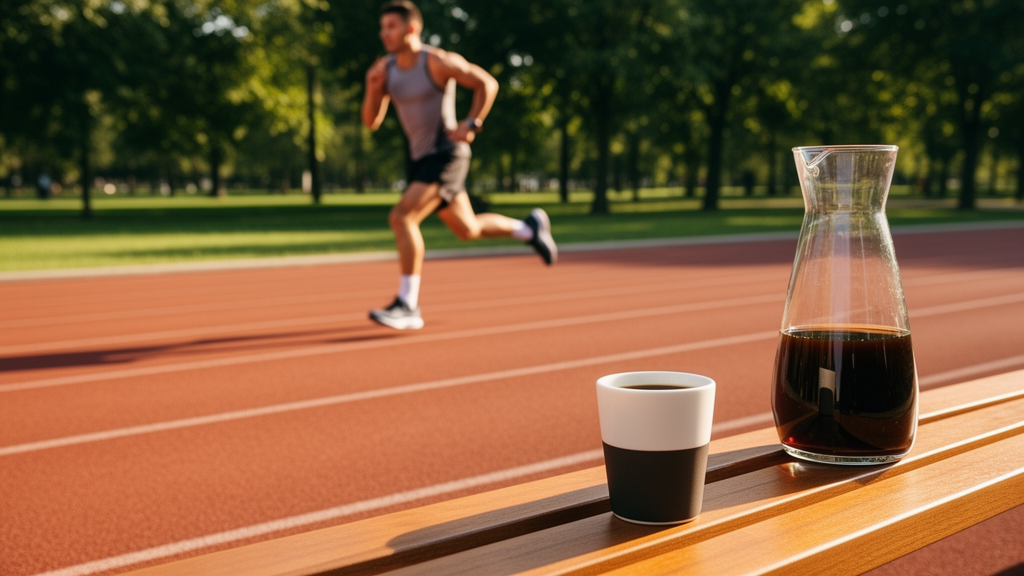
A single standard serving of Arabica coffee or caffeine-free chicory coffee consumed before vigorous exercise failed to provide an acute advantage in running endurance, perceived exertion, or overall cardiovascular and metabolic responses among healthy young male adults, according to a controlled crossover study conducted by researchers at Haliç University in Istanbul. In athletic and sports nutrition contexts, caffeinated beverages are frequently ingested before physical training under the widespread expectation that acute stimulant exposure will reliably improve endurance, fat utilization, and work output. However, established ergogenic benefits documented across previous exercise literature are predominantly observed at elevated dosages of three to six milligrams of caffeine per kilogram of body weight, which substantially exceed the chemical concentration found in a typical domestic cup. By evaluating a single standard serving designed to mimic routine morning consumption rather than an aggressive laboratory supplementation regimen, the investigators demonstrated that customary pre-exercise beverage volumes do not generate measurable performance enhancements during demanding shuttle running.
The investigation was designed to address an ongoing gap in physiological knowledge regarding how traditional roasted Arabica coffee compares directly with plant-based botanical coffee substitutes under standardized acute exercise conditions. Roasted Arabica coffee contains a complex matrix of caffeine, chlorogenic acids, and various dietary polyphenols that have been studied for their regulatory actions in glucose transport, lipid handling, adipocyte physiology, and oxidative stress pathways. Concurrently, public demand for caffeine-free alternatives has led to expanded interest in chicory root, derived from Cichorium intybus, which possesses a contrasting bioactive profile rich in inulin, sesquiterpene lactones, flavonoids, chicoric acid, and caffeoylquinic acid derivatives. While previous exploratory research had indicated that chicoric acid and related compounds could influence glucose regulation, cellular inflammatory signaling, and recovery after exhaustive bouts, comparative human trials examining both beverages against a non-consumption baseline during identical maximal running protocols remained exceptionally scarce in sports physiology.
To evaluate these comparative acute responses, the research team recruited voluntary male university students aged eighteen to twenty-five years who were screened using the Physical Activity Readiness Questionnaire for Everyone. Out of thirty volunteers evaluated, eight individuals were formally excluded due to medical contraindications such as cardiovascular disease, chest pain, recent syncope, active musculoskeletal conditions, or metabolic disorders that could compromise physical safety during exhaustive testing. The final experimental cohort comprised twenty-two moderately active young men with a mean age of 21.34 years, an average baseline body mass of 79.93 kilograms, and a mean body mass index of 25.80 kilograms per square meter. Physical activity status was verified using metabolic-equivalent criteria, confirming that all participants maintained moderate habitual conditioning. Anthropometric markers remained stable across the entire trial duration, ensuring that individual body composition shifts did not confound repeated measurements taken during subsequent visits.
The experimental protocol was conducted as a single-blind, controlled crossover trial under strictly regulated morning conditions between January and September 2024 at the university sports laboratory. One week prior to experimental testing, every participant completed a comprehensive one-hour familiarization session involving both theoretical instruction and practical rehearsal of the progressive twenty-meter shuttle-run test to minimize procedural learning curves. All participants completed an initial fixed reference session without coffee consumption to establish baseline physiological responses, after which they were randomized in a balanced order to receive either Arabica coffee first or chicory coffee first before crossing over to the alternate condition. A standardized three-day washout period separated every testing visit to ensure complete metabolic clearance of caffeine and adequate physical recovery from preceding exhaustive exertion. Fasting for at least eight hours was enforced before each morning visit, and twenty-four-hour dietary records were monitored to ensure participants maintained consistent nutrition while abstaining from extra caffeine.
During the active intervention visits, participants consumed a standardized 180-milliliter warm beverage exactly forty-five minutes before commencing the shuttle-run evaluation. Chicory coffee was prepared using twenty grams of roasted chicory root per 180-milliliter serving according to manufacturer specifications, while the Arabica beverage was prepared to represent a standard single cup, yielding an estimated caffeine exposure of approximately eighty to one hundred milligrams based on reference composition data. The investigators intentionally utilized this moderate single-serving volume to preserve practical ecological relevance to ordinary dietary habits and prevent the gastrointestinal discomfort often provoked by concentrated caffeine solutions, rather than administering a pharmacologically optimized weight-relative dose. The multi-stage twenty-meter shuttle run took place on a flat, non-slip indoor track marked by boundary cones, with running speeds paced by calibrated acoustic signals until a runner twice failed to cross the designated line, allowing direct calculation of total completed laps and estimated maximal oxygen uptake.
The primary athletic performance metrics demonstrated that neither coffee formulation produced a statistically significant advantage over the control condition or over each other. Participants completed an average of 54.20 laps during the control trial, 59.40 laps following Arabica coffee consumption, and 56.40 laps following chicory coffee consumption, reflecting small numerical variations that yielded a non-significant repeated-measures analysis of variance result with an F-statistic of 1.006 and a p-value of 0.372. Subjective exertion, quantified immediately upon exercise termination via the ten-point Borg rating scale, produced similar average scores of 7.90 in the control condition, 8.20 after Arabica coffee, and 8.20 after chicory coffee, which did not differ significantly under non-parametric testing. Furthermore, estimated maximal oxygen uptake values were essentially indistinguishable across conditions, registering at 38.60 milliliters per kilogram per minute for control, 39.10 for Arabica, and 38.70 for chicory, showing that standard single servings did not augment maximal functional output.
The cardiovascular and metabolic parameters assessed throughout the testing sessions were heavily dominated by the vigorous physical exertion itself rather than by pre-exercise beverage ingestion. Heart rate escalated from pre-exercise baseline values between 78.2 and 83.7 beats per minute up to peak post-exercise values between 165.8 and 182.9 beats per minute across all three conditions, followed by typical deceleration to approximately 119 to 121 beats per minute after five minutes of passive seated recovery. Systolic blood pressure increased significantly from pre- to post-exercise in all arms, rising to 129.9 millimeters of mercury in control, 130.9 after Arabica, and 121.1 after chicory, whereas diastolic blood pressure remained statistically stable. Blood lactate concentrations rose sharply from resting levels below 4.1 millimoles per liter to recovery concentrations exceeding 13.4 millimoles per liter in all groups, reflecting high anaerobic demands. Crucially, two-way repeated-measures analysis of variance revealed no significant condition-by-time interactions for heart rate, blood pressure, blood lactate, peripheral oxygen saturation, or capillary glucose, indicating that beverage choice did not alter acute cardiovascular stress.
Biochemical evaluation of venous blood collected within five minutes following the completion of the shuttle run provided nuanced findings regarding circulating metabolic and inflammatory proteins. Plasma concentrations of lipoprotein lipase, tumor necrosis factor-alpha, interleukin-6, and adiponectin were quantified in duplicate using commercially available sandwich enzyme-linked immunosorbent assay kits. A multivariate analysis encompassing the full four-biomarker panel revealed an overall statistical trend across conditions, represented by a Pillai trace of 0.209 and a p-value of 0.087, without achieving conventional significance. Subsequent univariate testing identified a statistically significant overall condition effect solely for post-exercise lipoprotein lipase protein concentrations, which registered at 27.72 nanograms per milliliter following chicory coffee, 19.08 nanograms per milliliter after Arabica coffee, and 17.52 nanograms per milliliter in the control session. However, post-hoc pairwise comparison between Arabica and chicory coffee using Bonferroni correction yielded an adjusted p-value of 0.061, remaining slightly above the conventional significance threshold.
The inflammatory cytokine analyses similarly demonstrated subtle patterns that fell short of definitive experimental shifts. Circulating interleukin-6 concentrations exhibited a non-significant statistical trend across conditions, averaging 38.03 picograms per milliliter after chicory coffee compared to 47.58 picograms per milliliter after Arabica and 97.82 picograms per milliliter in the control session, with an overall p-value of 0.094; however, the pairwise comparison between control and chicory was not statistically significant at a p-value of 0.140. In parallel, tumor necrosis factor-alpha concentrations showed no significant differences among conditions, averaging 50.25 picograms per milliliter for control, 32.75 for Arabica, and 30.25 for chicory. Circulating adiponectin concentrations remained steady at 7.03 micrograms per milliliter in both control and Arabica trials and 6.28 micrograms per milliliter after chicory, showing no beverage-related modulation. The authors emphasized that because interleukin-6 functions as an exercise-induced myokine involved in muscular energy signaling, lower post-exercise concentrations should not be reflexively categorized as therapeutic anti-inflammatory suppression.
The study authors highlighted several methodological boundaries that must contextualize the clinical interpretation of their results. The sample was restricted exclusively to twenty-two moderately active young adult males, preventing direct generalization of the findings to female athletes, older populations, highly trained endurance competitors, sedentary adults, or clinical cohorts with preexisting metabolic conditions. Additionally, caffeine and polyphenol contents in the administered Arabica beverage were estimated from published reference values rather than quantified through direct laboratory chromatography, and the enzyme-linked immunosorbent assay measured circulating lipoprotein lipase protein mass rather than actual catalytic enzyme cleavage activity or direct systemic lipid oxidation. Because the control session was consistently administered first, potential sequence or habituation effects could not be entirely excluded despite the preliminary familiarization session. The authors concluded that while single servings of Arabica or chicory coffee do not acutely enhance exercise capacity, the observed variations in post-exercise biomarker profiles warrant further investigation in larger crossover cohorts utilizing repeated blood sampling and direct metabolic gas analysis.
Subject of Research: Acute physiological and exercise performance effects of Arabica and chicory coffee in young adults
Article Title: Acute effects of arabica and chicory coffee on exercise performance and post‐exercise biomarkers in young male adults: A controlled crossover study
Article References: Özcan, F. Ö., Okudu, C., Odabaş, H. İ., & Turan, İ. T. (2026). Acute effects of arabica and chicory coffee on exercise performance and post‐exercise biomarkers in young male adults: A controlled crossover study. Physiological Reports, 14(21), Article e71200. https://doi.org/10.14814/phy2.71200
Image Credits: AI Generated
DOI: 10.14814/phy2.71200
Keywords: Arabica coffee, chicory coffee, caffeine, exercise performance, shuttle-run test, crossover trial, cardiometabolic response, lipoprotein lipase, interleukin-6, blood lactate, blood glucose, perceived exertion, estimated VO2max, Haliç University, sports nutrition, Cichorium intybus, biomarkers
News Source: Drew Townsend. (November 12, 2026). Single Serving of Arabica or Chicory Coffee Does Not Alter Running Performance. Scienmag.