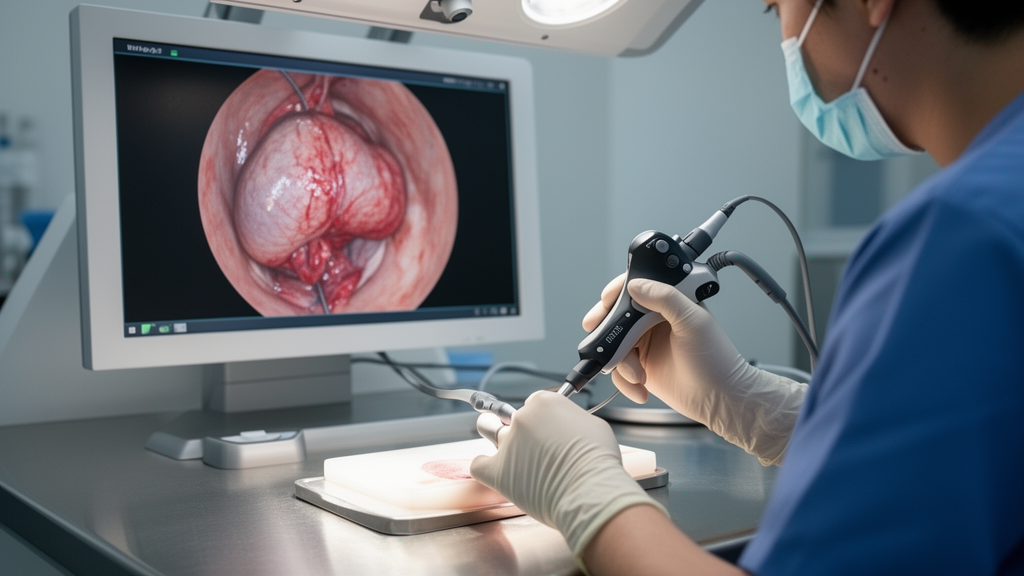
A newly published controlled study indicates that healthy chronological aging significantly alters individual performance across basic surgical motor tasks evaluated within an interactive visuo-haptic virtual environment. Conducted by researchers in Advances in Simulation, the trial demonstrated that younger participants systematically outperformed older adults across three standardized virtual surgical exercises consisting of tissue incision, obstacle dexterity navigation, and procedural suturing. While surgical competency demands complex cognitive judgment, spatial awareness, and manual mechanics, fine motor control naturally declines over the lifespan due to progressive neuromuscular changes. By isolating and quantifying kinematic metrics through force-feedback simulation, the investigators established that younger subjects demonstrated greater cutting efficiency, committed fewer navigational collisions, and completed wound closure maneuvers with substantially greater speed. Simultaneously, the trial recorded measurable learning capacities across both cohorts, indicating that while aging introduces psychomotor constraints, deliberate practice enables older adults to achieve notable kinematic refinements.
The clinical rationale driving this research stems from a persistent challenge in healthcare governance: the absence of standardized, objective frameworks to measure age-related variations in surgical skill and residual psychomotor proficiency. Historically, evaluations of senior surgeons have relied upon retrospective complication rates, peer assessments, or general physical and cognitive tests that do not directly measure technical execution. Quantifying technical performance inside operating rooms remains difficult because surgical procedures exhibit wide situational variability and would require attaching specialized sensors to surgeons and operating tables. Simulation-based assessment addresses these barriers by offering a safe, reproducible environment capable of gathering granular kinematic data without placing human patients at risk. Although simulation tools have gained wide acceptance for certifying trainees and evaluating medical students, their deployment as objective instruments for quantifying the physiological impacts of aging among surgeons has remained unexplored. By deploying specialized force-feedback engineering, the authors sought to establish baseline kinematic benchmarks that distinguish age-related psychomotor slowing from surgical competence.
To evaluate these motor dynamics across adulthood, investigators recruited thirty-nine participants divided into two non-overlapping age groups. The younger cohort comprised twenty participants aged twenty to forty years (mean age 29.6 ± 5.4 years, twelve female, two left-handed). The older adult group encompassed nineteen participants aged fifty to seventy years (mean age 59.8 ± 5.2 years, ten female, four left-handed). These contrasting brackets were chosen to maximize separation between groups, representing stable motor performance versus individuals approaching typical surgical retirement ages. Crucially, the protocol did not restrict recruitment to medical professionals, as the primary objective was to observe the biological influence of chronological aging on fundamental manual dexterity rather than formal surgical training. Nevertheless, five individuals in the younger group and seven in the older cohort possessed over three years of active surgical experience, allowing researchers to evaluate performance across varied clinical backgrounds.
The experimental apparatus integrated specialized haptic robotics with open-source biomechanical modeling software to reproduce the tactile sensations of soft tissue manipulation. Tactile interaction was mediated through the Geomagic Touch, a robotic device manufactured by 3D Systems that delivers real-time three-dimensional force feedback to the operator’s hand during virtual object interaction. The virtual environment was developed within the SOFA framework version 20.12.02, using two core extensions: the Geomagic plugin to interface real-time force feedback with the robotic stylus, and the SofaPython3 module to script simulation parameters. Individual experimental sessions lasted approximately forty minutes under direct supervision. Before testing, participants completed a demographic questionnaire and the validated Edinburgh Handedness Questionnaire to assess hand preference. Subsequently, each subject completed a familiarization session involving three guided exercises: following a line, touching a cube, and pressing a sphere. This ensured all participants felt comfortable with 3D navigation and haptic feedback without providing experimental task feedback that could bias outcomes.
The experimental protocol required participants to execute multiple repetitions of three standardized surgical tasks targeting core technical abilities: incision, dexterity, and suturing. The incision task required subjects to cut along an eleven-centimeter path marked across two adjacent virtual skin patches measuring seven by eleven by 1.5 centimeters. The top layers were connected by invisible spring force fields across eight localized regions of interest measuring 0.7 by 1.5 by two centimeters, which ruptured upon scalpel contact to simulate tissue separation across three patch orientations. The dexterity task, an adapted needle threading exercise, required moving a capsule-shaped end-effector through four suspended toroid rings positioned 1.5 centimeters above two skin patches measuring ten by sixteen by 2.5 centimeters. Collisions turned toroids red, providing visual error feedback across six repetitions. Finally, the suture task required connecting parallel skin patches by piercing four red spherical targets with a virtual suture needle. Correct entries generated elastic force springs that simulated tissue pull and wound closure across eight suture trials.
Kinematic data recorded at thirty hertz revealed clear behavioral differences during the linear incision exercise. Participants required an overall average duration of 8.8 ± 0.8 seconds per repetition, showing no significant difference between the younger cohort (8.3 ± 1.3 seconds) and older cohort (9.4 ± 0.9 seconds), nor duration improvement with practice. However, younger individuals cut significantly more tissue along the eleven-centimeter line, severing 9.6 ± 0.2 centimeters compared to 8.6 ± 0.3 centimeters among older adults (p = .015, d = 0.85). Furthermore, while both groups showed slight gains with practice, only younger participants achieved statistically significant cut length improvements (p = .017). Cutting depth and 3D pathlength revealed no significant group differences, but pathlength decreased with practice partially in younger subjects (p = 0.040 uncorrected) and significantly in older adults (p = .009). By the final trial, older adults achieved a pathlength significantly lower than younger participants’ baseline performance (p = 0.022, d = -0.92), matching younger participants’ spatial economy.
The dexterity threading task highlighted distinct contrasts in precision and hand-eye coordination between younger and older participants. When navigating the capsule end-effector through the four toroid obstacles across six repetitions, younger participants made significantly fewer collision errors than older adults (p = 0.001). Across the maximum possible error ceiling of twenty-four collisions, younger subjects maintained higher accuracy while exhibiting significantly shorter total 3D pathlengths (p = 0.032). Furthermore, younger participants displayed significantly lower trial-to-trial pathlength variability (p = 0.008), indicating that their movements remained more consistent across successive attempts. In contrast, neither average depth along the vertical z-position nor overall task completion time differed significantly between the two age groups. These findings suggest that while older individuals performed the task at an equivalent operational pace, they experienced greater positional dispersion and trajectory fluctuations in the absence of physical guides, leading to increased obstacle contacts and higher movement variability during fine motor navigation.
In the procedural suturing task, performance differences manifested through operational speed and movement economy. Younger participants demonstrated markedly superior execution velocity, completing individual suture trials in a mean time of 3.2 ± 0.2 seconds compared to 4.4 ± 0.3 seconds among older adults (p = .005, d = -1.03). Younger individuals also navigated the needle holder along a significantly shorter total trajectory, registering a mean 3D pathlength of 71.8 ± 5.7 centimeters versus 88.2 ± 4.8 centimeters recorded for older adults (p = .042, d = -0.69). Practice across the eight sequential suture trials further highlighted adaptation patterns: younger participants became significantly faster with practice (p = .010, d = -0.72). Conversely, while older adults displayed higher trial-to-trial variability, data trends showed that their execution time steadily decreased across repetitions. By the final suture trial, execution duration was comparable between both age groups, confirming that repetitive practice helps older individuals refine execution speed in multi-step manual procedures.
Subjective evaluations gathered after task completion revealed that perceived usability and workload remained equivalent across both demographic groups despite objective performance disparities. The Short-User Experience Questionnaire demonstrated that both young and older participants awarded the visuo-haptic simulator positive usability ratings, exceeding five out of seven points across pragmatic and hedonic dimensions. This uniformity indicated that older participants found the interface efficient, clear, and stimulating, without suffering from disorientation or technology bias. In parallel, analysis of the NASA Task Load Index documented moderate overall workload across all six evaluated dimensions, with group mean scores ranging between 26 and 56 out of 100. Mental demand and perceived effort registered the highest ratings among participants, whereas temporal demand and frustration received the lowest scores. These psychometric findings substantiate the practical feasibility of deploying visuo-haptic virtual environments across broad age spectrums, confirming that observed motor differences reflect genuine neuromuscular factors rather than digital unfamiliarity, interface intimidation, or adverse affective reactions.
Interpreting these experimental findings, the authors connected performance differences to established neurobiological mechanisms of aging, including neuromuscular degeneration, nervous system structural alterations, and diminished proprioceptive processing that impair coordination and increase movement variability. Slower execution and cautious approaches in older adults may further influence pathlength and collision rates in complex motor tasks. Crucially, the authors emphasized study limitations: the protocol analyzed isolated fundamental tasks rather than complex procedural simulations, did not stratify findings by surgical experience, and enrolled broad age cohorts (20–40 and 50–70 years) that might obscure the exact onset of motor decline. Additionally, manual hobbies such as musicianship or gaming were unrecorded. Future research must establish construct, concurrent, and predictive validity across realistic clinical procedures and longitudinal cohorts. Ultimately, the authors conclude that visuo-haptic simulators should not serve as punitive screening tools, but rather as objective educational platforms to detect skill changes early and implement personalized retraining programs that sustain surgical proficiency.
Subject of Research: Age-related performance differences in basic surgical skills assessed through visuo-haptic simulation
Article Title: Performance using a visuo-haptic surgical simulator is affected by age
Article References: Coduri, M., Saporetti, C., Minuto, M., Casadio, M., & Ricci, S. (2026). Performance using a visuo-haptic surgical simulator is affected by age. Advances in Simulation, 11(1), Article 58. https://doi.org/10.1186/s41077-026-00442-x
Image Credits: AI Generated
DOI: 10.1186/s41077-026-00442-x
Keywords: visuo-haptic simulation, surgical simulation, fine motor skills, psychomotor performance, Geomagic Touch, SOFA framework, surgical education, motor learning, incision task, suturing efficiency, dexterity assessment, aging surgeons, tactile feedback, hand-eye coordination, pathlength analysis, tissue separation, proprioceptive processing
News Source: Courtney Benton. (November 12, 2026). Visuo-Haptic Simulator Study Finds Age Alters Surgical Task Precision and Speed. Scienmag.