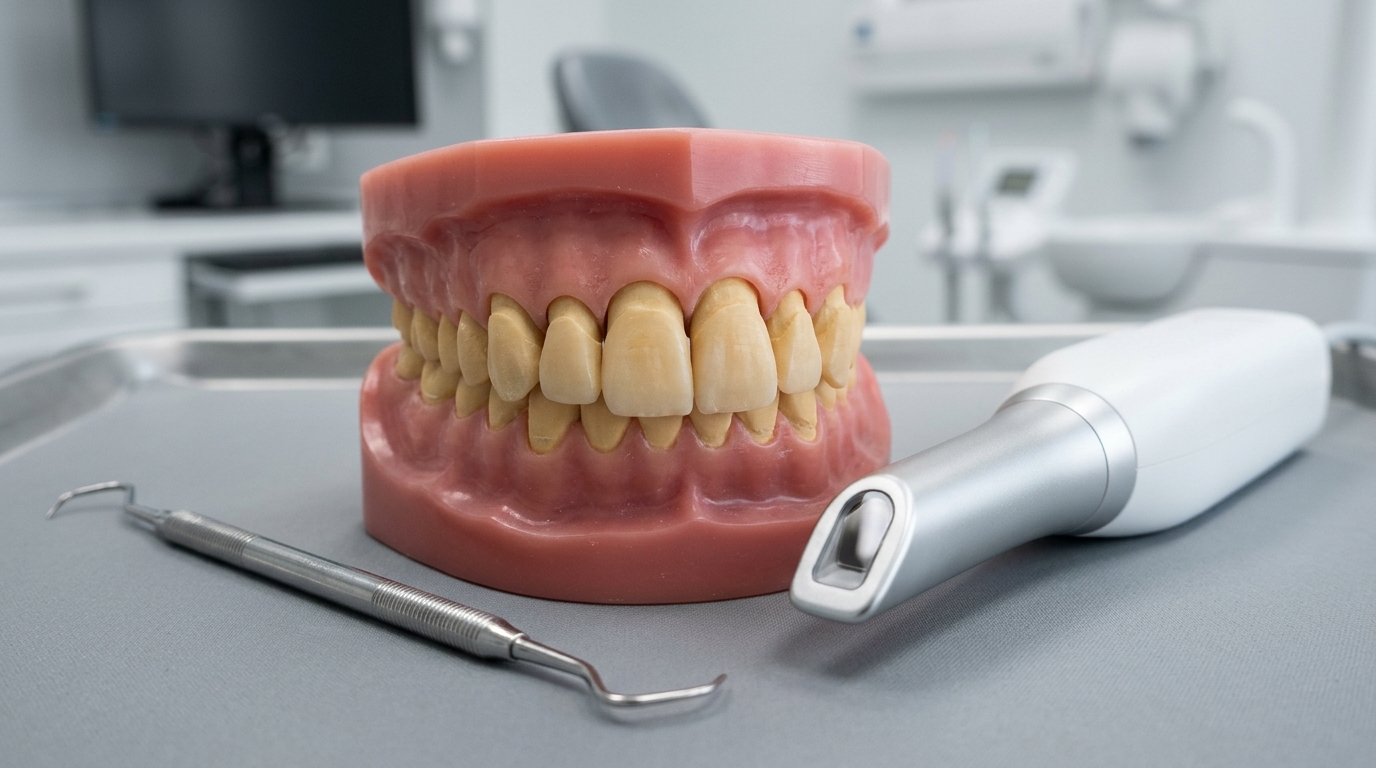
A comparative study of undergraduate dental education has revealed significant score discrepancies between automated digital evaluation tools and traditional instructor evaluations during all-ceramic veneer tooth preparations. In the evaluation of student performance, traditional expert assessment yielded the highest mean score of 74.1 ± 3.17, while an automated digital real-time assessment system produced the lowest mean score of 62.0 ± 9.21. A secondary digital method relying on a high-precision model scanning system recorded intermediate marks of 69.9 ± 8.82, with all pairwise differences between the three evaluation modalities reaching statistical significance.
Developing expertise in tooth preparation represents a fundamental clinical skill that dental students must master during their undergraduate training. Historically, faculty members have evaluated these preparations directly, providing performance feedback based on individual subjective knowledge and personal preferences. To address these inconsistencies and establish a more objective assessment protocol, researchers structured a comparative investigation analyzing whether digital real-time scoring and digital model scanning could reliably assess all-ceramic veneer preparations performed by dental trainees.
The study cohort consisted of 83 undergraduate dental students, each tasked with completing an all-ceramic veneer preparation on tooth #21 using a digital real-time assessment system. Researchers collected the resulting preparations and subjected them to three distinct assessment workflows designated as Test A, Test B, and Test C. Test A was scored automatically through the digital real-time assessment platform, Test B was quantified using a high-precision model scanning system, and Test C was evaluated independently by two experienced dental instructors.
To evaluate the performance and reliability of the grading approaches, the investigators analyzed inter-rater consistency between the two human examiners by calculating the intraclass correlation coefficient. Overall comparisons across the three assessment modalities were executed using a linear mixed-effects model that assigned student identification as a random effect, while post-hoc pairwise contrasts were controlled using the Bonferroni correction method. Additionally, participants completed a structured questionnaire designed to measure student perceptions of digital assessment tools alongside conventional expert grading.
The statistical analyses confirmed substantial divergence among the grading methodologies alongside poor consistency between the human evaluators. The intraclass correlation coefficient, ICC(2,1), between the two experienced instructors was 0.274 with a 95% confidence interval ranging from 0.070 to 0.460, demonstrating poor inter-examiner reliability. Furthermore, post-hoc pairwise comparisons confirmed that the score differences among the automated real-time platform, the model scanning system, and the human examiners were all statistically significant at an adjusted P value of less than 0.001.
Despite receiving lower average scores from automated tools, undergraduate students expressed strong support for computerized grading technology in the structured survey. The questionnaire results demonstrated that 97% of the participating students believed digital assessment systems enhanced their learning interest, and 88% endorsed incorporating these digital platforms into formal dental education curricula. The investigators concluded that digital assessment systems effectively support the evaluation of all-ceramic veneer preparations and serve as valuable objective supplements to traditional dental teaching practices.
The study was published in BMC Medical Education on 30 October 2026.
Subject of Research: Digital methods for evaluating undergraduate dental all-ceramic veneer preparations
Article Title: Digital methods for evaluating all-ceramic veneer preparation in undergraduate dental education : a comparative study
Article References: Yu, W., Zhu, Z., Su, T., Tang, T., Weng, W., & Xu, C. (2026). Digital methods for evaluating all-ceramic veneer preparation in undergraduate dental education : a comparative study. BMC Medical Education. https://doi.org/10.1186/s12909-026-10732-7
Image Credits: AI Generated
DOI: 10.1186/s12909-026-10732-7
Keywords: all-ceramic veneer preparation, dental education, digital assessment system, model scanning technology, undergraduate dental students, tooth preparation, instructor evaluation, intraclass correlation coefficient, linear mixed-effects model, Bonferroni correction, objective evaluation, real-time assessment, high-precision scanning, inter-rater consistency, structured questionnaire, expert assessment, student perceptions, learning interest
News Source: Courtney Benton. (November 12, 2026). Digital Systems and Instructors Differ Significantly in Evaluating Dental Veneer Preparations. Scienmag.