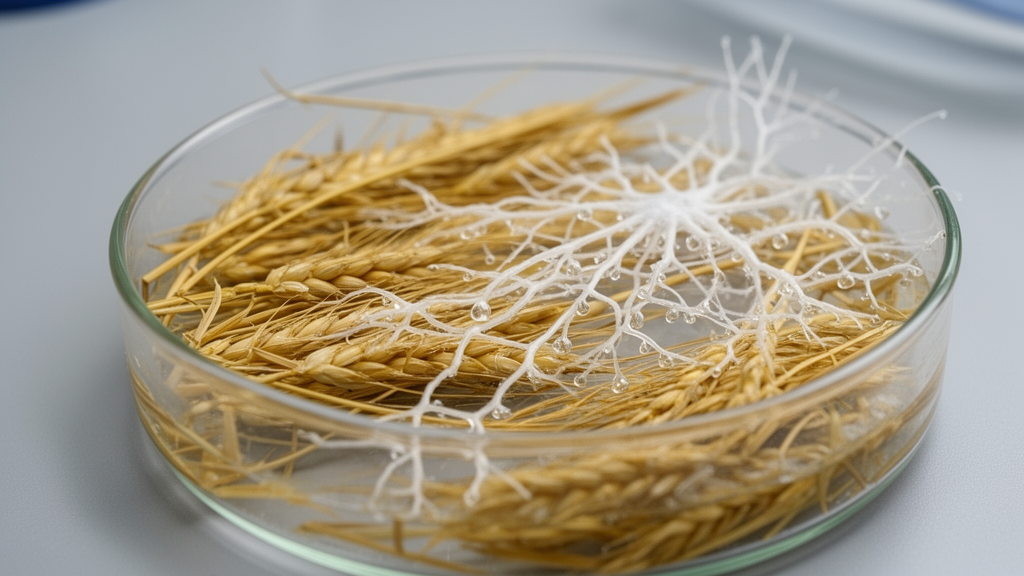
Researchers have successfully engineered a thermophilic filamentous fungus, Thermothelomyces heterothallica, to directly produce cellobionic acid from alkali-pretreated wheat straw without the addition of external cellulase enzymes. This study, published in Bioresources and Bioprocessing, represents a significant advancement in consolidated bioprocessing, where a single microbial system integrates both the hydrolysis of lignocellulosic biomass and the subsequent formation of value-added organic acids. The engineered strain, designated TH11, achieved a cellobionate concentration of approximately 64 mM within five days, demonstrating a cellulose conversion rate of about 88% and a yield of 96% from the consumed cellulose. This approach addresses a major economic barrier in industrial biorefineries, where the cost of exogenous enzyme cocktails has historically limited the commercial viability of direct biomass conversion.
Cellobionic acid, or its salt form cellobionate, is a sugar acid derived from the oxidation of cellobiose that has gained attention for its applications in the food, pharmaceutical, and chemical industries. Traditional production methods often rely on the prior hydrolysis of cellulose into cellobiose using commercial enzymes, followed by biological or chemical conversion. However, the high cost of cellobiose and the dependence on external cellulases pose significant challenges for large-scale application. By redirecting the metabolic flux of T. heterothallica toward cellobionate production, the research team aimed to create a self-sufficient system that utilizes the fungus’s native cellulase secretion capabilities to break down biomass and its endogenous enzymes to convert the resulting cellobiose into the target product.
The engineering strategy involved the sequential disruption of eleven genes involved in cellobiose and cellobionate catabolism and transport. Using a ribonucleoprotein-based CRISPR-Cas9 system, the researchers knocked out eight β-glucosidase genes, one cellobiose/cellobionate phosphorylase gene, and two putative cellobionate transporter genes. The β-glucosidases are typically responsible for hydrolyzing cellobiose into glucose, so their deletion was intended to promote the accumulation of cellobiose, which serves as the substrate for cellobionate production. The deletion of the phosphorylase gene, which catalyzes the first intracellular step of cellobionate catabolism, was designed to block the consumption of the product. Finally, the removal of the transporter genes was critical for preventing the re-uptake and degradation of cellobionate during the later stages of fermentation.
The parental strain, TH0, was developed by Dyadic International and served as the starting point for the genetic modifications. The engineering process was carried out in four sequential rounds of CRISPR-Cas9-mediated gene disruption. In the first round, the cellobiose/cellobionate phosphorylase gene and two β-glucosidase genes were knocked out simultaneously using a hygromycin resistance cassette. Subsequent rounds targeted the remaining β-glucosidase genes using phosphinothricin and neomycin resistance cassettes, and the final round addressed the cellobionate transporter genes using a zeocin resistance cassette. This stepwise approach allowed the researchers to isolate and verify the contribution of each gene cluster to the overall production phenotype, ensuring that the final strain TH11 possessed the complete set of necessary modifications for efficient cellobionate accumulation.
Experimental validation confirmed that the multiple gene knockouts did not adversely affect the general carbon metabolism or growth of the fungus. When cultivated with glucose, all engineered strains exhibited utilization patterns similar to the parental strain, consuming approximately 25 g/L of glucose within 30 hours. This observation suggests that the specific deletions of β-glucosidase, phosphorylase, and transporter genes did not impair the organism’s ability to metabolize simple sugars, which is crucial for maintaining robust growth during the initial phases of fermentation. The stability of glucose utilization indicates that the metabolic redirection was specific to the cellobiose-cellobionate pathway, allowing the fungus to maintain its physiological health while performing the desired biochemical conversion.
When cellobiose was provided as the sole substrate, the parental strain and the initial triple-knockout strain rapidly consumed the sugar without accumulating detectable levels of cellobionate. In contrast, strains with additional β-glucosidase deletions, such as TH6 and TH9, produced cellobionate but experienced a decline in concentration after cellobiose was depleted, indicating that cellobionate catabolism remained active. The final strain, TH11, which included the deletion of the two putative cellobionate transporters, continuously accumulated cellobionate throughout the fermentation, reaching 36 mM at 84 hours. The accumulated cellobionate remained stable even after the substrate was exhausted, confirming that the disruption of the transporter genes was essential for preventing product loss and maintaining high titers.
The performance of the engineered strains was further evaluated using 2% alkali-pretreated wheat straw as the lignocellulosic substrate. The parental strain did not produce detectable levels of cellobionate, whereas all engineered strains were capable of production, with titers increasing progressively with each round of gene knockout. The maximum cellobionate titers achieved by strains TH3, TH6, TH9, and TH11 were 22.3 mM, 28.8 mM, 40.4 mM, and 51.4 mM, respectively. The cellobiose concentration in the cultures initially increased as the fungus secreted cellulases to hydrolyze the cellulose in the straw, reaching a peak before being consumed and converted into cellobionate. This accumulation pattern suggests that the oxidation of cellobiose to cellobionate was the rate-limiting step in the overall conversion process, as the release of cellobiose from cellulose occurred more rapidly than its subsequent oxidation.
To optimize the production process, the researchers investigated the effects of pH control and fermentation temperature on cellobionate yield. The addition of citrate buffer to the fermentation broth improved cellobionate production by maintaining a more stable pH. Without buffer, the pH decreased to approximately 4.48, whereas the addition of 50 mM citrate buffer maintained the pH at around 5.1, resulting in a final cellobionate concentration of 60.3 mM compared to 46.8 mM without buffer. Temperature optimization showed that 43 °C was the optimal condition, accelerating substrate conversion and increasing the final titer. At this temperature, cellobiose was completely consumed by day 4, and the cellobionate titer was visibly higher by day 3 compared to lower temperatures. Fermentation at 46 °C did not provide further improvements, indicating that 43 °C represented the thermal optimum for the engineered strain.
Under the optimized conditions of 43 °C and 50 mM citrate buffer, strain TH11 produced approximately 64 mM of cellobionate from 2% pretreated wheat straw in five days. The combined concentration of cellobiose and cellobionate reached 64.6 mM, reflecting the overall extent of cellulose hydrolysis. The extracellular activities of cellobiohydrolase (CBH) and cellobiose dehydrogenase (CDH) were tracked throughout the fermentation. CBH activity increased progressively, reaching a maximum of 135 U/L, while CDH activity peaked at approximately 441 U/L on day 3 before declining. The sustained production of these enzymes indicates that the fungus maintains robust catalytic activity during the biosynthesis of cellobionate, with the thermophilic nature of the host likely enhancing the efficiency of the enzymatic reactions and reducing contamination risks.
The study highlights the advantage of using a thermophilic cellulolytic fungal host for direct lignocellulose bioconversion. Compared to the previously engineered Neurospora crassa strain HL10, which required eight days to produce 57 mM cellobionate, T. heterothallica TH11 achieved a higher titer of 64 mM in only five days. The cellulose conversion and cellobionate yields were comparable between the two strains, but the faster production kinetics and higher enzymatic activities of the thermophilic strain offer significant process benefits. The ability of T. heterothallica to naturally secrete high levels of extracellular cellulases eliminates the need for external enzyme supplementation, representing a major economic advantage for industrial applications. This consolidated bioprocessing capability provides a more practical foundation for scaling cellobionate production from renewable biomass.
Despite the high conversion efficiency, the transient accumulation of cellobiose indicates that the process is currently oxidation-limited. The researchers noted that further optimization of oxygen supply using bioreactors and additional engineering of oxidative metabolism could potentially improve productivity. The study provides a promising platform for the direct bioconversion of lignocellulosic biomass into value-added aldonic acids, offering an alternative to conventional chemical synthesis and enzyme-dependent processes. The successful engineering of T. heterothallica demonstrates the potential of thermophilic fungi in industrial biotechnology, where robust growth at elevated temperatures and high protein secretion capabilities can be leveraged to improve the efficiency and cost-effectiveness of biomass conversion.
Subject of Research: Engineering Thermothelomyces heterothallica for cellobionate production
Article Title: Engineering Thermothelomyces heterothallica for cellobionate production
Article References: Zada, B., Shapouri, H., Wang, J., Sharma, S., Kasuga, T., Valbuena, N., Tchelet, R., Emalfarb, M., & Fan, Z. (2026). Engineering Thermothelomyces heterothallica for cellobionate production. Bioresources and Bioprocessing, 13(1), Article 129. https://doi.org/10.1186/s40643-026-01126-0
Image Credits: AI Generated
DOI: 10.1186/s40643-026-01126-0
Keywords: Engineering, Thermothelomyces, heterothallica, cellobionate, production, scientific research
News Source: Roger Howard. (November 11, 2026). Engineered Fungus Converts Wheat Straw to Cellobionate. Scienmag.