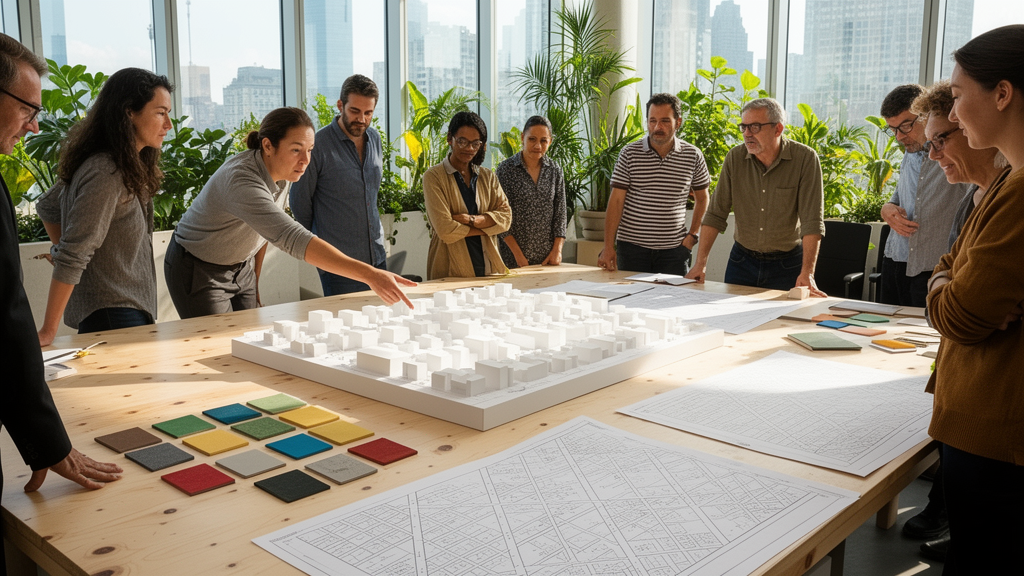
Published in the journal Frontiers of Urban and Rural Planning, the study examines a four-year city branding initiative in Longquan, China, to understand how designers move beyond traditional problem-solving roles to facilitate ongoing civic engagement. The research posits that as design expands into public policy and governance, pedagogy must evolve to cultivate civic capacity and critical dialogue rather than focusing solely on technical proficiency. By analyzing the interplay between people, products, networks, and power hierarchies, the authors demonstrate how design knowledge fosters sustained reflection among stakeholders, which is critical for building shared visions for long-term urban transformation.
The study addresses a significant gap in design education, which has historically emphasized formalist training rooted in twentieth-century paradigms of form, aesthetics, and function. The authors argue that this traditional approach has neglected human-centered and interdisciplinary methods, leaving graduates ill-equipped for the complex, systemic challenges of contemporary public life. With the cooling real-estate sector and the rise of digital industries, the competencies required for design graduates have diversified to include digital literacy, public management skills, and systemic thinking. Consequently, the role of designers has evolved from experts providing definitive solutions to facilitators and collaborators who co-create sustainable public spheres. This shift necessitates an update to the knowledge systems within design education to prepare practitioners for cross-sectoral collaboration.
City branding serves as a pedagogical laboratory in this context, operating as a situated learning process where students, designers, and civic actors engage with complex issues. Unlike tangible crafts or studio-based training, city branding involves intangible and complex processes that require integrating multidisciplinary knowledge from planning, culture, economics, and tourism. The authors conceptualize city branding not merely as a visual strategy but as a form of urban design education that communicates collective values and stimulates civic imagination. However, the process is often dominated by government or public sector actors concerned with efficiency and administrative feasibility, which can marginalize less powerful stakeholders and result in a lack of genuine participation. This power asymmetry presents a central challenge for designers seeking to foster democratic dialogues within constrained institutional frameworks.
The Longquan case study documents the authors’ extensive involvement in the city’s branding renewal, beginning in 2018 with a master plan for a celadon-themed craftsmen’s workspace. Longquan, a historically significant city in Zhejiang Province, is renowned for its celadon and swords, intangible cultural assets with a history spanning over 1,600 years. The design organization collaborated with the public sector for nearly four years, navigating coordination and communication to facilitate broader public engagement. The research employs a qualitative approach based on empirical materials gathered through fieldwork and design action research, including on-site observations, participatory activities, and design interventions. This methodology provides a foundation for exploring how designers can sustain swirling dialogues over time within a complex sociopolitical system.
In the initial phase, the design team observed a discrepancy between the aesthetic quality of urban sculptures and signboards in public spaces and the craftsmanship of artifacts in exhibitions and studios. To address this, they conducted seminars and workshops with stakeholders, including public officials, artists, and local designers, using tools such as giga mapping and social network analysis. The goal was to understand the cultural identity stakeholders wished to present to the public. The resulting design strategy focused on symbolic abstraction, with iterative workshops and product shape testing used to fine-tune the city’s brand representation in close collaboration with the community. This process allowed the designers to adjust their strategies continuously while collaborating with multiple stakeholders to capture the essence of the city’s cultural image.
During the small-scale piloting phase, the team shifted from large-scale construction to a smaller-scale pilot strategy within a Celadon Creative Park due to budget constraints and lengthy approval procedures. They created smart city signs with augmented reality and virtual reality features, along with QR code interfaces, establishing a technological feedback loop between users and the brand. By embedding these micro-level interventions within the government’s annual work plan, the team sustained participation and ensured continuity despite institutional and financial constraints. The use of the annual World Celadon Conference for exhibitions and lectures further boosted the project’s visibility and expanded the city’s cultural reach. This strategic adjustment enabled the government to achieve visible results within its budget while allowing the design team to create flexible, participatory processes that broadened stakeholder engagement.
In the citywide promotion phase, the team completed projects for the main entrance road and the area around the city hall, along with the development of tourism souvenirs. To enhance participation, a user feedback interface was integrated into the initial implementation, with QR codes installed at 281 city branding touchpoints. Over a six-month period, these codes recorded 42,343 instances of user interaction, yielding 3,425 pieces of substantive feedback. Users commented on the AR promotional videos, the visual patterns, and the availability of derivative products like silk scarves. This data served as a vital foundation for subsequent iterations of the city brand image and informed the development of the smart city concept. Additionally, ad-hoc offline engagement activities were organized to align with the public sector’s outreach efforts, fostering face-to-face interactions with grassroots citizens.
The final phase involved the derivation and proliferation of the brand through various cultural derivatives, ranging from urban sculptures and signage to practical furniture and travel souvenirs. To address the challenge of managing these new urban facilities, the team developed an Internet of Things platform for registering and monitoring street furniture and equipment. This platform features QR codes for information registration and sensors on traffic barriers to detect accidents, facilitating digital management of city facilities. By involving the public sector in dialogue during the construction and maintenance phases, the team changed how the government works, making it more efficient. The expansion of product offerings diversified local residents’ perception of celadon and swords, enabling them to connect with their cultural heritage in a more tangible and meaningful way.
The findings synthesize these experiences into the swirling dialogues approach, which illustrates how various stakeholders participate in discussions around complex real-world public issues. The framework identifies four types of dialogues: between people and people, people and products, products and networks, and the hierarchy of power. The dialogue between people involves active conversations among stakeholder groups, facilitated by workshops and public events that build mutual trust. The rise of social media has added a new dimension, allowing external audiences to engage with internal audiences through spontaneous sharing of experiences. Although collaboration with social media influencers was limited in the Longquan case, the authors note that such peer-to-peer propagation is valuable for amplifying reach and building authenticity in modern place branding.
The dialogue between people and products is made experiential through tangible design outcomes and iterative prototyping. Street furniture with AR features acts as a cultural touchpoint that invites public interaction, turning passive onlookers into active participants. A visitor can scan an AR-enabled sign to see location-specific cultural stories or submit feedback about the facilities. This person-product dialogue enriches the brand experience and demonstrates how design can educate and engage the public in the city’s story. The dialogue between products and networks involves linking dispersed city artifacts into a network that communicates with city managers. The IoT infrastructure allows officials to visualize the distribution of branding elements and monitor their status, transforming the public sector’s working mode from static planning to responsive management.
The final dialogue occurs across the hierarchy of power within the public sector. Designers must translate their ideas into the metrics and vocabulary that matter to policymakers, reframing design proposals to address policy objectives and performance indicators. By explicitly mapping design outcomes to policy goals, designers empower public sector leaders to see the value of design in fulfilling their mandates. This dialogue ensures that the project fits into the political logic and secures high-level buy-in, making it more likely to be sustained over the long term. The study concludes that these multi-layered dialogues require designers to navigate complex social relationships and develop adaptive, collaborative capabilities.
The authors argue that this case study offers practice-based insights for design education, suggesting that curricula should move beyond an exclusive focus on visual outcomes to cultivate students’ understanding of complex social relationships. They propose that design education should prepare designers to facilitate collaborative public learning, emphasizing the ability to navigate multi-layered dialogues among people, artifacts, networks, and hierarchies of power. The study acknowledges that power asymmetries inevitably persist in public projects, and the success of the swirling dialogues model depends on the willingness of the government to serve as an obligatory passage point for heterogeneous elements. The authors caution that the case provides an exploratory approach rather than a directly replicable model, noting that transferability depends on the city’s cultural background, administrative procedures, and budget scale. Future research should conduct comparative validation across different urban contexts to broaden the applicability of the framework and deepen understanding of the skills designers need for public participation.
Subject of Research: Design inspires swirling dialogues: from city branding practices to rethinking collaborative learning in design education
Article Title: Design inspires swirling dialogues: from city branding practices to rethinking collaborative learning in design education
Article References: Ma, Y., Wu, D., Valsecchi, F., Zhou, H., Guo, F. B., & Xu, J. (2025). Design inspires swirling dialogues: from city branding practices to rethinking collaborative learning in design education. Frontiers of Urban and Rural Planning, 3(1), Article 20. https://doi.org/10.1007/s44243-025-00066-1
Image Credits: AI Generated
DOI: 10.1007/s44243-025-00066-1
Keywords: Design, inspires, swirling, dialogues, city, branding, practices, rethinking, collaborative, learning, education, scientific research
News Source: Courtney Benton. (November 11, 2026). City Branding as Collaborative Learning: Designers Facilitate Public Dialogue. Scienmag.