• HOME
  • NEWS
  • EXPLORE
    • CAREER
      • Companies
      • Jobs
    • EVENTS
    • iGEM
      • News
      • Team
    • PHOTOS
    • VIDEO
    • WIKI
  • BLOG
  • COMMUNITY
    • FACEBOOK
    • INSTAGRAM
    • TWITTER
Monday, November 16, 2026
BIOENGINEER.ORG
No Result
View All Result
  • Login
  • HOME
  • NEWS
  • EXPLORE
    • CAREER
      • Companies
      • Jobs
        • Lecturer
        • PhD Studentship
        • Postdoc
        • Research Assistant
    • EVENTS
    • iGEM
      • News
      • Team
    • PHOTOS
    • VIDEO
    • WIKI
  • BLOG
  • COMMUNITY
    • FACEBOOK
    • INSTAGRAM
    • TWITTER
No Result
View All Result
Bioengineer.org
No Result
View All Result
Home NEWS Science News Technology

Quasi Renewal–Alpha Process Improves Failure Modeling for Systems Under Delayed Repair

by
November 11, 2026
in Technology
Reading Time: 2 mins read
0
Quasi Renewal–Alpha Process Improves Failure Modeling for Systems Under Delayed Repair

Quasi Renewal–Alpha Process Improves Failure Modeling for Systems Under Delayed Repair

Share on FacebookShare on TwitterShare on LinkedinShare on RedditShare on Telegram

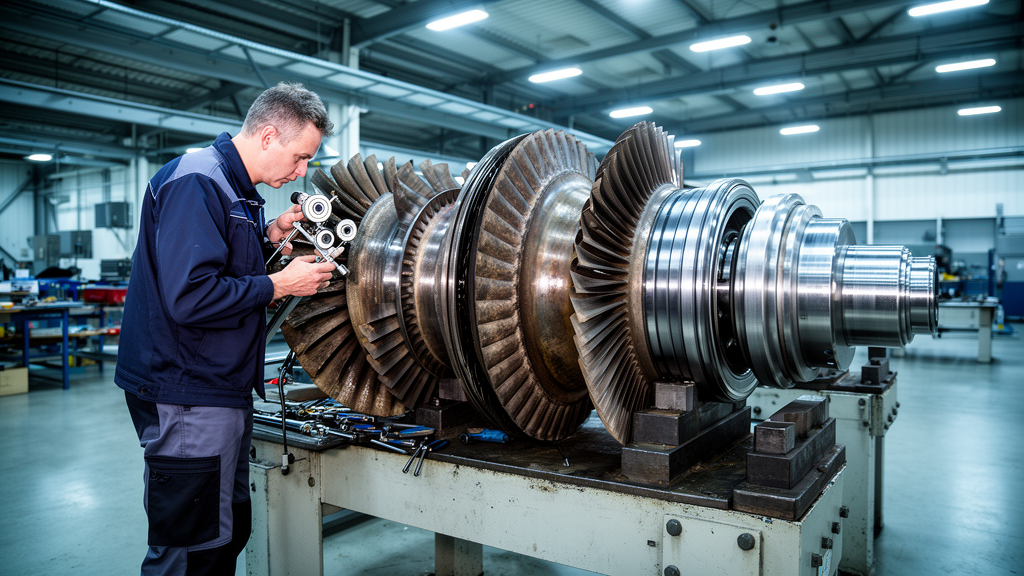
A mathematical maintenance model based on a Quasi Renewal–Alpha Process provides a superior statistical fit over the classical Quasi Renewal Process for failure-time data from deteriorating systems subject to imperfect delayed repairs, according to an investigation published in Discover Applied Sciences. The framework addresses maintenance optimization in reliability engineering where repairs are imperfect and maintenance activities are subject to delays.

To evaluate equipment degradation under realistic maintenance constraints, the authors examined an N-failure replacement policy. Using renewal–reward theory, the researchers formulated explicit mathematical expressions to determine both the expected renewal cycle length and the long-run average cost rate associated with operating and repairing the deteriorating asset.

The study established formal analytical conditions that confirm the existence and uniqueness of an optimal replacement number under the proposed maintenance framework. Numerical examples are presented to illustrate the analytical results.

To assess the model against conventional maintenance frameworks, the team conducted an empirical comparison using a publicly available failure-time dataset. Comparative evaluation based on the Akaike Information Criterion demonstrated that the Quasi Renewal–Alpha Process provides a better fit than the classical Quasi Renewal Process for the analyzed dataset, confirming its effectiveness for modeling deteriorating systems experiencing imperfect repairs and maintenance delays.

Subject of Research: Maintenance optimization and replacement policies for deteriorating systems under imperfect delayed repair

Article Title: Optimal replacement policies for deteriorating systems under imperfect delayed repair via a quasi renewal–alpha process

Article References: Neelakandan, R., Iqbal, P., Babu, D., Sutha, M., & Mageswari, M. (2026). Optimal replacement policies for deteriorating systems under imperfect delayed repair via a quasi renewal–alpha process. Discover Applied Sciences. https://doi.org/10.1007/s42452-026-09506-z

Image Credits: AI Generated

DOI: 10.1007/s42452-026-09506-z

Keywords: reliability engineering, deteriorating systems, imperfect repair, delayed repair, maintenance optimization, replacement policies, Quasi Renewal-Alpha Process, Quasi Renewal Process, renewal-reward theory, N-failure replacement policy, expected renewal cycle length, long-run average cost rate, optimal replacement number, failure-time dataset, Akaike Information Criterion, repairable systems, statistical model fitting

News Source: Denise Maddox. (November 11, 2026). Quasi Renewal–Alpha Process Improves Failure Modeling for Systems Under Delayed Repair. Scienmag.


Tags: Akaike information criteriondelayed repairdeteriorating systemsexpected renewal cycle lengthfailure-time datasetimperfect repairlong-run average cost ratemaintenance optimizationN-failure replacement policyoptimal replacement numberQuasi Renewal ProcessQuasi Renewal-Alpha Processreliability engineeringrenewal-reward theoryrepairable systemsreplacement policiesstatistical model fitting
Share12Tweet7Share2ShareShareShare1

Related Posts

Rethinking Faculty Development for Teaching in the Generative AI Era

Rethinking Faculty Development for Teaching in the Generative AI Era

November 15, 2026
AI Frameworks Advance Predictive Resistome Surveillance and AMR Risk Assessment

AI Frameworks Advance Predictive Resistome Surveillance and AMR Risk Assessment

November 15, 2026

Manure Redistribution Could Slash Norway’s Agricultural Mineral Phosphorus Imports by 78 Percent

November 15, 2026

Rising Faculty Development Participation in Japan Masks Declines in Collegial Formats

November 15, 2026

POPULAR NEWS

  • White Analytical Chemistry Framework Unifies Quality and Sustainability in Liquid Chromatography

    White Analytical Chemistry Framework Unifies Quality and Sustainability in Liquid Chromatography

    29 shares
    Share 12 Tweet 7
  • Palliate Carer Training Demonstrates High Acceptability and Usability in Simulation

    29 shares
    Share 12 Tweet 7
  • Hepatocyte Hedgehog Activation Protects Mice From Acetaminophen Liver Injury Through Vegfa

    29 shares
    Share 12 Tweet 7
  • Refrigerated Storage and Matrix Compactness Lower Starch Digestibility in Maize Foods

    29 shares
    Share 12 Tweet 7

About

We bring you the latest biotechnology news from best research centers and universities around the world. Check our website.

Follow us

Recent News

Disruption of piRNA Pathway Frequently Accompanies Human Pachytene Spermatogenic Arrest

Veterinary Cancer AI Demands Rigorous Evidence Standards Before Clinical Diagnostic Deployment

Epigenetic Regulator JMJD3 Drives Hepatocyte Maturation by Activating Fatty Acid Metabolism

Subscribe to Blog via Email

Enter your email address to subscribe to this blog and receive notifications of new posts by email.

Join 88 other subscribers
  • Contact Us

Bioengineer.org © Copyright 2023 All Rights Reserved.

Welcome Back!

Login to your account below

Forgotten Password?

Retrieve your password

Please enter your username or email address to reset your password.

Log In
No Result
View All Result
  • Homepages
    • Home Page 1
    • Home Page 2
  • News
  • National
  • Business
  • Health
  • Lifestyle
  • Science

Bioengineer.org © Copyright 2023 All Rights Reserved.