A research team has established a study protocol to evaluate the diagnostic performance and community acceptability of four diagnostic methods for detecting Strongyloides stercoralis infection in Côte d’Ivoire. The investigation focuses on identifying practical screening options to support large-scale disease mapping.
Previous parasitological surveys conducted in rural regions of Côte d’Ivoire have documented that the prevalence of S. stercoralis infection can reach up to 50 percent in local populations.
The World Health Organization has designated S. stercoralis infection among the soil-transmitted helminthiases that demand focused intervention to attain effective control by 2030. Although pharmaceutical treatments for strongyloidiasis exist, control efforts face a critical shortage of affordable, sensitive, and field-applicable diagnostic instruments suitable for resource-constrained endemic areas.
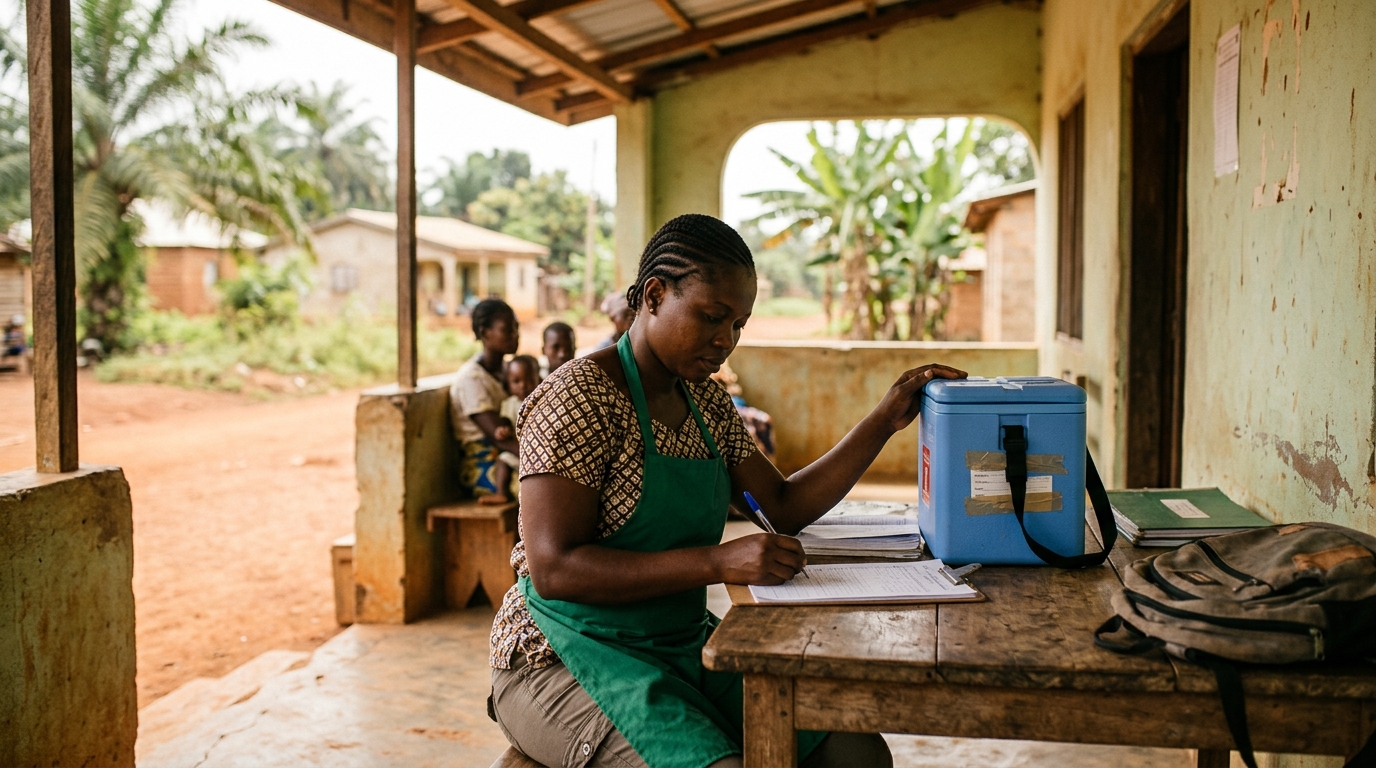
The protocol outlines cross-sectional parasitological surveys to be carried out across 20 villages situated in the southern health districts of Agboville and Dabou. Within each participating village, 60 individuals selected at random will be invited to provide stool and urine specimens, alongside finger-prick blood samples.
Laboratory evaluation will combine multiple diagnostic approaches across the collected specimens. Stool samples will undergo duplicate Baermann examinations, duplicate Kato-Katz thick smears, and polymerase chain reaction analysis, while urine specimens will be evaluated using filtration, IgG-ELISA, and PCR. Blood specimens will be analyzed using a Strongyloides IgG4 rapid diagnostic test.
Individual diagnostic tools will be assessed against a composite reference standard to determine sensitivity, specificity, and positive and negative predictive values, alongside assessments of sample collection acceptability to inform diagnostic algorithms for disease mapping.
As a study protocol published in BMC Infectious Diseases, the paper outlines planned investigation methods rather than empirical diagnostic results or completed epidemiological findings. Because the study has not yet gathered final outcome data, the publication serves to detail the prospective research design, sampling scheme, and analytical strategy before field surveys commence. The primary objective is to evaluate both the diagnostic performance and the participant acceptability of four selected diagnostic tools: the Baermann technique, urine-IgG ELISA, stool-PCR, and the Strongyloides IgG4 rapid diagnostic test.
The prospective fieldwork centers on cross-sectional parasitological surveys across 20 rural villages situated in the southern health districts of Agboville and Dabou in Côte d’Ivoire. Within each of the 20 participating villages, 60 individuals will be selected at random and invited to provide biological specimens.
Laboratory analysis will apply distinct diagnostic procedures to each collected specimen type. Stool specimens will undergo duplicate Baermann examinations, duplicate Kato-Katz thick smears, and polymerase chain reaction testing. Urine specimens will be processed using filtration, IgG-ELISA, and polymerase chain reaction analysis. Blood samples collected by finger prick will be evaluated using the Strongyloides IgG4 rapid test. Using these individual diagnostic methods, the researchers plan to estimate the prevalence and, whenever possible, the infection intensity of Strongyloides stercoralis among the examined participants.
The investigation will calculate the sensitivity, specificity, positive predictive value, and negative predictive value for each individual diagnostic tool.
The planned investigation addresses critical public health priorities for soil-transmitted helminth control. Strongyloidiasis is caused by a parasitic worm, primarily Strongyloides stercoralis, and surveys in rural Côte d’Ivoire have revealed that infection prevalence can reach up to 50 percent. Although pharmaceutical treatments are available, control programs are hindered by a shortage of affordable, sensitive, and field-applicable diagnostic tools. The World Health Organization has included Strongyloides stercoralis among the soil-transmitted helminths requiring dedicated attention for effective control by 2030. By defining diagnostic parameters, the study aims to support evidence-based decisions on diagnostic algorithms for large-scale disease mapping in Côte d’Ivoire and other endemic settings.
Subject of Research: Diagnostic performance and acceptability of diagnostic tools for Strongyloides stercoralis in Côte d’Ivoire
Article Title: Diagnostic performance of Baermann technique, urine-ELISA, stool-PCR and Strongyloides IgG4 rapid test for diagnosis of strongyloidiasis: a study protocol
Article References: Assaré, R. K., Becker, S. L., Hoekstra, P. T., Anuar, N. S., Ouattara, M., Coulibaly, G., Bassa, F. K., Kouadio, J. N., Diakité, N. R., Odermatt, P., van Dam, G. J., N’Goran, E. K., Sithithaworn, P., Noordin, R., & Utzinger, J. (2026). Diagnostic performance of Baermann technique, urine-ELISA, stool-PCR and Strongyloides IgG4 rapid test for diagnosis of strongyloidiasis: a study protocol. BMC Infectious Diseases. https://doi.org/10.1186/s12879-026-14231-4
Image Credits: AI Generated
DOI: 10.1186/s12879-026-14231-4
Keywords: Strongyloides stercoralis, strongyloidiasis, study protocol, Baermann technique, urine-ELISA, stool-PCR, Strongyloides IgG4 rapid test, parasitological surveys, Côte d'Ivoire, Agboville, Dabou, soil-transmitted helminths, World Health Organization, Kato-Katz thick smears, composite reference standard, diagnostic performance, urine filtration, diagnostic algorithms
News Source: Ophelia Keating. (November 11, 2026). Study Protocol Details Diagnostic Testing for Strongyloidiasis in Côte d’Ivoire. Scienmag.