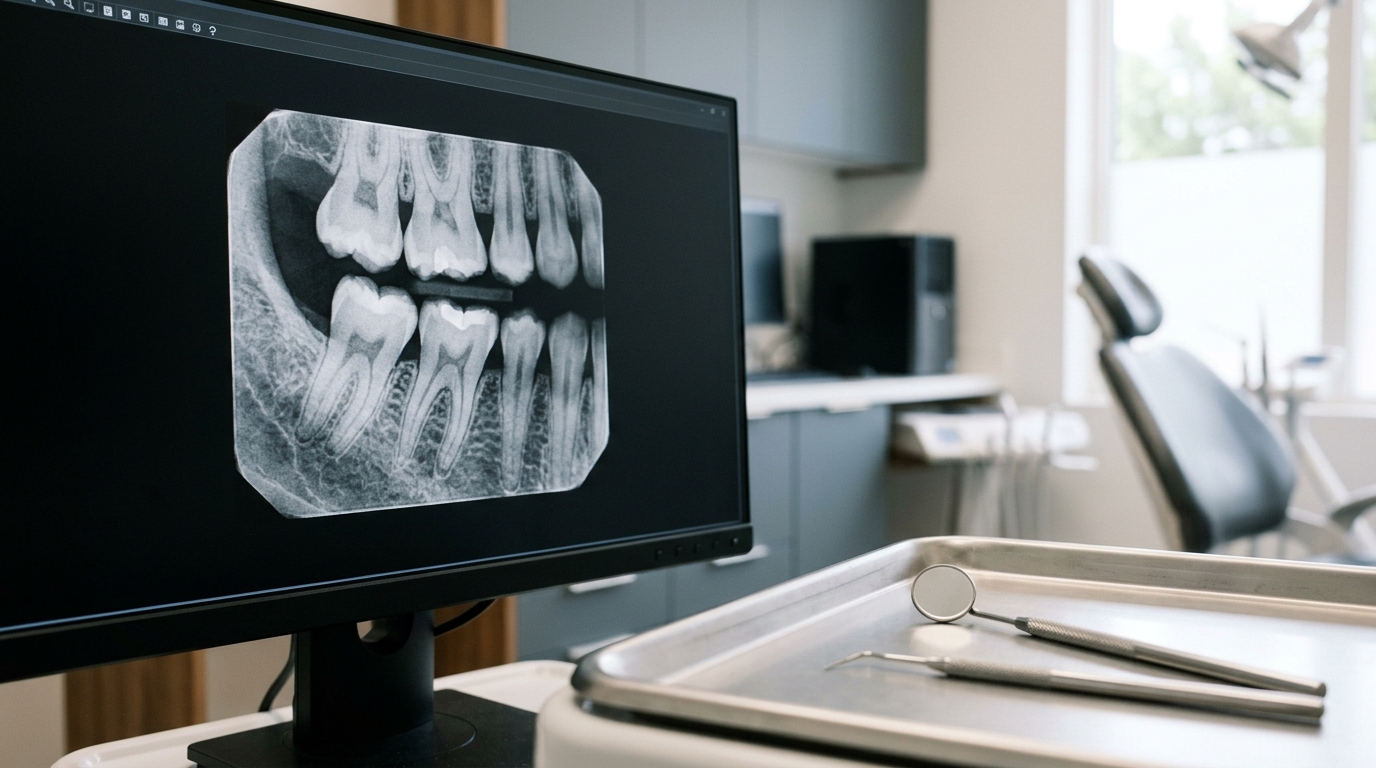
A randomized experimental study evaluating the effects of artificial intelligence presentation formats on dental clinicians found no statistically significant difference in overall diagnostic accuracy between visual annotations, descriptive text recommendations, and unassisted evaluations. The trial examined how different presentations of clinical decision support influence clinician decision making during radiographic furcation detection across five standardized cases.
While artificial intelligence-based clinical decision support tools are increasingly incorporated into dental diagnosis, existing research has primarily concentrated on underlying algorithmic performance rather than the practical ways recommendations are delivered to clinicians.
To investigate these dynamics, investigators conducted a randomized experimental study involving 122 participants from an academic dental setting, comprising 60 dental faculty members and 62 predoctoral dental students. The participants were assigned across three randomized conditions: a control group of 41 participants who completed diagnostic tasks without AI assistance, a visual AI annotation group of 40 participants, and a descriptive recommendation group of 41 participants who received text-based AI guidance.
The prespecified primary outcome of the trial was pooled diagnostic accuracy across five radiographic cases evaluated for furcation detection. Beyond overall diagnostic accuracy, the study protocol established secondary endpoints designed to evaluate broader cognitive and behavioral effects, including clinician diagnostic confidence, radiographic interpretation time, and clinician ratings regarding the perceived usefulness of artificial intelligence tools.
In the prespecified primary analysis, pooled diagnostic accuracy across the five radiographic cases reached 87.8 percent in the control group without decision support, 84.0 percent in the visual AI annotation group, and 84.4 percent in the descriptive AI recommendation group. Statistical comparison revealed no significant difference in diagnostic accuracy among the three presentation formats, yielding a chi-square statistic of 1.434 with a p-value of 0.488.
Secondary exploratory analyses revealed format-specific presentation effects under specific diagnostic conditions, notably for tooth number 18 among predoctoral students. In that specific case, visual AI annotation among students was associated with greater agreement with an incorrect AI recommendation.
The investigators also observed divergence in post-task confidence and efficiency between experience levels. Faculty members assigned to the visual AI condition exhibited reduced post-task diagnostic confidence compared with student participants, while radiographic interpretation times varied between faculty and students across selected images. Across all study arms, general perceptions regarding the usefulness of artificial intelligence remained positive.
The study authors concluded that while AI presentation format can influence clinician responses during complex diagnostic scenarios—especially when radiographic interpretation presents notable difficulty—these effects did not appear consistently across all examined cases.
Subject of Research: Impact of AI presentation format on radiographic furcation detection and clinician decision making
Article Title: Presentation of AI-based decision support influences clinician decision making
Article References: Glick, A., Al-Hatem, A., Angelov, N., & Chang, J. (2026). Presentation of AI-based decision support influences clinician decision making. BMC Medical Informatics and Decision Making. https://doi.org/10.1186/s12911-026-03871-w
Image Credits: AI Generated
DOI: 10.1186/s12911-026-03871-w
Keywords: artificial intelligence, clinical decision support, dental diagnosis, radiographic interpretation, furcation detection, visual AI annotation, descriptive AI recommendation, diagnostic accuracy, diagnostic confidence, interpretation time, dental faculty, predoctoral dental students, randomized experimental study, tooth 18, perceived usefulness, oral radiology, clinician decision making
News Source: Ophelia Keating. (November 11, 2026). AI Presentation Format Did Not Significantly Change Overall Dental Diagnostic Accuracy. Scienmag.