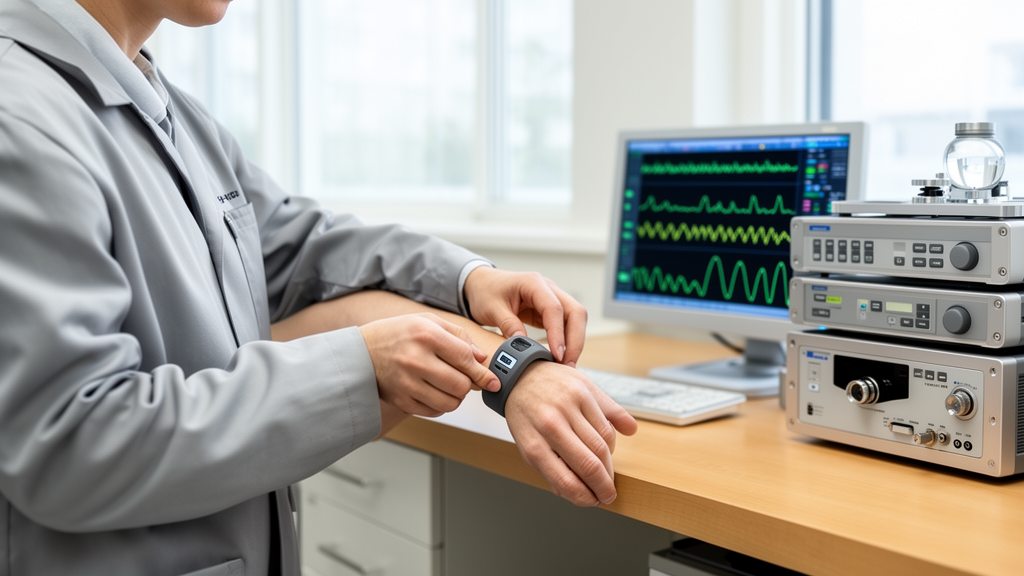
A comprehensive conceptual synthesis evaluating artificial intelligence applications across mobile and wearable health ecosystems has revealed that upstream data errors propagate automatically through computational inference and clinical interventions unless checked by deliberate institutional governance. Publishing in Frontiers in Digital Health, a research team led by Chen Zhang, Wenhui Jiang, and You Guo from Gannan Medical University analyzed the structural dependencies linking data acquisition, algorithmic risk stratification, clinical action, and systemic oversight across 106 biomedical, engineering, and implementation sources published between October 2015 and September 2026. Global public health faces an escalating dual burden where non-communicable diseases claim approximately 41 million lives annually—accounting for 74 percent of global mortality, with 15 million premature deaths occurring between ages 30 and 69, of which 85 percent occur in low- and middle-income countries—while acute infectious outbreaks and mental health conditions affecting 970 million people repeatedly strain health systems. Conventional surveillance infrastructure remains hindered by passive, clinic-based reporting delays of days to weeks and misses vast populations of mildly symptomatic or asymptomatic individuals, illustrated by serological evaluations in a cholera-endemic community in Bangladesh where actual infection burdens exceeded surveillance case counts by more than three orders of magnitude.
To trace how technical limitations compound across the digital health lifecycle, the investigators organized evidence into an analytical scaffold comprising four linked domains: Sensing, Inference, Intervention, and Governance. Within the sensing domain, the performance ceiling of artificial intelligence inference is fundamentally established at the physical point of data acquisition, meaning subsequent algorithmic refinement cannot compensate for underlying hardware limitations, signal dropout, or user non-adherence. Photoplethysmography sensors, which optical wearables utilize to estimate heart rate variability, monitor blood pressure trends, and screen for atrial fibrillation, exhibit measurement discrepancies heavily dictated by device models, exercise intensities, and participant skin tones. Empirical evidence reviewed by the authors revealed that while wrist-worn photoplethysmography monitors such as the Fitbit Charge 5 demonstrated no statistically significant pigmentation-related difference in heart rate estimation error while users were at rest, exercising at intensities exceeding 60 percent of heart rate reserve produced a mean absolute error of 16.5 beats per minute in darker-skinned participants compared to 3.5 beats per minute in lighter-skinned cohorts, representing a more than fourfold error disparity. Across multiple evaluated commercial devices, measurement outliers were disproportionately concentrated among darker-skinned participants, and cuffless photoplethysmography blood pressure monitoring remains unvalidated against clinical standards in hypertensive cohorts.
Complementary sensing modalities present parallel data-quality constraints that threaten the fidelity of downstream machine learning models. Inertial measurement units and accelerometer-based wearables offer cost-effective, objective gait analysis and fall-risk profiling for older adults in community settings, yet these kinetic sensors cannot reliably distinguish actual pathology-driven changes from transient situational adjustments, such as compensation patterns caused by an individual’s acute fear of falling or generalized muscular weakness. Wearable single-lead electrocardiogram patches extend prolonged ambulatory monitoring for cardiac rhythm anomalies and intermittent arrhythmias, but motion artefacts directly overlap the electrical spectrum of cardiac activity and resist standard digital filtering, while electrode detachment during extended wear degrades signal reliability and produces low specificity for arrhythmias other than atrial fibrillation. Skin-interfaced microfluidic systems capable of tracking glucose, lactate, and cortisol in sweat and interstitial fluid achieve minimal invasiveness without batteries, but their correspondence with standard venous blood chemistry remains matrix-dependent and semi-quantitative, constrained by chemical signal drift and limited sensor durability. Meanwhile, acoustic smartphone sensing for respiratory monitoring reliably captures cough frequency and duration, yet models remain vulnerable to false detections from speech, ambient television noise, and unvalidated environmental variations across diverse international settings.
Digital phenotyping strategies that synthesize these multimodal continuous data streams into longitudinal behavioral and physiological trajectories face severe methodological hurdles before they can reliably inform patient triage. The clinical interpretability of digital phenotyping depends strictly on established individual historical baselines and continuous active self-report calibration; in the absence of anchored baselines, benign daily behavioral fluctuations risk being misclassified by automated monitoring software as emergent pathological crises. Furthermore, passive mobile monitoring suffers from non-random patterns of missing data that track declining user adherence over time and differ systematically across demographic lines, including race and socioeconomic background. Because conventional statistical imputation strategies remain incomplete and optimal compensation models are unestablished, missingness introduces severe selection biases into the longitudinal training distributions that underpin automated clinical decision support tools.
Within the inference domain, machine learning architectures display stark trade-offs between predictive capability, computational tractability, and clinical interpretability. Traditional ensemble methods like random forests and extreme gradient boosting achieve robust classification accuracy in static cross-sectional datasets for chronic disease risk profiling, but they discard sequential temporal pattern information and depend heavily on handcrafted features. Sequential deep learning models capture longitudinal physiological dynamics, with long short-term memory networks tracking short-range temporal dependencies and Transformer self-attention architectures resolving irregularly sampled, long-horizon data sequences. While wearable-derived resting heart rate and heart rate variability metrics have successfully predicted infection onset days to more than a week before clinical symptoms in COVID-19, and 12 to 36 hours before symptoms in controlled influenza and rhinovirus challenge trials, the architectural opacity of deep neural networks impedes clinical verification and safety accountability. Model accuracy in the aggregate frequently conceals systematic reliability gaps, causing algorithmic performance to degrade most severely in vulnerable patient subpopulations where targeted intervention is most urgently required.
Deploying intelligent inference directly onto resource-constrained mobile and edge hardware introduces additional equity risks through model compression techniques. Tiny machine learning enables decentralized, real-time edge processing on microcontrollers without requiring continuous cloud network connectivity, exemplified by low-power cardiac arrhythmia classification hardware developed for under 25 United States dollars and integer-only microcontroller executions for cuffless blood pressure estimation. However, post-training quantization, network pruning, and knowledge distillation can degrade predictive generalizability unevenly across demographic groups. In medical imaging benchmarks cited in the synthesis, applying 70 percent magnitude pruning to a skin-lesion localization model reduced localization performance in female patients by more than 8 percent relative to male counterparts, although fairness-constrained pruning successfully reduced between-ethnicity equal-opportunity performance discrepancies from 11.6 to 3.9 percentage points. Because empirical evidence assessing post-compression performance degradation in wearable physiological biosignals remains scarce, the authors emphasize that pre-deployment auditing must evaluate worst-subgroup accuracy alongside overall latency, memory footprint, and energy consumption.
Efforts to scale population-level surveillance through federated learning encounter structural limitations regarding representational fairness and institutional authority. Federated learning allows multi-institutional collaborative training without aggregating sensitive patient records into central repositories, yet preserving raw data locality does not guarantee demographic or institutional equity. Under conventional federated aggregation protocols, smaller or resource-limited clinical sites contributing fewer data samples are routinely underrepresented in global weight updates, propagating localized data deficiencies and measurement biases into the overarching predictive model. While fairness-aware optimization functions can mitigate this asymmetry by penalizing cross-hospital performance variations, site-level parity does not guarantee demographic subgroup fairness among patients within those institutions. More fundamentally, integrating digital search behavior, social media trends, and wearable physiological metrics into municipal anomaly detection systems yields high false-positive rates, and determining whether an automated epidemiological signal warrants public health quarantine, clinic deployment, or resource reallocation remains an institutional governance responsibility that cannot be resolved through algorithmic optimization alone.
In the intervention domain, closing the clinical loop through just-in-time adaptive interventions requires balancing proximal behavioral engagement against long-term habituation and prompt fatigue. Evaluated through microrandomized trial designs that independently randomize allocation strategies across thousands of operational decision points, tailored smartphone push notifications demonstrate immediate behavioral benefits that rapidly decay over time. In physical activity trials, contextually tailored walking recommendations produced significant step count increases on initial days, but intervention efficacy decayed by approximately 3 percent daily until the treatment effect became undetectable by day 29. Similarly, comparisons between fixed daily notifications, randomized delivery schedules, and zero-notification controls demonstrated that while notifications sustained app opening probabilities across 30 days, they failed to extend overall participant retention or alter time to disengagement. In complex disease management such as heart failure, where 30-day unplanned readmissions generate costs equivalent to roughly 32 percent of initial hospitalization expenditures, multimodal wearable tracking of nocturnal heart rate and physiological decompensation shows promise in prospective trials like SMART-CARE, yet remote monitoring across broader cohorts has not yet demonstrated consistent reductions in hospital readmissions.
The synthesis identifies a compounding system of risk across the governance layer, where algorithmic bias, the digital divide, clinical validation gaps, cybersecurity vulnerabilities, and regulatory latency reinforce one another. Passive smartphone sensing models designed for depression screening exhibit substantial reliability degradation across racial, gender, and socioeconomic strata, showing the lowest predictive validity in marginalized populations experiencing the highest baseline burdens of mental illness. Older adults face compounding operational barriers, as declining visual acuity, impaired fine motor coordination, and reduced working memory capacity conflict with dense user interfaces and multi-step digital navigation workflows. Furthermore, contemporary regulatory standards exhibit acute latency; while major regulatory agencies have advocated lifecycle oversight, substantial proportions of artificial intelligence medical devices authorized by the United States Food and Drug Administration lack published prospective clinical trial validation, and mandates like Section 524B of the Federal Food, Drug, and Cosmetic Act enforce cybersecurity vulnerability plans without requiring parallel reporting for longitudinal model drift or subgroup performance decay.
To translate artificial intelligence mobile health into verifiable population benefits, the authors formulated an operational four-phase implementation roadmap linked to specific Sustainable Development Goal 3 targets. Phase one establishes technical readiness through multi-skin-tone optical sensor calibration and TinyML optimization serving targets 3.4 and 3.8. Phase two guides clinical adaptation through locally calibrated risk thresholds for computer-aided chest radiography in tuberculosis screening, smartphone visual assessment in cervical precancer triage, and conversational agent safety guardrails addressing targets 3.1, 3.2, 3.3, and 3.4. Phase three incorporates workforce and system integration through structured task-shifting protocols for community health workers and non-proprietary electronic health record interoperability under targets 3.c and 3.8. Phase four enforces accountability at scale through legal liability assignments across developers and healthcare providers, continuous model-drift tracking, and mandatory subgroup equity audits supporting targets 3.8, 3.b, and 3.d. The authors conclude that because their conceptual synthesis was narrative and derived largely from studies conducted in high-income settings, future empirical research must validate the four-domain framework across underrepresented resource-constrained populations to ensure emerging digital health ecosystems advance universal health equity.
Subject of Research: Systems-level evaluation of artificial intelligence in mobile health technologies
Article Title: A four-domain framework for AI-enabled mobile health: from sensing to equitable governance
Article References: Zhang, C., Jiang, W., Zhao, Q., Ouyang, M., Wu, N., & Guo, Y. (2026). A four-domain framework for AI-enabled mobile health: from sensing to equitable governance. Frontiers in Digital Health, 8, 1967889. https://doi.org/10.3389/fdgth.2026.1967889
Image Credits: AI Generated
DOI: 10.3389/fdgth.2026.1967889
Keywords: mobile health, artificial intelligence, photoplethysmography, algorithmic bias, connected health, wearable sensors, digital phenotyping, health equity, TinyML, federated learning, just-in-time adaptive interventions, heart failure monitoring, clinical governance, Sustainable Development Goal 3, model compression, remote patient monitoring, sensor calibration
News Source: Blake Davidson. (November 11, 2026). Mobile Health Framework Reveals How Upstream Sensor Biases Propagate Through Algorithms. Scienmag.