• HOME
  • NEWS
  • EXPLORE
    • CAREER
      • Companies
      • Jobs
    • EVENTS
    • iGEM
      • News
      • Team
    • PHOTOS
    • VIDEO
    • WIKI
  • BLOG
  • COMMUNITY
    • FACEBOOK
    • INSTAGRAM
    • TWITTER
Monday, November 16, 2026
BIOENGINEER.ORG
No Result
View All Result
  • Login
  • HOME
  • NEWS
  • EXPLORE
    • CAREER
      • Companies
      • Jobs
        • Lecturer
        • PhD Studentship
        • Postdoc
        • Research Assistant
    • EVENTS
    • iGEM
      • News
      • Team
    • PHOTOS
    • VIDEO
    • WIKI
  • BLOG
  • COMMUNITY
    • FACEBOOK
    • INSTAGRAM
    • TWITTER
No Result
View All Result
Bioengineer.org
No Result
View All Result
Home NEWS Science News Health

Machine Learning Predicts Stone Clearance Following Shock Wave Lithotripsy and Surgery

by
November 11, 2026
in Health
Reading Time: 2 mins read
0
Machine Learning Predicts Stone Clearance Following Shock Wave Lithotripsy and Surgery

Machine Learning Predicts Stone Clearance Following Shock Wave Lithotripsy and Surgery

Share on FacebookShare on TwitterShare on LinkedinShare on RedditShare on Telegram

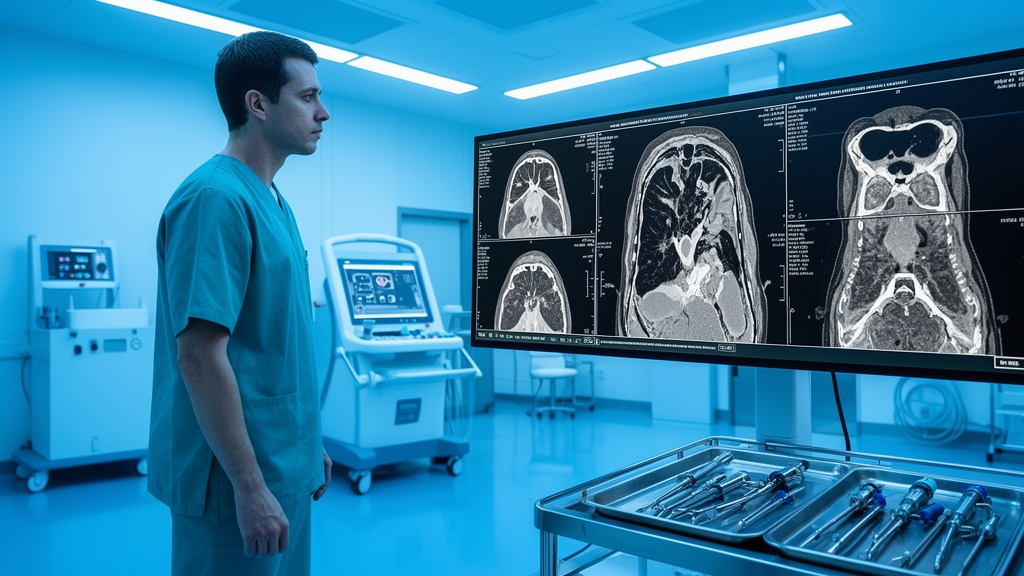
Machine learning models trained on routinely available non-contrast computed tomography scans can accurately predict short-term stone-free outcomes following two common urinary tract stone procedures, according to a study published in BMC Urology. Researchers developed and evaluated treatment-specific computational models for shock wave lithotripsy (SWL) and retrograde intrarenal surgery (RIRS) in adult patients presenting with upper urinary tract stones.

Accurately predicting treatment success after SWL and RIRS remains a significant clinical challenge for urologists. To address this difficulty, the study aimed to develop and validate treatment-specific machine learning models using routinely available non-contrast computed tomography parameters.

The study was conducted across two distinct phases, starting with a retrospective cohort of 324 adult patients treated with either SWL or RIRS. Researchers utilized demographic variables alongside computed tomography-derived stone characteristics—specifically size, volume, density, and heterogeneity—to train supervised machine learning algorithms across fifteen distinct architectures evaluated through five-fold cross-validation.

Following model training, the top-performing algorithm for each intervention was evaluated in an independent prospective cohort of 40 patients, comprising 20 SWL cases and 20 RIRS cases. The researchers also incorporated Shapley Additive Explanations, or SHAP analysis, to quantify the direction and relative contribution of individual imaging features toward the final outcome predictions.

Among the tested algorithms, the CatBoost model achieved the highest predictive performance in the SWL group, reaching an accuracy of 0.85 and an area under the curve of 0.89. For patients undergoing RIRS, a Random Forest model proved most effective, yielding an accuracy of 0.84 and an area under the curve of 0.90. Across both groups, mean stone density measured in Hounsfield units and geometric measurements—the long edge for SWL and the vertical edge for RIRS—were identified as the most influential predictors of clearance.

In the prospective validation cohort, the models correctly classified 100 percent of SWL cases and 95 percent of RIRS cases. The investigators noted that patients assigned to RIRS presented with larger stone sizes, higher volumes, and more challenging anatomical locations, demonstrating confounding by indication in procedural allocation. The authors emphasized that these tools are intended to support individualized patient counseling and expectation management rather than direct treatment selection, noting that broader validation in larger prospective cohorts is required prior to clinical adoption.

Subject of Research: Machine learning prediction of post-procedural stone-free outcomes in urinary tract stone treatments

Article Title: Treatment-specific prediction of stone-free outcomes after SWL and RIRS using machine learning

Article References: Ünlü, N., Erdem, E., Akbay, E., Serel, T. A., & Saylam, B. (2026). Treatment-specific prediction of stone-free outcomes after SWL and RIRS using machine learning. BMC Urology. https://doi.org/10.1186/s12894-026-02345-5

Image Credits: AI Generated

DOI: 10.1186/s12894-026-02345-5

Keywords: machine learning, shock wave lithotripsy, retrograde intrarenal surgery, stone-free outcomes, non-contrast computed tomography, urolithiasis, upper urinary tract stones, CatBoost, Random Forest, Hounsfield units, stone density, stone geometry, SHAP analysis, cross-validation, patient counseling, confounding by indication

News Source: Ophelia Keating. (November 11, 2026). Machine Learning Predicts Stone Clearance Following Shock Wave Lithotripsy and Surgery. Scienmag.


Tags: CatBoostconfounding by indicationcross-validationHounsfield UnitsMachine Learningnon-contrast computed tomographypatient counselingRandom Forestretrograde intrarenal surgerySHAP analysisshock wave lithotripsystone densitystone geometrystone-free outcomesupper urinary tract stonesurolithiasis
Share12Tweet7Share2ShareShareShare1

Related Posts

Drug-Resistant Enterobacteriaceae in Livestock Foods Pose Escalating Global Safety Threats

Drug-Resistant Enterobacteriaceae in Livestock Foods Pose Escalating Global Safety Threats

November 16, 2026
Review links PTSD to metabolic dysfunction, proposes drug repurposing

Review links PTSD to metabolic dysfunction, proposes drug repurposing

November 16, 2026

Higher Inflammatory Markers Linked to Pregnancy Loss

November 16, 2026

Vachellia tortilis Extracts Show Antioxidant and Amylase Inhibition

November 16, 2026

POPULAR NEWS

  • Single-Cell Sequencing Unveils Immune Signatures Linked to Methotrexate Response in Arthritis

    Single-Cell Sequencing Unveils Immune Signatures Linked to Methotrexate Response in Arthritis

    29 shares
    Share 12 Tweet 7
  • CRISPR Gene Editing Yields Non-Browning Bananas to Extend Shelf Life

    29 shares
    Share 12 Tweet 7
  • Rare Pannonibacter Bloodstream Infection in Hemodialysis Patient Resolves After Catheter Removal

    29 shares
    Share 12 Tweet 7
  • Machine Learning Distinguishes Fenugreek Seeds but Exposes Deep Learning Context Flaws

    29 shares
    Share 12 Tweet 7

About

We bring you the latest biotechnology news from best research centers and universities around the world. Check our website.

Follow us

Recent News

Feedback Control Framework Reveals Why Neuronal Homeostasis Fails in Neurodevelopmental Disorders

Review Evaluates Early Warnings And Predictive Control For Engineered Environmental Microbiomes

Natural Product Scaffolds Drive Cancer Drug Discovery Through Targeted Synthetic Optimization

Subscribe to Blog via Email

Enter your email address to subscribe to this blog and receive notifications of new posts by email.

Join 87 other subscribers
  • Contact Us

Bioengineer.org © Copyright 2023 All Rights Reserved.

Welcome Back!

Login to your account below

Forgotten Password?

Retrieve your password

Please enter your username or email address to reset your password.

Log In
No Result
View All Result
  • Homepages
    • Home Page 1
    • Home Page 2
  • News
  • National
  • Business
  • Health
  • Lifestyle
  • Science

Bioengineer.org © Copyright 2023 All Rights Reserved.