A research team has developed an antibody-free flow cytometry approach named PhagoCyt to isolate intact pathogen-containing phagosomes from infected human macrophages, enabling deep quantitative proteomics of both host and bacterial compartments during infection. In a study published in PLOS Biology, investigators utilized this methodology to profile the changing molecular landscape of human THP-1 macrophages infected with Salmonella enterica serovar Typhimurium across early and matured stages of infection. Pathogenic bacteria frequently manipulate the internal environment of host phagosomes to survive and replicate, yet elucidating these dynamics has historically been impeded by the technical difficulty of separating pure bacteria-containing vacuoles from host organelles of comparable physical density. By isolating intact vacuoles based on physical parameters and fluorescent staining rather than density gradients or antibody markers, the platform achieved high-purity recovery from low-input biological samples, identifying thousands of simultaneously shifting proteins across both host and bacterial proteomes during vacuolar maturation.
To establish the PhagoCyt workflow, researchers differentiated human monocytic THP-1 cells into macrophages using phorbol 12-myristate 13-acetate across a seventy-two-hour protocol, confirming macrophage differentiation through elevated surface expression of CD11b, CD11c, and CD14. The macrophages were subsequently infected with wild-type Salmonella enterica serovar Typhimurium or an isogenic mutant strain lacking the PhoP virulence regulator at a multiplicity of infection of one hundred to one for thirty minutes. Following bacterial uptake, extracellular microbes were cleared using gentamicin, and infected macrophages were chased to evaluate phagosomes at either thirty minutes or four hours post-infection.
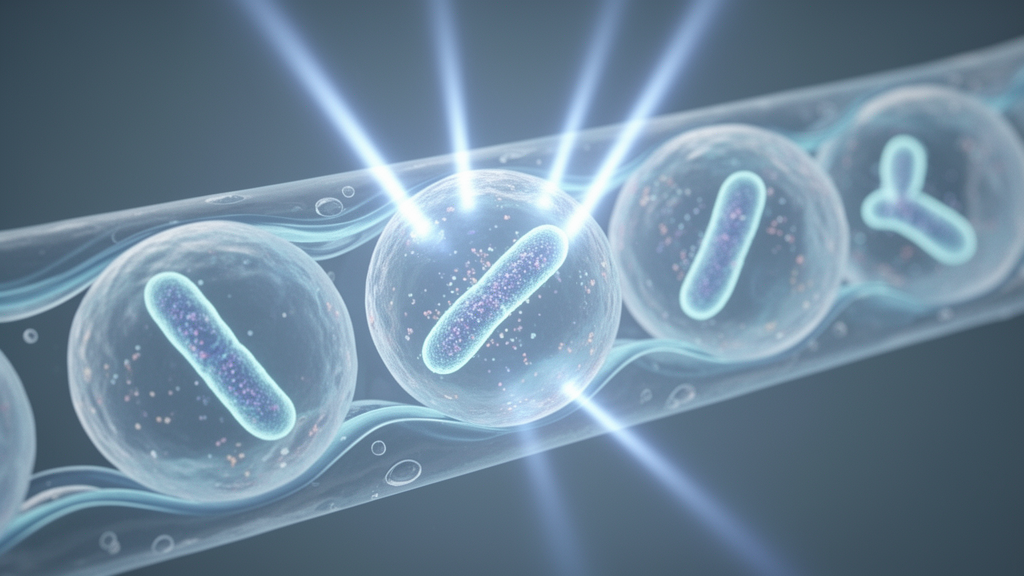
Using a dual-fluorescence gating strategy on a cell sorter, the authors isolated double-positive events displaying both bacterial fluorescence and far-red membrane signals, effectively excluding extracellular bacteria, free membrane fragments, and unstained cellular debris. Imaging flow cytometry confirmed that over ninety-five percent of sorted events represented intact vacuoles enclosing fluorescent bacteria. The authors coupled this sorting method to high-recovery sample preparation using micro-scale suspension trapping and data-independent acquisition mass spectrometry on a trapped ion mobility spectrometry quadrupole time-of-flight mass spectrometer. Testing with HeLa reference standards demonstrated that optimized acquisition schemes achieved comprehensive proteome depth from as little as twenty-five to fifty nanograms of tryptic peptides. When applied to infection samples, peptide digests derived from approximately one hundred thousand sorted phagosomes, containing roughly twenty-five nanograms of total protein mass, yielded robust quantitative signals across multiple biological replicates without requiring large initial cell populations.
Across six independent biological replicates, the proteomic analysis quantified 4,761 distinct proteins meeting stringent reproducibility thresholds of detection in at least four replicates, comprising 3,900 human host proteins and 861 Salmonella proteins. During phagosome maturation from thirty minutes to four hours post-infection in macrophages harboring wild-type bacteria, a total of 1,331 proteins exhibited statistically significant abundance shifts, defined by an adjusted false discovery rate below 0.05 and a fold-change exceeding 1.5. Within this responsive subset, 858 human proteins and 444 bacterial proteins significantly increased in relative abundance over time, whereas 557 host proteins and 15 bacterial proteins demonstrated significant reductions. Gene ontology analyses demonstrated that the isolated phagosomes were heavily enriched with proteins characteristic of early endosomes, late endosomes, lysosomes, the endoplasmic reticulum, the nuclear envelope, and mitochondria, reflecting active remodeling and extensive membrane organellar engagement.
The quantitative profiles revealed that host surface receptors followed divergent trajectories as phagosomes transitioned into matured intracellular niches within the human macrophage. Consistent with classical endocytic clearance and degradation mechanisms, plasma membrane receptors including cytokine receptors and Fc-gamma receptors decreased substantially between thirty minutes and four hours post-infection. In contrast, specific members of the integrin family, notably ITGAL and ITGB2, increased significantly over the same maturation timeframe. Toll-like receptor 2 also exhibited a pronounced accumulation on maturing Salmonella vacuoles, contrasting directly with its documented reduction on phagosomes enclosing inert polystyrene beads. Lysosomal proteases displayed complex individual trafficking patterns, where the majority of luminal cathepsins accumulated during vacuolar maturation, yet four specific cathepsins decreased in relative abundance over time, illustrating that pathogen-directed transport diverts specific hydrolytic enzymes from normal delivery pathways.
The proteomic data demonstrated substantial host structural and functional remodeling across multiple protein complexes surrounding the pathogen-containing vacuole. Complexes involved in early phagosome formation and intracellular transport exhibited decreasing abundance, including septin assemblies, the Golgi-derived coatomer complex, and the associated actin cytoskeleton network. Conversely, host cell defense and processing machineries showed marked increases over time, highlighted by the accumulation of the multi-subunit proteasome and major histocompatibility complex molecules responsible for processing and presenting microbial antigens. Concurrently, wild-type vacuoles exhibited marked enrichment of matrix metalloproteinase-9 and its endogenous regulator, tissue inhibitor of metalloproteinases 3, alongside increases in the lysosomal thiol reductase IFI30, the membrane-repair factor galectin-3, the pore-forming effector gasdermin-A, and the glycosaminoglycan-degrading enzyme alpha-L-iduronidase, indicating a coordinated assembly of tissue-remodeling, host defense, and membrane-permeabilizing factors at the vacuolar interface.
A critical observation within the host organellar profile was the substantial presence and dynamic shift of mitochondrial proteins associated with bacteria-containing vacuoles. In previous studies employing density-gradient centrifugation, mitochondrial markers were frequently considered non-specific background contaminants due to overlapping buoyant densities between mitochondria and intact bacterial cells. In the PhagoCyt dataset, mitochondrial protein abundances shifted markedly between early and late infection timepoints and varied significantly between bacterial strains, pointing toward active organellar recruitment rather than random co-isolation. Furthermore, while the classical phagosomal NADPH oxidase complex declined in abundance during wild-type vacuolar maturation and inducible nitric oxide synthase remained undetectable, mitochondrial superoxide dismutase 2 increased dramatically on late vacuoles. Conversely, cytoplasmic superoxide dismutase 1 maintained static expression levels, supporting a model where mitochondrial membrane recruitment supplies localized reactive oxygen species within the host defense apparatus.
To investigate the functional role of mitochondrial interactions during infection, the investigators tested whether altering mitochondrial electron transport influenced bacterial survival inside host immune cells. Cultured murine bone marrow-derived macrophages were infected with wild-type Salmonella enterica serovar Typhimurium and treated with two micromolar rotenone, a specific chemical inhibitor of mitochondrial respiratory Complex I that stimulates the intracellular generation of reactive oxygen species. Rotenone treatment led to a statistically significant decrease in bacterial colony-forming units recovered from lysed macrophages after four hours of infection. In contrast, parallel control assays exposing Salmonella to identical concentrations of rotenone in standard lysogeny broth culture medium revealed no measurable changes in microbial viability or replication rates. These comparative results indicate that the antibacterial impact of Complex I inhibition depends upon host-mediated cellular pathways rather than direct intrinsic bacterial toxicity from the compound.
Parallel proteomic characterization of phagosomes harboring an isogenic Salmonella mutant lacking the sensor kinase PhoP demonstrated widespread alterations in host protein recruitment patterns. The PhoP/PhoQ two-component regulatory system detects vacuolar acidification, magnesium limitation, and host antimicrobial peptides to activate virulence programs required for intracellular replication. In macrophages infected with the PhoP deletion strain, the accumulation of host glycolytic enzymes observed during wild-type infection was completely reversed, suggesting that bacterial signaling actively reconfigures localized macrophage metabolism to secure nutrient access. Furthermore, key host immune and stress proteins that accumulated on wild-type vacuoles, including matrix metalloproteinase-9, tissue inhibitor of metalloproteinases 3, galectin-3, gasdermin-A, and interferon-stimulated factors such as ISG15 and the HERC5 ubiquitin ligase, showed reversed trajectories or decreased abundance on mutant vacuoles, underscoring bacterial dependence on intact PhoP regulation to orchestrate host remodeling.
Simultaneous profiling of the intra-phagosomal Salmonella proteome validated known virulence pathways while identifying uncharacterized microbial factors induced inside macrophages. As expected, wild-type bacteria strongly upregulated core PhoP-dependent regulators, including PhoP, PhoQ, PhoN, PhoU, and PhoB, together with the phosphate starvation transporter PstS, the outer membrane invasin PagN, the vesicle-associated factor PagC, and the periplasmic peptidase PdgL. Bacterial anti-oxidant enzymes, including superoxide dismutases SodCI and SodA, methionine sulfoxide reductase A, and alkyl hydroperoxide reductase AhpC, increased in parallel with iron-sulfur cluster assembly machinery composed of SufC, SufD, SufI, and SufS to counteract host oxidative stress.
Beyond previously annotated virulence factors, the proteomic survey revealed early and late bacterial candidates with distinct kinetics during infection. During initial entry at thirty minutes, bacteria displayed elevated levels of the copper resistance factor YobA and the biofilm-associated lipoprotein YbaY, both of which decreased as vacuoles matured. At four hours, bacteria exhibited pronounced upregulation of three putative factors: SL1344_1263, an LpxR family lipid A deacylase; SL1344_1563, a predicted envelope-associated protein; and SL1344_3560, an uncharacterized phosphatidic acid phosphatase. Targeted gene-deletion experiments in bone marrow-derived macrophages confirmed that strains lacking either SL1344_1263 or SL1344_1563 exhibited significantly impaired intracellular survival compared to the wild-type parental strain, whereas deletion of SL1344_3560 did not alter bacterial recovery.
Subject of Research: Isolation and proteomic profiling of Salmonella-containing phagosomes using flow cytometry
Article Title: PhagoCyt enables isolation of Salmonella -containing phagosomes and mapping of host and bacteria remodelling of the intracellular niche
Article References: Chatterjee, R., Marin-Rubio, J. L., Cianfanelli, F. R., Frey, A. M., Armando Raymond, B. B., Dannoura, A., Valenzuela, C., Meng, M., Heunis, T., Li, M., Sidgwick, F., Enninga, J., Filby, A., & Trost, M. (2026). PhagoCyt enables isolation of Salmonella-containing phagosomes and mapping of host and bacteria remodelling of the intracellular niche. PLOS Biology, 24(11), e3004073. https://doi.org/10.1371/journal.pbio.3004073
Image Credits: AI Generated
DOI: 10.1371/journal.pbio.3004073
Keywords: Salmonella Typhimurium, PhagoCyt, Phagosome Maturation, Proteomics, Flow Cytometry, Macrophage Infection, Host Pathogen Interactions, Mitochondrial ROS, enables, isolation, Salmonella, containing
News Source: Kristina Jarvis. (November 10, 2026). Flow Cytometry Method Isolates Salmonella Phagosomes to Map Host Pathogen Remodeling. Scienmag.