• HOME
  • NEWS
  • EXPLORE
    • CAREER
      • Companies
      • Jobs
    • EVENTS
    • iGEM
      • News
      • Team
    • PHOTOS
    • VIDEO
    • WIKI
  • BLOG
  • COMMUNITY
    • FACEBOOK
    • INSTAGRAM
    • TWITTER
Thursday, November 12, 2026
BIOENGINEER.ORG
No Result
View All Result
  • Login
  • HOME
  • NEWS
  • EXPLORE
    • CAREER
      • Companies
      • Jobs
        • Lecturer
        • PhD Studentship
        • Postdoc
        • Research Assistant
    • EVENTS
    • iGEM
      • News
      • Team
    • PHOTOS
    • VIDEO
    • WIKI
  • BLOG
  • COMMUNITY
    • FACEBOOK
    • INSTAGRAM
    • TWITTER
No Result
View All Result
Bioengineer.org
No Result
View All Result
Home NEWS Science News Technology

Researchers Develop Bio-Based Epoxy Curing Agents From Pulping Black Liquor Components

by
November 10, 2026
in Technology
Reading Time: 2 mins read
0
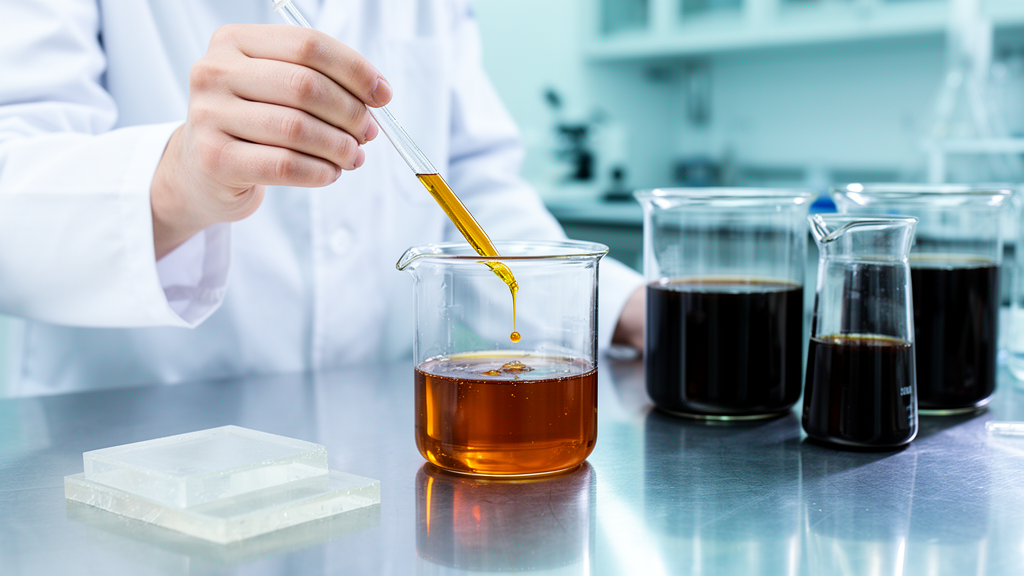
Researchers Develop Bio-Based Epoxy Curing Agents From Pulping Black Liquor Components

Researchers Develop Bio-Based Epoxy Curing Agents From Pulping Black Liquor Components

Share on FacebookShare on TwitterShare on LinkedinShare on RedditShare on Telegram

Researchers have developed bio-based aldehyde-amine curing agents for bisphenol A epoxy resin coatings by isolating and converting multiple chemical fractions from pulping black liquor. In the investigation, the research team demonstrated that both lignin and saccharide-rich fractions separated from this pulping by-product can be successfully transformed into functional curing agents, offering an experimental route for the high-value utilization of all components found in black liquor.

To isolate the distinct constituent materials from the pulping black liquor, the experimental procedure began with acid precipitation to separate the lignin fraction. Following the removal of lignin, the researchers treated the remaining supernatant liquid through either acidolysis or dialysis. These treatment pathways allowed the authors to isolate separate saccharide-rich fractions from the black liquor byproduct alongside the recovered lignin.

The isolated lignin and the various saccharide-rich fractions were subsequently subjected to the Mannich reaction to synthesize bio-based aldehyde-amine curing agents. Following chemical synthesis, the resulting curing agents were evaluated using spectroscopic techniques. Specifically, Fourier transform infrared spectroscopy and proton nuclear magnetic resonance suggested the successful synthesis of both the lignin-based and saccharide-based aldehyde-amine curing agents.

The synthesized curing agents were then applied to cure bisphenol A epoxy resin, specifically designated as E901, to prepare protective epoxy coatings. Within the evaluation of coating performance, curing agents prepared from the acidolysis supernatant—identified as MIAAA and MIBAA—exhibited superior performance when compared directly against the curing agents derived from lignin. Furthermore, the researchers observed that inorganic salts retained within the isolated lignin and saccharide-rich fractions served as functional fillers, contributing to enhanced mechanical properties in the cured epoxy coatings.

Quantitative testing demonstrated specific property advantages depending on the formulation derived from the acidolysis supernatant. The epoxy coating formulated and cured with the MIAAA curing agent achieved a maximum tensile strength of 57.0 MPa. Meanwhile, the coating cured using the MIBAA curing agent demonstrated optimal corrosion protection, recording an impedance modulus value of log|Z|0.01 Hz of 7.31 after two hours of immersion in a 3.5 weight percent sodium chloride solution. Overall, the findings indicate the feasibility of converting black liquor lignin and saccharides into effective curing agents for epoxy coatings.

The authors noted that data will be made available on request.

Subject of Research: Bio-based epoxy curing agents synthesized from pulping black liquor components

Article Title: Preparation of bio-based curing agents utilizing various components isolated from pulping black liquor for application in epoxy coatings

Article References: Ye, J., Song, W., Zhu, W., Lin, H., Fan, Q., & Li, X. (2026). Preparation of bio-based curing agents utilizing various components isolated from pulping black liquor for application in epoxy coatings. Journal of Materials Science, 61(40), 31338-31357. https://doi.org/10.1007/s10853-026-13408-1

Image Credits: AI Generated

DOI: 10.1007/s10853-026-13408-1

Keywords: black liquor, lignin, saccharide fractions, curing agents, epoxy coatings, Mannich reaction, acidolysis, materials science, Preparation, bio-based, curing, agents

News Source: Denise Maddox. (November 10, 2026). Researchers Develop Bio-Based Epoxy Curing Agents From Pulping Black Liquor Components. Scienmag.


Tags: acidolysisagentsbio-basedblack liquorcuringcuring agentsepoxy coatingsligninMannich reactionmaterials sciencepreparationsaccharide fractions
Share12Tweet7Share2ShareShareShare1

Related Posts

Interactive Flow-Models Repository Expands Online Network Traffic Analysis Tools

Interactive Flow-Models Repository Expands Online Network Traffic Analysis Tools

November 12, 2026
Unified Context-Aware AI Framework Improves Multiscale Brain State Decoding Across Subjects

Unified Context-Aware AI Framework Improves Multiscale Brain State Decoding Across Subjects

November 12, 2026

Post-Exposure Acquired Immunity Substantially Reduces Diphtheria Burden in New Transmission Model

November 12, 2026

Multiplexed Superconducting Detectors Precisely Count More Than 9,000 Individual Photons

November 12, 2026

POPULAR NEWS

  • Survey Assesses Cystic Echinococcosis Prevention Gaps Among West Bank Healthcare Trainees

    Survey Assesses Cystic Echinococcosis Prevention Gaps Among West Bank Healthcare Trainees

    29 shares
    Share 12 Tweet 7
  • Nomogram Predicts Survival Outcomes in Supratentorial H3 K27-Altered Diffuse Midline Glioma

    29 shares
    Share 12 Tweet 7
  • Medical Artificial Intelligence Procurement in China Concentrates Heavily in Tertiary Hospitals

    29 shares
    Share 12 Tweet 7
  • Florida Atlantic University Secures NSF Grant for AI and Robotics Training Framework

    29 shares
    Share 12 Tweet 7

About

We bring you the latest biotechnology news from best research centers and universities around the world. Check our website.

Follow us

Recent News

Ophthalmic hospital loss patterns linked to medical services and length of stay

Once-Weekly Basal Insulin Modestly Lowers HbA1c in Type 2 Diabetes Meta-Analysis

Physicists Aim to Test Matter and Antimatter Symmetry Using Molecular Spectroscopy

Subscribe to Blog via Email

Enter your email address to subscribe to this blog and receive notifications of new posts by email.

Join 86 other subscribers
  • Contact Us

Bioengineer.org © Copyright 2023 All Rights Reserved.

Welcome Back!

Login to your account below

Forgotten Password?

Retrieve your password

Please enter your username or email address to reset your password.

Log In
No Result
View All Result
  • Homepages
    • Home Page 1
    • Home Page 2
  • News
  • National
  • Business
  • Health
  • Lifestyle
  • Science

Bioengineer.org © Copyright 2023 All Rights Reserved.