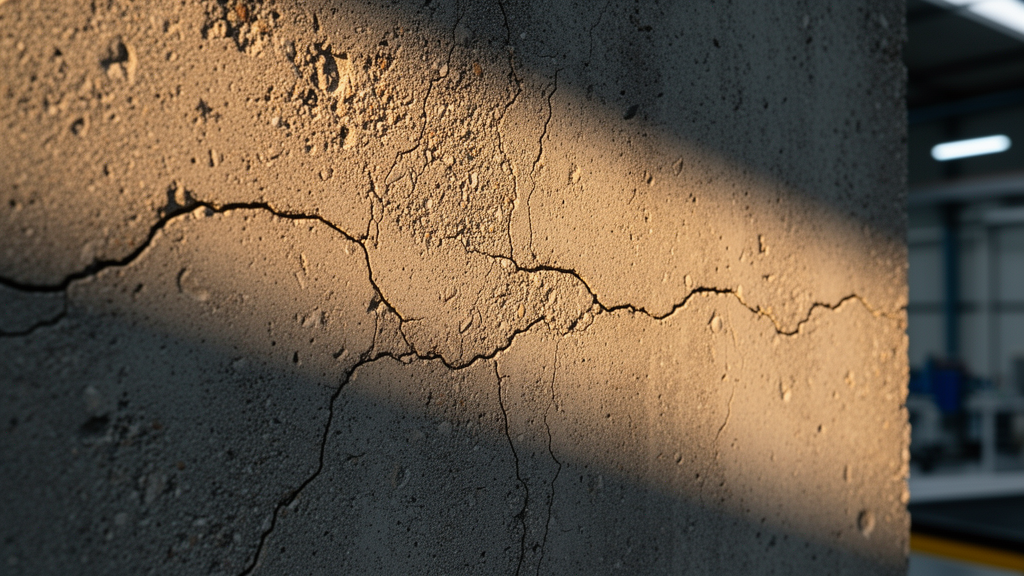
Concrete cracking poses a persistent threat to the structural integrity and operational safety of critical infrastructure, including bridges, roadways, and building structures. As fracture lines propagate through reinforced concrete, they accelerate carbonation and embrittlement, rendering structural components vulnerable to damage, especially in low-temperature environments where fracture zones degrade rapidly. In a study published in AI in Civil Engineering, researchers Hui Li, Chenyu Liu, Ning Zhang, and Wei Shi introduced CG-CNNs, an enhanced segmentation framework combining a clustering-guided block with convolutional neural networks. Traditional manual inspection of surface cracks suffers from inefficiency, high costs, and safety risks, making automated computer vision essential for infrastructure health assessment. The proposed CG-CNN method significantly advances automated boundary recognition, allowing deep learning models to identify crack morphology with high precision. Experimental evaluations demonstrated that an enhanced DeepLabV3+ model achieved an F1 score of 0.90, an intersection over union of 0.82, and reduced edge localization error to 2.31 pixels.
Early research on crack detection primarily employed classical machine learning classifiers, such as Support Vector Machines, Random Forests, and heuristic filters, to achieve crack identification and segmentation. Subsequent investigations introduced refined image processing techniques: binary pixel iterative algorithms guided by seed points along crack paths, weighted skeleton extraction for minimum crack paths, and grid partitioning to isolate crack-textured regions of interest. Other computational pipelines utilized adaptive fuzzy thresholding on grayscale features, minimum-maximum gray discriminant analysis, and specialized noise suppression to delineate structural damage. While these traditional image processing techniques demonstrated effectiveness in controlled settings, significant limitations persisted, particularly when attempting to identify faint cracks against complex concrete backgrounds. In recent years, deep learning and convolutional neural networks transformed visual crack recognition by employing nonlinear mapping to extract high-level feature representations across challenging illumination conditions. However, standard deep networks predominantly focus on detecting broad crack regions rather than refining crack segmentation edge delineation, leaving boundary localization unresolved.
A primary limitation in deploying standard convolutional neural networks for structural health monitoring stems from their heavy reliance on pre-training segmentation. This dependency poses substantial hurdles when transferring trained networks to new concrete cracking scenarios, thereby hampering the operational flexibility of model migration. To address this bottleneck, the researchers explored unsupervised machine learning algorithms, which partition datasets into distinct groups based on inherent mathematical similarities without requiring manual pre-training annotations. Unsupervised clustering has recently gained traction for concrete crack segmentation, with distance-based K-means algorithms prominently utilized to minimize intra-cluster feature differences. However, standard K-means clustering presents notable challenges when applied to crack image analysis. Selecting an optimal cluster number K remains ambiguous for complex datasets, frequently requiring extensive, computationally demanding iterations. Furthermore, the arbitrary choice of K significantly influences algorithmic robustness when processing concrete crack images with varying noise levels, underscoring the need for an automated mechanism to determine optimal cluster counts dynamically.
To resolve the ambiguities of cluster selection while enhancing neural feature representation, the study proposed an innovative clustering-guided block integrated directly into convolutional networks. The clustering-guided block conducts preliminary multidimensional feature extraction from raw images by grouping image pixels according to both grayscale intensity values and spatial coordinates. To mitigate the risk of converging to local optima, the block employs the K-means++ initialization method. The first centroid is chosen randomly from the image data, while subsequent centroids are selected probabilistically, with selection likelihood proportional to squared Euclidean distances to existing centroids. Pixels are assigned to clusters based on minimum squared distance, and centroids are iteratively recomputed as the mathematical mean of all member pixels until convergence. The block autonomously identifies the optimal cluster number K by maximizing the average silhouette coefficient specifically for crack-classified pixels across multiple iterations. Upon convergence, cluster centroid grayscale values and pixel spatial coordinates are combined, isolating crack regions into dedicated clusters and generating an enhanced feature representation matching the original image dimensions.
The researchers implemented the clustering-guided block across three established neural network architectures, creating CG-DeepLabV3+, CG-U-Net, and CG-SegNet. Within CG-DeepLabV3+, the clustering module is integrated directly into the encoder structure, preceding an atrous spatial pyramid pooling module that performs parallel convolutions at multiple dilation rates to extract multi-scale context before a decoder reconstructs full image resolution via bilinear interpolation. The CG-U-Net architecture employs an encoder-decoder topology featuring convolutional, max-pooling, and transposed convolution layers, relying solely on local connections rather than dense layers to substantially decrease computational demands while enhancing segmentation efficiency. In contrast, CG-SegNet pairs a VGG16-based encoder with a decoder connected to softmax output layers, using transposed convolutions that track max-pooling indices during upsampling. While this index-tracking mechanism reduces computational complexity during feature reconstruction, SegNet demonstrated comparatively lower semantic segmentation accuracy than DeepLabV3+ and U-Net due to its reduced sensitivity to subtle crack features, an architectural limitation largely mitigated once enhanced with clustering guidance.
To train and validate the hybrid frameworks, the research team assembled a dedicated dataset from concrete structures, capturing 384 high-resolution photographs measuring 4112 by 3008 pixels using an industrial digital camera operating on the GigE protocol. The photographic collection focused predominantly on longitudinal cracks propagating along concrete column surfaces. To standardize visual characteristics, histogram equalization was applied to enhance brightness contrast by broadening grayscale distributions across dense regions while compressing sparse intervals. The images were subsequently partitioned into smaller sub-windows measuring 512 by 368 pixels, and blocks devoid of crack formations were removed. Data augmentation techniques, including rotation, color transformation, sharpening, and blurring, were systematically implemented to expand diversity and prevent model overfitting. The resulting augmented dataset comprised 2500 processed images, partitioned into training (80 percent), validation (10 percent), and testing (10 percent) subsets. Computational experiments were executed within MATLAB R2023a on a workstation equipped with an Intel Core i7-11800H processor, an NVIDIA GeForce RTX 3070 graphics card, and 32 gigabytes of DDR4 memory.
Training of the neural networks was conducted using the Adam optimization algorithm across 100 epochs with a batch size of 8. The initial learning rate was set to 0.001 and adjusted in a piecewise manner, reducing by 30 percent every 10 epochs to promote stable convergence. Because crack pixels constitute only a minuscule proportion of surface images, severe class imbalance exists between crack targets and dominant background regions. Standard overall accuracy proves inadequate under these conditions, as it can be easily skewed by predominant background pixels. To counteract this imbalance during training, the team implemented a weighted cross-entropy loss function that assigns distinct loss weights to crack and background classes. Model performance was evaluated using precision, recall, F1 score, and crack-region intersection over union. Restricting intersection over union measurements strictly to crack pixels prevented background dominance from distorting evaluation, ensuring an accurate assessment of how closely segmented boundaries aligned with ground-truth annotations.
Quantitative evaluation of concrete column crack segmentation revealed that incorporating the clustering-guided block consistently improved all semantic segmentation metrics across tested architectures. Without the clustering block, standard CNNs exhibited redundant edge artifacts along crack boundaries, caused by ambiguous fracture demarcations and concrete surface noise. DeepLabV3+ displayed noticeable sensitivity to intra-crack ash deposits and exposure variations, while all networks struggled with edge localization in low-resolution samples. With clustering guidance incorporated, the models effectively suppressed noise artifacts while maintaining robustness against surface paint spots and uneven illumination. Among evaluated models, CG-DeepLabV3+ achieved the highest precision at 0.92, while CG-U-Net achieved the best recall at 0.89. Both models demonstrated comparable overall performance, with CG-DeepLabV3+ securing an F1 score of 0.90 and an intersection over union of 0.82. Although SegNet initially showed lower baseline accuracy, adding the clustering block made its performance competitive with CG-DeepLabV3+ and CG-U-Net, demonstrating significant improvements in intersection over union.
To verify the optimal cluster number K, the researchers evaluated the joint trends of Root Mean Square Error and average silhouette coefficient across candidate K values ranging from 2 to 6. Root Mean Square Error assesses clustering effectiveness by measuring discrepancies between pixel values and cluster centroids; smaller values indicate more cohesive clustering. While increasing K reduces intra-cluster variance, practical returns diminish because concrete crack images contain only a few primary visual constituents, predominantly crack voids and background substrate. The Root Mean Square Error exhibited a sharp initial decline before plateauing at higher K values, with an inflection point at K = 4. Concurrently, the average silhouette coefficient reached its peak at K = 4.
Because accurate crack edge identification is essential for determining crack width, the study introduced the Euclidean pixel distance delta between ground-truth and predicted edges, along with its standard deviation sigma, to evaluate boundary accuracy. Without clustering guidance, baseline networks exhibited high localization errors, averaging 3.51 pixels for DeepLabV3+, 3.86 pixels for U-Net, and 4.06 pixels for SegNet, with dispersion exceeding 2 pixels. Incorporating the clustering block reduced mean edge error to 2.31 pixels for CG-DeepLabV3+, 2.75 pixels for CG-U-Net, and 3.12 pixels for CG-SegNet, lowering error standard deviation by approximately 0.8 pixels and concentrating error distributions around a peak at 2 pixels. Furthermore, on the public DeepCrack dataset, CG-DeepLabV3+ outperformed baseline DeepLabV3+ by margins of 0.06 in precision and 0.08 in recall, achieving top scores in F1 and intersection over union against APF-Net and MambaCrackNet. Despite minor limitations with faint cracks under heavy noise, CG-CNNs deliver highly reliable concrete crack assessments.
Subject of Research: Automated concrete crack segmentation using clustering-guided convolutional neural networks
Article Title: An enhanced method of CNNs by incorporating the clustering-guided block for concrete crack recognition
Article References: Li, H., Liu, C., Zhang, N., & Shi, W. (2025). An enhanced method of CNNs by incorporating the clustering-guided block for concrete crack recognition. AI in Civil Engineering, 4(1), Article 13. https://doi.org/10.1007/s43503-025-00058-6
Image Credits: AI Generated
DOI: 10.1007/s43503-025-00058-6
Keywords: concrete crack detection, convolutional neural networks, clustering algorithms, semantic segmentation, structural health monitoring, deep learning, computer vision, infrastructure inspection, enhanced, method, CNNs, incorporating
News Source: Blake Davidson. (November 10, 2026). Clustering-Guided Convolutional Networks Enhance Concrete Crack Boundary Detection Accuracy. Scienmag.