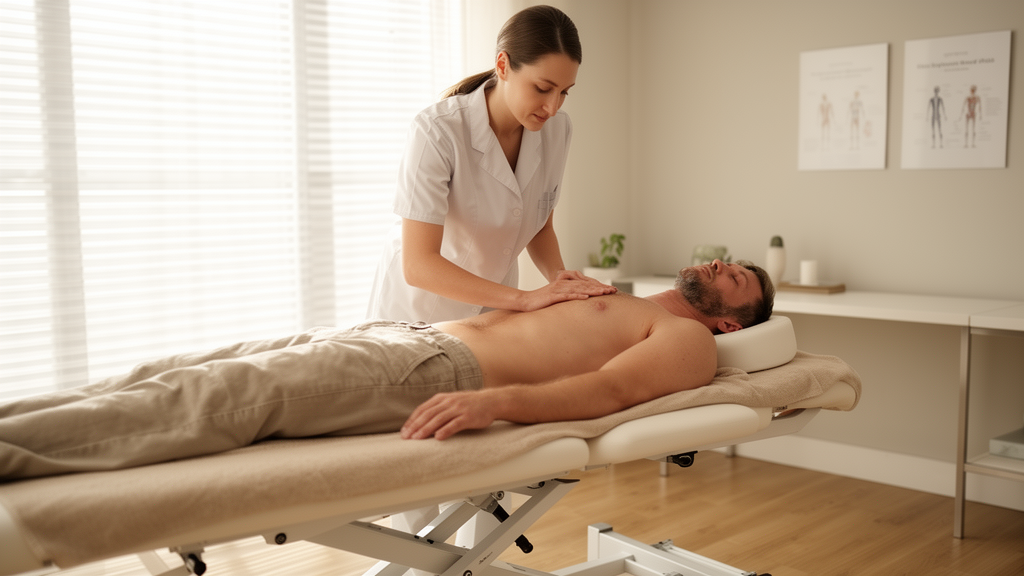
A randomized controlled trial investigating connective tissue massage has found preliminary evidence of improvements in symptom severity, autonomic dysfunction, and overall wellbeing among men diagnosed with erectile dysfunction.
Connective tissue massage is characterized as a specialized physiotherapy approach that produces an autonomic response through cuteno-visceral reflexes. To address this notable gap in the literature, the researchers designed a clinical trial to evaluate how connective tissue massage influences erectile dysfunction severity, the severity of autonomic dysfunction symptoms, and psychological status along with health-related quality of life among affected individuals.
The randomized controlled study evaluated sexually active male participants aged 20 to 65 years who were clinically diagnosed with erectile dysfunction. The full investigation commenced participant enrollment in December 2023 and completed its experimental protocols and follow-up assessments in December 2024. The researchers divided thirty enrolled individuals into two equal parallel cohorts consisting of fifteen participants each: a connective tissue massage intervention group and a control group. At the beginning of the study, participants allocated to the connective tissue massage group had a mean age of 44.67 years and an average body mass index of 25.51 kilograms per square meter, whereas individuals assigned to the control group had a mean age of 45.67 years and an average body mass index of 28.07 kilograms per square meter.
Each cohort followed distinct intervention regimens over a structured four-week experimental timeframe. The control group received standard treatment alone throughout the study duration. In contrast, participants assigned to the connective tissue massage group received connective tissue massage administered at a frequency of three days per week for four consecutive weeks in addition to their standard treatment protocol. The research team evaluated four primary clinical dimensions before and after the four-week period: erectile dysfunction severity using the five-item International Index of Erectile Function (IIEF-5), autonomic dysfunction symptoms using the 31-item Composite Autonomic Symptom Score (COMPASS-31), psychological status using the 21-item Depression Anxiety Stress Scale (DASS-21), and overall quality of life using the 36-item Short Form Health Survey (SF-36).
An analysis comparing the pre-intervention and post-intervention measurements within each group showed significant improvements confined exclusively to the massage arm. Within the connective tissue massage group, participants achieved statistically significant increases in their IIEF-5 scores, with the reported p-value reaching 0.018. Significant gains were likewise observed in quality-of-life assessments, as the physical health domain score of the SF-36 increased with a p-value of 0.004, and the mental health domain score increased with a p-value of less than 0.001. Furthermore, scores on the COMPASS-31 autonomic scale decreased, and participants experienced decreases in both the anxiety and stress subscale scores of the DASS-21. In contrast, the control group receiving standard treatment alone demonstrated no statistically significant changes across any of the measured parameters over the course of the four-week observation window.
Direct comparisons between the two study groups following the four-week intervention confirmed several significant advantages for the cohort receiving connective tissue massage. When comparing post-intervention outcomes between groups, the investigators found that IIEF-5 scores were significantly higher in the connective tissue massage group than in the control group, with a p-value of 0.037. Participants in the massage group also demonstrated significantly higher SF-36 mental health scores compared to the control group, yielding a p-value of 0.002. Additionally, post-treatment values for the COMPASS-31 autonomic assessment and the depression subscale of the DASS-21 were lower among individuals in the connective tissue massage group compared to those in the control group.
In their conclusion, the study authors stated that this randomized controlled trial provides preliminary evidence that connective tissue massage may improve erectile dysfunction symptom severity, autonomic dysfunction, and overall wellbeing. However, the authors explicitly emphasized that these early findings require confirmation in larger, long-term clinical trials featuring active control groups before any firm clinical recommendations can be made in routine practice.
Subject of Research: Connective tissue massage for erectile dysfunction
Article Title: Connective tissue massage improves symptoms, autonomic dysfunctions and wellbeing in erectile dysfunction: a randomized controlled trial
Article References: Arslan, M., Kaya, D. O., & Celenay, S. T. (2026). Connective tissue massage improves symptoms, autonomic dysfunctions and wellbeing in erectile dysfunction: a randomized controlled trial. BMC Urology. https://doi.org/10.1186/s12894-026-02421-w
Image Credits: AI Generated
DOI: 10.1186/s12894-026-02421-w
Keywords: erectile dysfunction, connective tissue massage, autonomic dysfunction, physiotherapy, randomized controlled trial, men's health, IIEF-5, quality of life, Connective, tissue, massage, improves
News Source: Ophelia Keating. (November 10, 2026). Connective Tissue Massage May Relieve Erectile Dysfunction Symptoms in Randomized Trial. Scienmag.