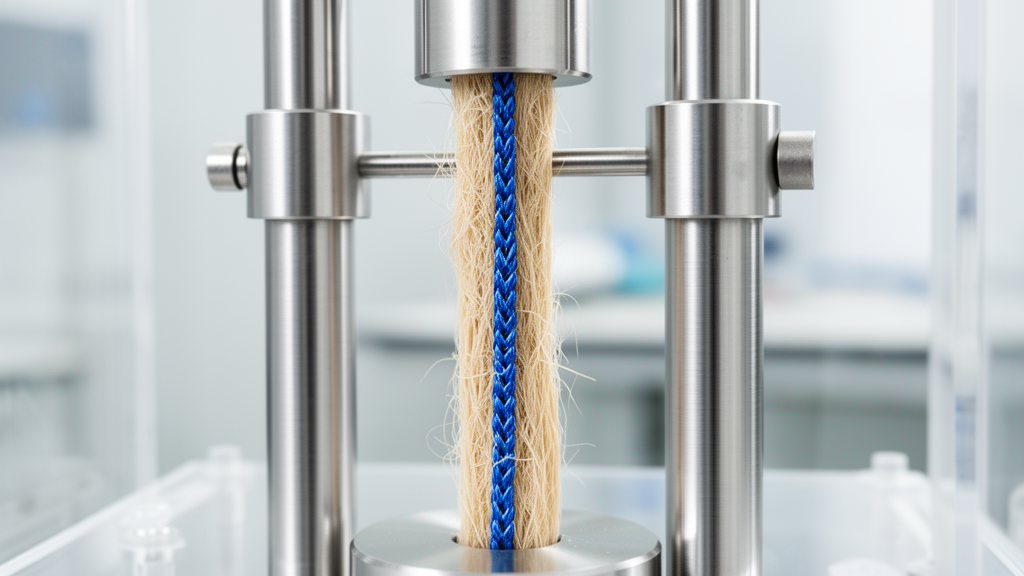
In an in vitro laboratory biomechanical study evaluating tendon graft preparation for anterior cruciate ligament reconstruction, adding an independent high-strength suture augmentation parallel to bovine tendon grafts significantly improved mechanical performance by increasing construct stiffness and ultimate failure load while reducing elongation under tensile load.
The all-inside anterior cruciate ligament reconstruction technique relies heavily on continuous graft stability, placing critical importance on graft preparation methods. To address stability demands, graft augmentation techniques have been proposed, prompting investigators to test whether applying an independent high-strength suture parallel to the tendon graft would enhance overall construct properties.
The biomechanical evaluation examined a total of thirty-eight specimens allocated across three distinct experimental groups. These configurations included a suture-alone group comprising ten specimens prepared with No. 2 non-absorbable braided polyethylene suture, a graft-alone group consisting of thirteen bovine tendon specimens, and a combined graft-plus-suture construct group containing fifteen specimens.
Mechanical testing across all thirty-eight specimens was conducted using uniaxial tensile evaluation. Each construct underwent an initial preconditioning phase ranging from 0 to 350 newtons, immediately followed by a destructive load-to-failure test performed at a displacement rate of 50 millimeters per minute. The protocol measured three primary mechanical parameters: elongation in millimeters, ultimate failure load in newtons, and construct stiffness in newtons per millimeter, with group differences evaluated through one-way analysis of variance and Bonferroni post-hoc testing.
Under mechanical evaluation, the combined graft-plus-suture constructs demonstrated significantly lower elongation at 2.72 ± 0.51 millimeters compared with 4.44 ± 1.59 millimeters in the graft-alone group (mean difference -1.71 mm, 95% confidence interval -2.86 to -0.56; p = 0.002) and 7.77 ± 1.37 millimeters in the suture-alone group (mean difference -5.05 mm, 95% confidence interval -6.29 to -3.81; p < 0.001). The graft-plus-suture constructs also demonstrated a higher ultimate failure load of 1327.83 ± 388.13 newtons compared with 925.52 ± 337.06 newtons in the graft-alone group (mean difference 664.93 N, 95% confidence interval 335.82 to 994.04; p < 0.001), alongside significantly greater construct stiffness of 229.17 ± 25.105 newtons per millimeter versus 163.880 ± 31.3 newtons per millimeter (p < 0.001).
The investigators concluded that in this in vitro bovine model, independent high-strength suture augmentation significantly improved tendon graft biomechanical properties. While these findings suggest a potential strategy for graft reinforcement during reconstruction preparation, the authors emphasized that a cautious interpretation is warranted pending in vivo testing and clinical validation.
Subject of Research: Biomechanical evaluation of suture augmentation for tendon graft reconstruction
Article Title: A simple independent high-strength suture augmentation significantly improves tendon biomechanical properties in anterior cruciate ligament reconstruction
Article References: Dung, T. C., Elsheikh, R., Kha, T. D., An, N. T., Makram, A. M., Chanh, P. T., Nam, N. H., & Huy, N. T. (2026). A simple independent high-strength suture augmentation significantly improves tendon biomechanical properties in anterior cruciate ligament reconstruction. BMC Musculoskeletal Disorders. https://doi.org/10.1186/s12891-026-10537-1
Image Credits: AI Generated
DOI: 10.1186/s12891-026-10537-1
Keywords: anterior cruciate ligament reconstruction, suture augmentation, biomechanical testing, tendon graft, tensile strength, construct stiffness, bovine tendon model, orthopedic research, simple, independent, high-strength, suture
News Source: Ophelia Keating. (November 10, 2026). Suture Augmentation Strengthens Bovine Tendon Constructs in Laboratory ACL Reconstruction Model. Scienmag.