• HOME
  • NEWS
  • EXPLORE
    • CAREER
      • Companies
      • Jobs
    • EVENTS
    • iGEM
      • News
      • Team
    • PHOTOS
    • VIDEO
    • WIKI
  • BLOG
  • COMMUNITY
    • FACEBOOK
    • INSTAGRAM
    • TWITTER
Thursday, November 19, 2026
BIOENGINEER.ORG
No Result
View All Result
  • Login
  • HOME
  • NEWS
  • EXPLORE
    • CAREER
      • Companies
      • Jobs
        • Lecturer
        • PhD Studentship
        • Postdoc
        • Research Assistant
    • EVENTS
    • iGEM
      • News
      • Team
    • PHOTOS
    • VIDEO
    • WIKI
  • BLOG
  • COMMUNITY
    • FACEBOOK
    • INSTAGRAM
    • TWITTER
No Result
View All Result
Bioengineer.org
No Result
View All Result
Home NEWS Science News Health

High Screen Time Linked to Sleep and Behavioral Issues in Preschoolers

by
November 10, 2026
in Health
Reading Time: 2 mins read
0
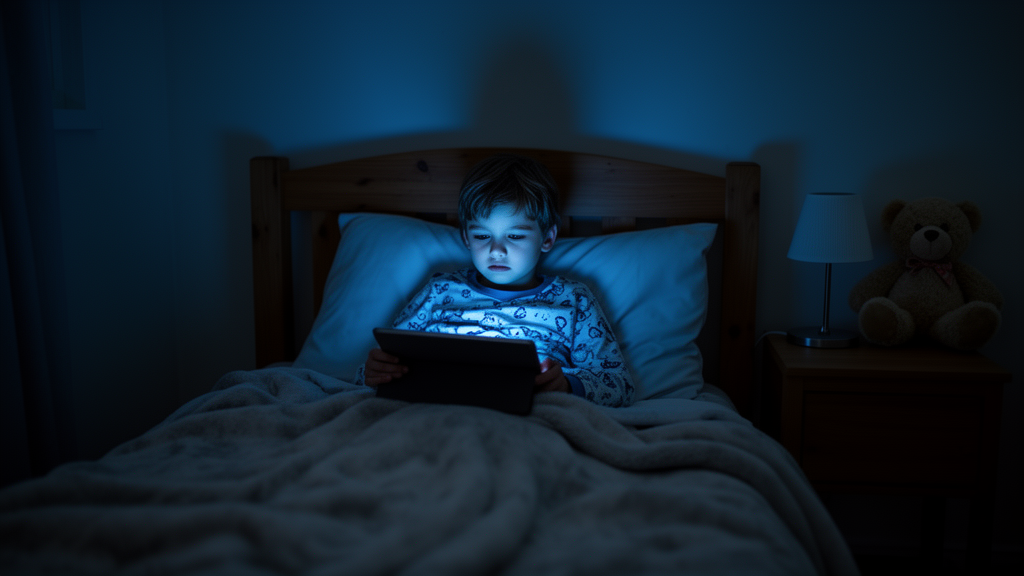
High Screen Time Linked to Sleep and Behavioral Issues in Preschoolers

High Screen Time Linked to Sleep and Behavioral Issues in Preschoolers

Share on FacebookShare on TwitterShare on LinkedinShare on RedditShare on Telegram

A cross-sectional study conducted in Portugal has identified significant associations between high screen time and several adverse lifestyle and mental health outcomes in preschool children. Published in Child and Adolescent Psychiatry and Mental Health, the research examined a cohort of 931 children aged two to six years. The primary objective was to assess how screen exposure relates to daily habits, including sleep and diet, and to evaluate the connection between these factors and emotional and behavioral difficulties.

Data collection relied on parent-completed questionnaires to assess children’s lifestyle habits and emotional and behavioral difficulties. The Strengths and Difficulties Questionnaire (SDQ) was the primary instrument used to measure mental health indicators. In addition to self-reported data, anthropometric measurements were collected to account for physical health factors. Screen time was categorized into three distinct levels: low, defined as 60 minutes or less per day; moderate, ranging from more than 60 to less than 120 minutes per day; and high, defined as 120 minutes or more per day.

The analysis employed linear and logistic regression models to adjust for potential confounding variables. These adjustments included the child’s age, sex, body mass index, and parental education level.

Regarding lifestyle habits, the study found that high screen time was significantly associated with shorter weekday sleep duration. Children in the high screen time category also reported higher consumption of ultra-processed foods. However, the study did not find significant associations between high screen time and active play time or participation in extracurricular sports after adjustment.

In terms of mental health, children with high screen time had higher odds of scoring in the abnormal range on the SDQ. This suggests a greater prevalence of emotional and behavioral difficulties among those with higher screen exposure. The study also identified other factors independently associated with SDQ categories. Longer weekend sleep duration and lower maternal educational level were found to be significant predictors of mental health outcomes.

The conclusions drawn from this study support current recommendations for promoting balanced screen use and healthy lifestyle habits during early childhood. Furthermore, the study highlights the role of family and sociodemographic factors in shaping children’s mental health.

The cross-sectional design prevents causal inferences, meaning it is not possible to determine whether high screen time causes the observed outcomes or if other factors contribute to both. Additionally, the reliance on parent-reported data for lifestyle habits and screen time may introduce measurement bias. The sample was drawn from Portugal, which may limit the applicability of the findings to other populations.

Subject of Research: Associations between screen time, lifestyle habits, and mental health in preschool children

Article Title: Screen use, lifestyle habits and mental health in preschool children: a cross-sectional study

Article References: Ródenas-Munar, M., Costa, G., Bouzas, C., Machado-Rodrigues, A. M., Tur, J. A., & Rodrigues, D. (2026). Screen use, lifestyle habits and mental health in preschool children: a cross-sectional study. Child and Adolescent Psychiatry and Mental Health. https://doi.org/10.1186/s13034-026-01158-6

Image Credits: AI Generated

DOI: 10.1186/s13034-026-01158-6

Keywords: screen time, preschool children, mental health, sleep duration, ultra-processed foods, cross-sectional study, Portugal, behavioral difficulties, lifestyle habits, SDQ, Screen, lifestyle

News Source: Glenn Wilkins. (November 10, 2026). High Screen Time Linked to Sleep and Behavioral Issues in Preschoolers. Scienmag.


Tags: behavioral difficultiesCross-sectional Studylifestylelifestyle habitsMental HealthPortugalpreschool childrenscreenscreen timeSDQsleep durationultra-processed foods
Share12Tweet7Share2ShareShareShare1

Related Posts

Mixed and Dedifferentiated Endometrial Carcinomas Share Clonal Roots and Hypermutated Backgrounds

Mixed and Dedifferentiated Endometrial Carcinomas Share Clonal Roots and Hypermutated Backgrounds

November 19, 2026
Isometric Handgrip Exercise Fails to Lower Blood Pressure in Trained Hypertensive Women

Isometric Handgrip Exercise Fails to Lower Blood Pressure in Trained Hypertensive Women

November 19, 2026

Three Cell Death Biomarkers May Help Identify Ischemic Stroke in Blood

November 19, 2026

Depth Perception Often Remains Impaired After Central Serous Chorioretinopathy Therapy

November 19, 2026

POPULAR NEWS

  • Corncrake Flagship Status Does Not Guarantee Local Recognition in Rural Romania

    Corncrake Flagship Status Does Not Guarantee Local Recognition in Rural Romania

    29 shares
    Share 12 Tweet 7
  • Pre-Rollout Survey Finds Eighteen Percent HPV Vaccine Uptake Among Chinese College Women

    29 shares
    Share 12 Tweet 7
  • Military Physicians Issue Fewer Medical Exemptions as Decision Fatigue Mounts Across Workdays

    29 shares
    Share 12 Tweet 7
  • Counseling and Mobile App Increase Postpartum Modern Contraceptive Uptake in Jordan

    29 shares
    Share 12 Tweet 7

About

We bring you the latest biotechnology news from best research centers and universities around the world. Check our website.

Follow us

Recent News

Mixed and Dedifferentiated Endometrial Carcinomas Share Clonal Roots and Hypermutated Backgrounds

Knowledge Transfer and Blockchain Capability in Saudi Supply Chain Financing

Isometric Handgrip Exercise Fails to Lower Blood Pressure in Trained Hypertensive Women

Subscribe to Blog via Email

Enter your email address to subscribe to this blog and receive notifications of new posts by email.

Join 88 other subscribers
  • Contact Us

Bioengineer.org © Copyright 2023 All Rights Reserved.

Welcome Back!

Login to your account below

Forgotten Password?

Retrieve your password

Please enter your username or email address to reset your password.

Log In
No Result
View All Result
  • Homepages
    • Home Page 1
    • Home Page 2
  • News
  • National
  • Business
  • Health
  • Lifestyle
  • Science

Bioengineer.org © Copyright 2023 All Rights Reserved.