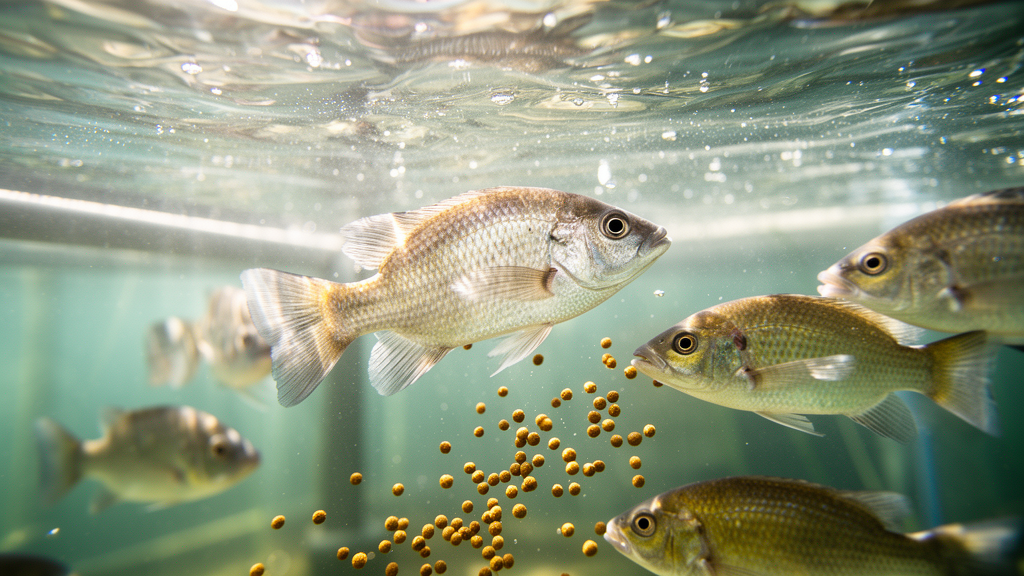
Researchers at Beibu Gulf University in Qinzhou, China, have demonstrated that fermented complete fish feed inoculated with a single strain of Bacillus spizizenii significantly improves disease resistance, growth performance, and hepato-intestinal health in Nile tilapia. Published in Frontiers in Veterinary Science in November 2026, the study highlights the potential of this specific bacterial strain, designated D7-HSJ9, as a green alternative to antibiotics in aquaculture. The work addresses a critical gap in the aquafeed industry, where synthetic microbial consortia are often preferred for industrial-scale production despite insufficient comparative data on their probiotic effects relative to single strains. By isolating a Bacillus strain with specific inhibitory activity against Streptococcus iniae, a pathogen responsible for substantial economic losses in the global tilapia industry, the team aimed to evaluate the efficacy of single-strain fermentation against mixed-strain approaches.
The study focused on Bacillus spizizenii D7-HSJ9, which was isolated from mangrove sediment and identified through whole-genome sequencing and morphological analysis. The strain exhibited a short rod morphology and shared 99.4% similarity with Bacillus spizizenii in phylogenetic analysis. Safety assessments confirmed that D7-HSJ9 did not produce hemolytic zones on blood agar plates, indicating a favorable safety profile. The strain demonstrated the ability to produce amylase, protease, and cellulase, enzymes that facilitate the fermentation of various animal and plant raw materials. Furthermore, D7-HSJ9 displayed robust environmental adaptability, maintaining growth across a broad pH range of 4 to 9 and at low to moderate salt concentrations, with optimal growth observed at 30 degrees Celsius. These characteristics suggest that the strain is well-suited for the variable conditions encountered in feed production and aquaculture environments.
To evaluate the probiotic effects, the researchers prepared three types of fermented complete pellet feed (FCPF) using commercial tilapia feed. The first group, labeled RKL, contained only Bacillus spizizenii D7-HSJ9. The second group, BL, included D7-HSJ9 combined with Lactobacillus rhamnosus. The third group, BLS, contained D7-HSJ9, L. rhamnosus, and Saccharomyces cerevisiae. A control group, CK, received the unfermented commercial feed. The mixtures were fermented at 30 degrees Celsius for six days. Post-fermentation viable counts showed that D7-HSJ9 populations increased to at least 1 x 10^7 CFU/g in all groups. Notably, no viable yeast was detected in the BLS group at the end of fermentation, suggesting that the rapid proliferation of Bacillus and lactic acid bacteria created an acidic, nutrient-deficient microenvironment that restrained yeast reproduction. This competitive dynamic may explain why single-strain fermentation yielded superior results in subsequent trials.
In vitro antimicrobial assays revealed that the RKL group exhibited the strongest inhibitory activity against S. iniae, with an inhibition zone diameter of 14 ± 0.3 mm. This result surpassed the BL group (9 ± 0.13 mm), the BLS group (11 ± 0.31 mm), and the chloramphenicol positive control (11 ± 0.23 mm). The study also conducted an in vivo challenge trial in Nile tilapia to assess disease resistance. After an eight-week feeding period, fish were intraperitoneally injected with S. iniae at a dose of 1 x 10^9 CFU/mL. Within seven days post-challenge, the RKL group achieved the highest relative protection rate of 42.86%, compared to 38.10% for the BLS group and 14.29% for the BL group. The survival rate in the RKL group was 60%, significantly higher than the control group. These findings indicate that single-strain fermentation enhances the feed’s ability to resist S. iniae both in vitro and in vivo, likely due to the absence of competitive interactions that might inhibit D7-HSJ9 proliferation when other strains are present.
The eight-week feeding trial also demonstrated that the RKL group exhibited the best growth promotion among all treatment groups. The weight gain rate (WGR) and specific growth rate (SGR) in the RKL group were significantly higher than in the control group, with WGR reaching 679.29 ± 133.30% and SGR at 3.64 ± 0.16%/d. The feed conversion ratio (FCR) was also significantly lower in the RKL group (1.30 ± 0.05) compared to the control (1.46 ± 0.01), indicating more efficient feed utilization. Final body weight in the RKL group was 50.00 ± 13.27 g, significantly higher than the control group’s 40.19 ± 14.31 g. These improvements in growth performance were attributed to enhanced nutrient absorption and intestinal function, as evidenced by morphological and biochemical analyses of the fish’s digestive system.
Intestinal morphological analysis revealed a significant increase in villus width in the RKL group (272.37 μm) compared to the control group (100.15 μm), indicating a substantial expansion of the absorptive surface area. Digestive enzyme activities were also enhanced in the RKL group. Intestinal trypsin activity was significantly higher in the RKL group (14.38 U/g mass) than in the control (6.35 U/g mass), suggesting improved protein digestion. Additionally, intestinal lipase activity was significantly increased in the RKL group (4.91 U/g mass) compared to the control (1.51 U/g mass), indicating superior enhancement of fat digestion. These combined improvements in villus width and digestive enzyme activities highlight the beneficial effects of single-strain fermented feed on nutrient absorption and overall intestinal function, which likely contribute to the observed growth promotion.
Histological examination of liver tissues showed that the control group exhibited signs of hepatic steatosis, characterized by prominent hepatocyte vacuolation indicative of lipid accumulation. In contrast, the RKL group displayed reduced hepatic vacuolation and a more uniform, healthy hepatocellular structure. The liver triglyceride content in the RKL group (5.46 mg/g) was significantly reduced compared to the control group (12.37 mg/g). Serum biochemical parameters further supported the protective effects of the RKL feed. Aspartate aminotransferase (AST) levels were significantly lower in the RKL group (53.63 U/L) than in the control (103.62 U/L), while total antioxidant capacity (T-AOC) was significantly higher in the RKL group (5.20 μmol/mL) compared to the control (3.03 μmol/mL). These results suggest that the fermented feed helps prevent hepatic lipid accumulation and promotes a healthier liver state by enhancing the antioxidant defense system.
16S rRNA gene sequencing of intestinal contents revealed significant differences in microbial community structure between the RKL and control groups. The RKL group exhibited reduced abundances of the pathogen Plesiomonas and increased levels of probiotic genera such as Bacillus and Pediococcus. Linear discriminant analysis effect size (LEfSe) analysis identified Plesiomonas as a biomarker in the control group, while Bacilli were characterized as biomarkers in the RKL group. Metabolomic analysis indicated that the RKL group had 145 increased and 194 decreased metabolites compared to the control. This modulation of the gut microbiota and metabolome likely contributes to the improved health and disease resistance observed in the tilapia fed with RKL fermented feed.
Transcriptomic analysis of liver tissues identified 111 differentially expressed genes between the RKL and control groups, with 36 upregulated and 75 downregulated genes. The upregulated genes included immune-related genes such as E3-TRIM39, NLRC3, CTL10, Mx, and Ho1, which are involved in pathogen recognition, antiviral defense, and cytoprotection. Conversely, immunosuppressive genes such as LTA4, Plc2, angptl3, VTCN-1, and PD1 were significantly downregulated in the RKL group. The downregulation of these genes suggests a reduction in negative regulatory constraints on the immune system, potentially enhancing T-cell and B-cell-mediated immune responses. The coordinated modulation of these immune pathways indicates that the single-strain fermented feed improves the overall immune capacity of Nile tilapia, providing a molecular basis for the observed increase in disease resistance against S. iniae.
The study acknowledges several limitations, including the artificial nature of the high-dose bacterial challenge, which may not fully reflect natural outbreak conditions in commercial ponds. The authors note that future work should validate the role of bacillaene, a metabolite produced by D7-HSJ9, in S. iniae inhibition and conduct large-scale field trials to confirm the practical application of this fermented feed. Despite these limitations, the findings provide strong evidence that single-strain fermentation with Bacillus spizizenii D7-HSJ9 is a promising strategy for improving aquaculture sustainability. By offering a green alternative to antibiotics, this approach could help mitigate the issues of drug resistance and environmental impact associated with conventional aquafeed practices. The study underscores the importance of optimizing probiotic strains and fermentation conditions to maximize health benefits in fish farming.
Subject of Research: Evaluation of single-strain Bacillus spizizenii fermented complete feed on Nile tilapia health and growth
Article Title: Bacillus fermented complete feed: a green alternative to improve disease resistance, growth performance and hepato-intestinal health of Nile tilapia
Article References: Xie, Z., Liu, Y., Li, X., Jia, J., Qiu, M., Wu, Z., Peng, C., Wang, Y., Qin, Y., & Gong, B. (2026). Bacillus fermented complete feed: a green alternative to improve disease resistance, growth performance and hepato-intestinal health of Nile tilapia. Frontiers in Veterinary Science, 13, 1908740. https://doi.org/10.3389/fvets.2026.1908740
Image Credits: AI Generated
DOI: 10.3389/fvets.2026.1908740
Keywords: Bacillus spizizenii, Nile tilapia, fermented feed, Streptococcus iniae, aquaculture, gut microbiota, probiotics, hepatic health, transcriptomics, disease resistance, Bacillus, fermented
News Source: Kristina Jarvis. (November 10, 2026). Single Bacillus Strain Fermented Feed Boosts Tilapia Immunity and Growth. Scienmag.