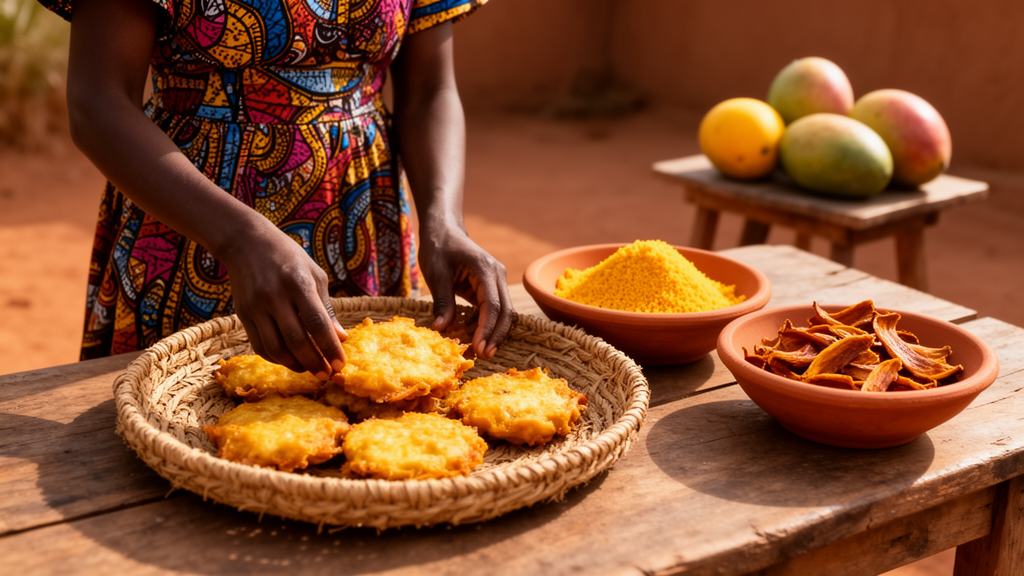
Researchers from Burkina Faso have demonstrated that incorporating mango peel and kernel flours into mugudugu, a traditional millet and peanut snack, significantly enhances its nutritional and bioactive profiles. The study, published in Food, Nutrition and Health, investigates the potential of valorizing mango by-products, which are abundant in the country, to improve the nutritional resilience of local food systems. By substituting millet with these flours at incremental levels, the team observed marked increases in dietary fiber, ash, and antioxidant compounds, although protein levels decreased across all fortified formulations.
The research team, led by Wendkouni Marguerite Bamogo and colleagues, utilized mango peels and kernels from the Lippens variety, a dominant cultivar in Burkina Faso’s mango processing industry. These by-products were processed into mango peel flour (MPF) and mango kernel flour (MKF). The kernels underwent a specific treatment involving soaking in tap water for 72 hours followed by boiling for 30 minutes, a protocol designed to reduce antinutritional factors. Both the peels and kernels were then dried at 60 °C and milled into fine flours for use in the snack formulations.
The experimental design involved creating control mugudugu samples and fortified variants where millet was partially substituted at 10%, 20%, 30%, 40%, and 50% levels. The substitutions used MPF, MKF, or a 1:1 blend of both flours. This approach allowed the researchers to assess how varying degrees of by-product incorporation affected the physical, chemical, and sensory properties of the final product. The base recipe included millet, peanuts, sugar, and salt, with the flours added after an additional drying step to ensure proper integration.
Nutritional analysis revealed that all fortified samples exhibited higher carbohydrate, ash, and dietary fiber contents compared to the control. The increase in ash content suggests a greater mineral contribution to the diet, while the rise in fiber is attributed to the inherently high fiber concentrations in mango peels and kernels relative to millet. Conversely, protein levels declined as the substitution level increased, a result consistent with the lower protein content of mango by-products compared to millet. Lipid content showed a more complex pattern, decreasing in samples enriched with mango peel flour but rising in those with mango kernel flour or the blend.
Mineral profiling indicated significant improvements in the fortified snacks. Potassium, calcium, magnesium, and manganese concentrations increased markedly across all formulations. At the 50% substitution level, potassium increased by 47.25% in the mango peel flour samples, while calcium rose by 84.92% in the same formulation. Manganese levels also saw substantial gains, with a 53.71% increase in the mango peel flour variant. These enhancements are notable given the essential roles these minerals play in physiological functions such as bone health and arterial stabilization.
The bioactive potential of the fortified mugudugu was a key finding of the study. All enriched samples showed enhanced levels of phenolic compounds, flavonoids, and antioxidant capacities. The mango kernel flour formulations demonstrated the most pronounced effects, with total phenolic content increasing by 85.27% at the 50% substitution level. Flavonoid content rose by 87.08% in the kernel flour samples, and the DPPH free radical scavenging capacity increased by 87.58%. These results suggest that mango by-products can serve as functional food ingredients capable of boosting the antioxidant profile of traditional cereals.
Microbiological analysis confirmed the safety of the fortified snacks. No enterobacteria, yeasts, or molds were detected in any of the formulations. The low moisture content of the mugudugu further inhibited microbial proliferation, ensuring the product remained safe for consumption despite the addition of new ingredients.
Sensory evaluation was conducted by a panel of 60 assessors to determine the acceptability of the fortified variants. The panelists rated the samples on a 5-point hedonic scale, with all formulations achieving scores above 4.00, indicating high acceptability. While the control sample was generally ranked first in overall preference, the mango peel flour enriched samples showed significant improvements in color and texture. The natural yellowish pigmentation of the peel flour enhanced the visual appeal of the snack, and the substitution produced a finer texture compared to the control.
The study highlights the viability of using mango by-products to fortify traditional foods in Burkina Faso. By integrating these flours into mugudugu, the researchers demonstrated a practical method for reducing food waste while improving nutritional quality. The findings suggest that such fortification strategies could contribute to the prevention of chronic non-communicable diseases by increasing the intake of antioxidants and essential minerals. However, the reduction in protein content indicates that further formulation adjustments, potentially using other protein-rich ingredients, may be necessary to ensure balanced nutritional quality.
This research underscores the importance of local resources in addressing nutritional challenges. The valorization of mango by-products offers a sustainable approach to food fortification, leveraging existing agricultural outputs to create healthier food options. The study provides a foundation for future work on optimizing processing conditions to preserve protein levels while maintaining the enhanced bioactive properties. As mango production continues to expand in the region, the potential for utilizing these by-products in functional foods remains a promising avenue for improving public health and food security.
The analytical methods employed in the study were rigorous and followed established international standards. Nutritional analyses were performed on a dry matter basis to ensure consistency. Moisture content was measured using an electric oven at 105 degrees Celsius, while lipid content was quantified via Soxhlet extraction using hexane as the solvent. Total protein content was determined using the Kjeldahl method, which involves multiplying the nitrogen content by a factor of 6.25. Ash content was obtained by incinerating samples in a muffle furnace at 550 degrees Celsius. The resulting ash was then used to determine mineral concentrations through flame atomic absorption spectrometry. Crude fiber content was measured after sequential digestion with sulfuric acid and potassium hydroxide, followed by oven-drying and mineralization. Carbohydrate content was calculated by difference, subtracting the percentages of lipid, protein, and ash from 100. These standardized procedures provide a reliable foundation for comparing the nutritional profiles of the different formulations.
Bioactive compounds were assessed using specific colorimetric and radical scavenging assays. Polyphenols were extracted via ethanolic maceration, and the total phenolic content was determined using the Folin–Ciocalteu method. Total flavonoid content was measured using a colorimetric procedure described in previous literature. Antioxidant activity was evaluated using the DPPH radical scavenging assay, which measures the ability of the ethanolic extracts to neutralize free radicals. The results of these assays are expressed in specific units, such as milligrams of gallic acid equivalents for phenolics and milligrams of quercetin equivalents for flavonoids. The antioxidant capacity is often reported as a percentage of free radical scavenging or in milligrams of ascorbic acid equivalents. These metrics provide a quantitative measure of the potential health benefits associated with the consumption of the fortified mugudugu, particularly regarding its capacity to combat oxidative stress.
Statistical analysis was conducted using Microsoft Excel and R software, version 4.4.1. The researchers calculated means and standard deviations for all measured parameters. Analysis of variance was carried out to determine if there were significant differences between the groups. Tukey’s test was applied at a 5 percent significance level to identify specific differences between sample means. This statistical approach ensures that the observed variations in nutritional and sensory properties are not due to random chance but are attributable to the different levels and types of mango flour substitution. The use of robust statistical tools enhances the reliability of the findings and supports the conclusions drawn regarding the efficacy of the fortification strategy.
Subject of Research: Fortification of traditional mugudugu snack with mango by-product flours
Article Title: Valorization of mango by-products: fortification of mugudugu using mango peel and kernels
Article References: Bamogo, W. M., Kabré, W. J. D., Tankoano, A., Traoré, M. A. E., Banhoro, O., Parkouda, C., & Savadogo, A. (2025). Valorization of mango by-products: fortification of mugudugu using mango peel and kernels. Food, Nutrition and Health, 2(1), Article 31. https://doi.org/10.1007/s44403-025-00040-1
Image Credits: AI Generated
DOI: 10.1007/s44403-025-00040-1
Keywords: mango by-products, food fortification, mugudugu, nutritional analysis, antioxidant capacity, Burkina Faso, functional foods, dietary fiber, mineral content, sensory evaluation, Valorization, mango
News Source: Daisy Hatcher. (November 10, 2026). Mango By-Products Fortify Traditional Burkinabe Snack. Scienmag.