A large-scale metagenomic study published in Animal Microbiome reveals that high-productivity greenhouse shrimp farming systems in China rely on a conserved functional architecture of microbial communities, even as the specific taxonomic identities of these microbes shift across different geographic regions. The research, led by Hongye Shen and colleagues, examined 90 standardized aquaculture units spanning a 15-degree latitudinal gradient in the core production areas of China. The core metabolic pathways governing nutrient cycling remained conserved.
The Greenhouse Shrimp Farming Model, or GSFM, has revolutionized farmed shrimp production in China. However, the microbial mechanisms that underpin the productivity and biosafety of this intensive paradigm had remained poorly understood prior to this investigation. The study deciphered the functional architecture of the GSFM microbiome. The researchers characterized the microbial diversity within GSFM and highlighted the multifaceted contributions and potential value of these communities to the overall aquaculture system.
One of the central findings of the study is the striking functional convergence observed despite geographic taxonomic variation. While the microbial compositions shifted significantly across the different regions studied, the core metabolic pathways, particularly those involved in nutrient cycling, remained conserved. High-productivity systems, notably those located in the southern provinces of Guangxi and Guangdong, were characterized by a specialized microbial repertoire that optimized water chemistry through efficient nitrogen processing.
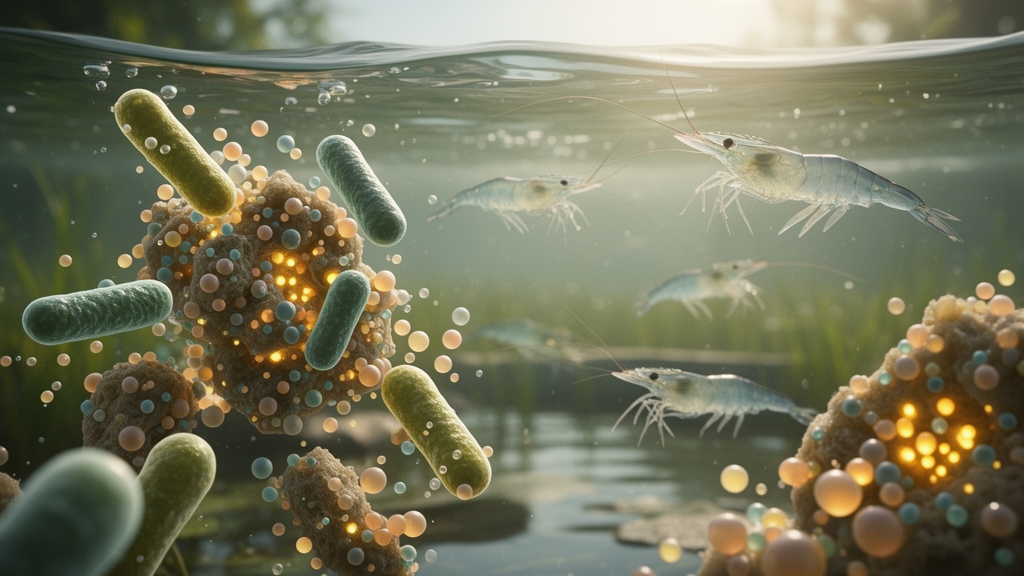
The study identified a sophisticated spatial division of labor within the microbial communities that facilitates efficient nitrogen cycling. The gut microbiota of the shrimp acts as a specialized unit for nitrite detoxification, enriching in genes responsible for nitrite metabolism. In contrast, the water column microbiota serves as the primary engine for ammonia assimilation, possessing a great capacity for ammonium metabolism. This complementary metabolic division of labor underpins the GSFM’s adaptation to high nitrogen loads.
In addition to mapping the nitrogen cycle, the researchers characterized a diverse antibiotic resistome within the GSFM systems. The study mapped the distribution of antibiotic-resistance genes, identifying aminoglycoside, macrolide, and tetracycline resistance genes as the most prevalent. These resistance genes were primarily associated with the phyla Proteobacteria, Bacteroidetes, and Actinobacteria. By utilizing host-tracking, the team evaluated the ecological costs of intensification.
The findings shift the focus of aquaculture microbiome research from microbial identity to functional niche partitioning. The mechanistic blueprint provided by the study offers a foundation for the sustainable intensification of aquaculture through targeted microbiome management.
The study’s scope was limited to standardized aquaculture units in the core GSFM production regions of China, spanning a 15-degree latitudinal gradient.
The identification of a specialized division of labor in nitrogen metabolism between gut and water microbiota offers a new perspective on how these systems manage nutrient loads.
Subject of Research: Microbial functional convergence and nitrogen cycling in greenhouse shrimp farming
Article Title: Microbial drivers of high aquaculture productivity: decoupling of taxonomic and functional profiles enables efficient nitrogen cycling in greenhouse shrimp farming
Article References: Shen, H., Ma, L., Li, J., Hu, Y., Peng, N., & Zhao, S. (2026). Microbial drivers of high aquaculture productivity: decoupling of taxonomic and functional profiles enables efficient nitrogen cycling in greenhouse shrimp farming. Animal Microbiome, 8(1), Article 117. https://doi.org/10.1186/s42523-026-00607-z
Image Credits: AI Generated
DOI: 10.1186/s42523-026-00607-z
Keywords: shrimp aquaculture, microbiome, nitrogen cycling, metagenomics, functional convergence, greenhouse farming, antibiotic resistance, water quality, microbial ecology, China, Microbial, drivers
News Source: Morgan Morrow. (November 10, 2026). Shrimp Farm Microbes Show Functional Convergence Despite Geographic Variation. Scienmag.