Researchers from the University of Toronto have demonstrated that accelerated carbonation curing can significantly reduce the internal expansion of concrete affected by alkali-silica reaction (ASR), yet it may simultaneously increase the width of visible surface cracks. The study, published in Discover Concrete and Cement, examined the complex interplay between carbon dioxide exposure and ASR-induced damage in mortar and concrete systems. By utilizing a multi-modal exposure scheme that combines carbonation curing with subsequent ASR acceleration, the team provided new insights into how this potential mitigation strategy affects the mechanical and microstructural integrity of concrete made with reactive aggregates.
Alkali-silica reaction is a prevalent degradation mechanism in concrete structures worldwide, occurring when moisture becomes available to reactive aggregates. This chemical process generates an expansive gel that impairs mechanical properties, increases transport characteristics, and leads to visible cracking, ultimately threatening the service life of infrastructure. Traditionally, the mitigation of ASR relies heavily on the use of supplementary cementing materials (SCMs), such as fly ash or ground granulated blast furnace slag, to suppress the reaction. However, global supplies of these traditional SCMs are steadily declining due to the transition to renewable energy and the decarbonization of steel production, creating an urgent need for alternative concrete technologies.
The study aimed to develop and justify a multi-modal exposure scheme involving carbonation curing followed by ASR for both mortar and concrete. The research team sought to examine the influence of carbonation curing on the mechanical, transport, and microstructural properties of concrete made with three types of reactive aggregates: Sudbury gravel, Spratt limestone, and Jobe sand. These aggregates were selected based on their well-documented reactivity levels, ranging from highly reactive to very highly reactive, providing a robust framework for evaluating the effectiveness of carbonation curing across different material systems.
The experimental design involved subjecting mortar bars and concrete prisms to two distinct curing regimes: atmospheric curing (ATM) at 0.04% CO2 concentration and accelerated carbonation curing (ACC) at 3% CO2 concentration. Both regimes were maintained at 23 °C and 50% relative humidity for 14 days. Following this initial curing phase, the specimens were subjected to ASR-accelerating exposures. Mortar bars were immersed in a 1 N NaOH solution at 80 °C for 28 days, while concrete prisms were stored at 50 °C and greater than 95% relative humidity for six months. This protocol allowed the researchers to isolate the effects of carbonation on the subsequent development of ASR damage.
The results revealed a stark contrast between the behavior of mortar bars and concrete prisms. In the mortar bar tests, accelerated carbonation curing reduced the expansion of all aggregate types well below the 0.10% non-reactivity threshold defined by ASTM C1778. For instance, Jobe mortar bars subjected to ACC showed an expansion of only 0.05%, compared to 1.20% for those subjected to atmospheric curing. This significant reduction suggests that the carbonation front effectively hindered the permeation of external alkali ions into the mortar matrix, thereby suppressing the ASR mechanism.
In contrast, the concrete prisms exhibited a more nuanced response. While the ACC-cured prisms showed lower expansions than their ATM-cured counterparts, they did not fall below the 0.04% expansion threshold. The Jobe concrete prisms, for example, experienced a length change of 0.28% under ACC conditions, compared to 0.35% under ATM conditions. This indicates that testing concrete prisms provides a more conservative assessment of the potential for accelerated carbonation curing to reduce ASR-induced expansion. The difference in response is attributed to the internal supply of alkalis in concrete mixes, which the carbonated outer layer is less effective at hindering compared to the external alkali supply in mortar tests.
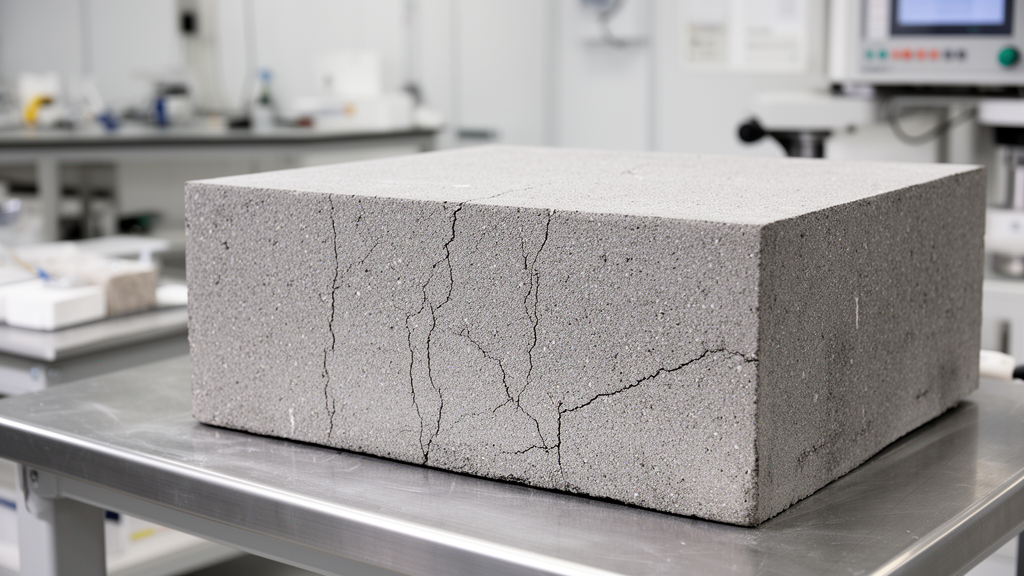
Despite the reduction in internal expansion, the study observed a counterintuitive increase in surface crack width for the carbonation-cured concrete. Jobe prisms subjected to ACC developed maximum crack widths of 0.60 mm after six months of ASR exposure, whereas the corresponding ATM-cured prisms exhibited only hairline cracks less than 0.06 mm wide. This observation suggests that carbonation curing may modify the manifestation of ASR damage rather than eliminating it. The researchers propose that the carbonation process may alter the near-surface mechanical properties of the cement paste, increasing brittleness and leading to greater crack localization.
Mechanical testing further illuminated the complex effects of carbonation curing. The relative dynamic modulus of elasticity (RDME) measurements showed that ACC-cured prisms had lower RDME values at day 20 compared to ATM-cured prisms, likely due to moisture loss during the carbonation process. However, by the end of the six-month ASR exposure, the RDME values varied significantly depending on the aggregate type. Sudbury prisms showed higher RDME values under ACC conditions, aligning with their lower expansions, while Jobe prisms exhibited a marked decrease in RDME under ACC, consistent with the observed wider cracks. This dynamic behavior highlights the interplay between carbonation-induced shrinkage and ASR-induced expansion.
Compressive strength measurements indicated that ACC-cured concrete generally achieved higher mean cube compressive strengths compared to ATM-cured specimens. The mean compressive strength increased by up to 6 MPa for ACC-cured specimens, with Sudbury prisms reaching 73.00 MPa under ACC conditions. This increase in strength is consistent with the densification of the microstructure resulting from the transformation of calcium-bearing phases into calcium carbonate. However, the study noted that the potential for increased vulnerability to corrosion of reinforced concrete was not included in the scope of this research, a critical factor for practical application.
Microstructural analysis using scanning electron microscopy (SEM) and energy dispersive spectrometry (EDS) provided further insights into the ASR products. The analysis of Spratt C-ACC→ASR50 specimens revealed ASR products in cracks at a depth of 10 to 20 mm from the surface, with a Ca/Si atomic ratio ranging from 0.32 to 0.65. The presence of these products at a depth beyond the carbonation front (approximately 2.2 mm) suggests that the carbonation process did not completely prevent ASR gel formation within the interior of the concrete. The researchers emphasized that while carbonation curing offers a partial solution to reduce ASR effects, it does not eliminate the reaction entirely.
The study concludes that accelerated carbonation curing is a promising but complex strategy for mitigating ASR in concrete. While it effectively reduces internal expansion in mortar systems, its impact on concrete is more limited and may lead to increased surface cracking. The findings underscore the need for further research to tailor curing conditions, such as CO2 concentration and duration, to the specific reactivity of the aggregates and mix design. Future work should focus on decoupling microstructural cracking and investigating the interplay between carbonation shrinkage and ASR expansion to optimize the benefits of this low-carbon technology.
This research contributes to the growing body of knowledge on sustainable concrete technologies, offering a pathway to reduce the reliance on traditional SCMs while maintaining structural durability. As the construction industry faces the dual challenges of increasing demand and decreasing SCM availability, the insights provided by this study are crucial for developing long-life, low-embodied carbon concrete solutions. The multi-modal exposure scheme developed in this study offers a standardized approach for comparing the effects of carbonation curing on ASR, facilitating further research and practical implementation in the field.
The study utilized three specific reactive aggregates with distinct geological origins and reactivity classifications to evaluate the exposure scheme. Sudbury gravel, a glaciofluvial deposit from Ontario, Canada, and Spratt limestone, also from Ontario, were used as coarse aggregates. Jobe sand, a volcanic chert and silicified carbonate from Texas, USA, served as the fine reactive aggregate. Previous literature reported one-year expansions for these materials ranging from 0.17% for Sudbury to 0.56% for Jobe, placing them within the highly reactive to very highly reactive categories. The concrete mixes incorporated these reactive aggregates alongside non-reactive fine and coarse aggregates sourced from local suppliers in Ontario. The cement used in all mixes had a total alkali content of 0.91%, which was intentionally increased to 1.25% using sodium hydroxide pellets to ensure sufficient alkali availability for the reaction.
Length change measurements were recorded at specific intervals throughout the exposure period, including days 0, 7, 14, 19, 28, 35, 48, 75, 112, 145, 175, and 203. These measurements were taken using an invar reference bar with a gauge length of 250 mm. The mean values for length change were calculated from the average of three mortar bars and four concrete prisms for each condition. This standardized measurement protocol allowed for consistent tracking of expansion over time, capturing both the initial curing phase and the subsequent ASR exposure. The data revealed that the timing of expansion varied by aggregate reactivity, with Jobe mortar bars crossing the reactivity threshold as early as two days under atmospheric curing, compared to ten days for Sudbury bars.
Carbonation depth measurements were conducted after the completion of the ASR exposure phase using a 1% phenolphthalein indicator solution. The mean carbonation depth for accelerated carbonation cured concrete prisms was approximately 2 mm, with values of 1.99 mm for Sudbury, 2.22 mm for Spratt, and 1.98 mm for Jobe. Statistical analysis indicated no significant difference between these concrete depths. In contrast, the carbonation depth in mortar bars was higher, with Sudbury mortar bars showing a statistically significant depth of 3.32 mm compared to 2.67 mm for Spratt and 2.78 mm for Jobe. Atmospheric curing resulted in negligible carbonation depths of approximately 0.00 mm for both mortar and concrete specimens, confirming that the observed effects were specific to the accelerated carbonation regime.
The study acknowledges several limitations that constrain the interpretation of the results. The microstructural analysis using scanning electron microscopy was limited to thin sections from only one category of specimen, specifically the Spratt C-ACC→ASR50 prisms. This restriction means that the observed ASR products and their chemical compositions may not fully represent the behavior of the Sudbury or Jobe aggregates. Additionally, the study did not directly measure pore solution chemistry, pH evolution, or calcium hydroxide depletion. Consequently, the proposed mechanisms for reduced expansion, such as the consumption of calcium-bearing phases and reduction in pore solution alkalinity, remain hypotheses consistent with prior literature rather than outcomes verified by direct experimental measurement in this specific study.
Subject of Research: Impact of accelerated carbonation curing on alkali-silica reaction in concrete
Article Title: Concrete affected by multi-modal exposure of CO2 curing and alkali silica reaction (ASR)
Article References: Narneni, S. R., & Panesar, D. K. (2026). Concrete affected by multi-modal exposure of CO2 curing and alkali silica reaction (ASR). Discover Concrete and Cement, 2(1), Article 58. https://doi.org/10.1007/s44416-026-00096-y
Image Credits: AI Generated
DOI: 10.1007/s44416-026-00096-y
Keywords: concrete, alkali-silica reaction, carbonation curing, durability, sustainable construction, materials science, reactive aggregates, infrastructure, affected, multi-modal, exposure, curing
News Source: Denise Maddox. (November 10, 2026). CO2 Curing Reduces Concrete Expansion but Widens Surface Cracks. Scienmag.