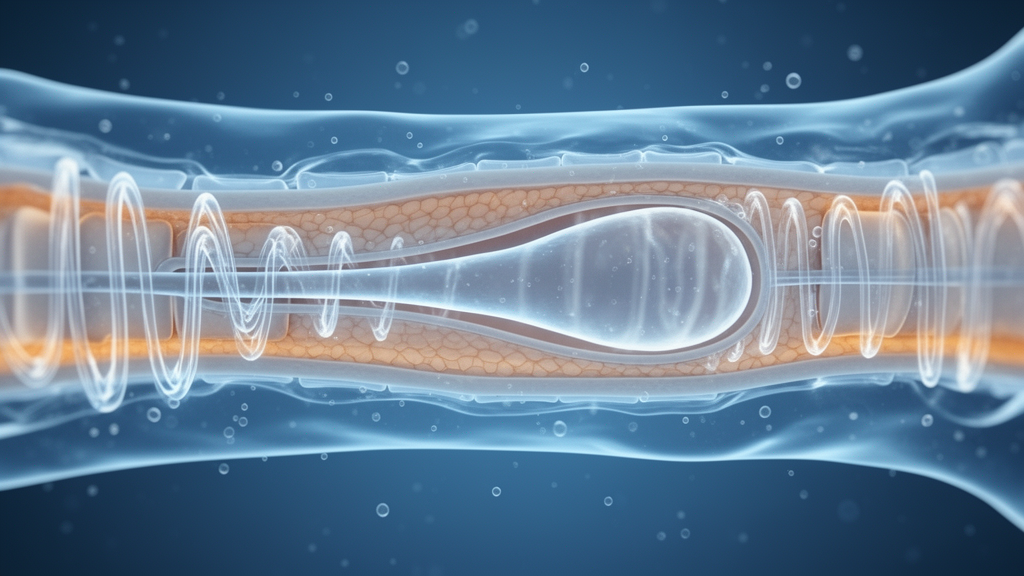
A prospective cohort study published in Fluids and Barriers of the CNS provides direct clinical evidence that abnormal pulsatile intraspinal pressure waves, rather than static pressure differences, serve as the primary mechanical driver for the formation and progression of post-traumatic syringomyelia. The research team, led by Chenghua Yuan and colleagues, investigated whether a novel minimally invasive surgical procedure could attenuate these pressure waves and whether specific intraoperative pressure metrics could predict neurological recovery. By measuring intraspinal pressure directly across the site of spinal cord injury in 64 patients, the study offers a new perspective on the pathophysiology of syringomyelia, a condition characterized by the development of fluid-filled cavities within the spinal cord following trauma.
The exact mechanism behind the development of these fluid-filled cavities, known as syrinxes, has long been debated, with theories ranging from the water hammer effect to venous congestion and bulk flow. The current study aims to test the CSF pulsatile pressure dynamic equilibrium hypothesis, which posits that high-amplitude pressure waves act like a fluid pump, continuously propelling cerebrospinal fluid into the spinal cord parenchyma where it is trapped by intact pia mater, creating a self-sustaining cycle of fluid accumulation.
The study included 64 consecutive patients with symptomatic post-traumatic syringomyelia treated at Xuanwu Hospital and the First Hospital of Hebei Medical University between January 2022 and 2025. The cohort consisted of 46 men and 18 women, with a mean age of 46.8 years, ranging from 6 to 74 years. Most patients had a history of incomplete spinal cord injury at the thoracic or lumbar level. The median time from the original spinal cord injury to the surgery was 166.0 months, while the median time from the MRI diagnosis of syringomyelia to surgery was 35.8 months. All patients underwent a subarachnoid-subarachnoid (S-S) bypass procedure, a minimally invasive technique designed to reconstruct physiological cerebrospinal fluid flow within the subarachnoid space without directly manipulating the scarred injury site.
Intraoperative measurements of intraspinal pressure were taken using a non-flush strain-gauge transducer attached to a catheter inserted at both the cranial and caudal ends of the arachnoid adhesion. The researchers recorded continuous pressure waveforms for at least three minutes during stable respiration and heart rate, discarding any recordings with visible movement or breathing artifacts. The key metrics analyzed included the pressure gradient across the injury site, defined as the difference between proximal and distal pressures, and the cranial ISP pulse amplitude, calculated as the mean peak-to-trough pressure difference across cardiac cycles. These measurements were taken both before and after the placement of the bypass tube to assess the immediate hemodynamic effects of the procedure.
Following a mean follow-up period of 23.6 months, 46 of the 64 patients, representing 71.9%, showed neurological improvement, while the remaining 18 patients maintained a stable neurological status. Radiological evaluation confirmed a reduction in syrinx size in the same 46 patients who experienced clinical improvement. The procedure was generally safe, with complications occurring in only 3.2% of cases, specifically two instances of aseptic meningitis that resolved spontaneously within two weeks.
Statistical analysis using multivariate logistic regression identified three independent predictors of positive neurological recovery. The pre-bypass ISP gradient across the injury site was a significant predictor, with an odds ratio of 2.228. The pre-bypass ISP amplitude measured cranial to the injury site was the strongest predictor, with an odds ratio of 4.269. Additionally, the length of the bypass tube spanning vertebral levels was an independent predictor, with an odds ratio of 0.331, indicating that shorter conduits were associated with better outcomes. These findings suggest that the magnitude of the pressure wave and the efficiency of the bypass conduit are critical determinants of surgical success.
Receiver operating characteristic curve analysis established optimal predictive cut-offs for these parameters. A pre-bypass ISP gradient greater than 1.5 mmHg demonstrated a sensitivity of 93.48% and a specificity of 66.67% for predicting recovery. A pre-bypass ISP amplitude greater than 3.5 mmHg yielded a sensitivity of 82.61% and a specificity of 94.44%. A bypass span of less than 5.5 vertebral levels showed a sensitivity of 100% and a specificity of 44.44%. In the favorable outcome subgroup, the preoperative pressure gradient across the arachnoid adhesion was significant, with cranial pressures averaging 15.4 mmHg compared to 11.1 mmHg caudally. This gradient normalized postoperatively, with both cranial and caudal pressures stabilizing around 8 mmHg, indicating that the bypass effectively restored pressure equilibrium.
The study also highlighted the importance of conduit length in the context of Poiseuille’s law, which governs fluid flow in narrow tubes. Given the fixed internal diameter of the silicone bypass tubes, fluid resistance is directly proportional to the length of the conduit. The researchers found that for a conduit of the specified fixed diameter, a length spanning less than 5.5 vertebral levels is necessary to achieve the drainage volume required for clinical efficacy. This biomechanical constraint explains why excessively long bypasses may fail to adequately reduce the pulsatile pressure wave, as illustrated by a case where a bypass spanning from T2 to T11 failed to resolve the syrinx, necessitating the addition of a thecal-peritoneal shunt.
Illustrative cases from the study further support the hypothesis that abnormal pulsatile waves are the driving force behind syrinx formation. In one successful case, a 40-year-old female with a thoracic spinal cord injury had a significant preoperative ISP gradient of 6.5 mmHg. After the placement of two bypass conduits, her symptoms improved, and she regained the ability to walk, with follow-up MRI confirming the resolution of the syrinx. In contrast, a 60-year-old male with no significant abnormal pulsatile ISP wave prior to intervention showed only stabilization of symptoms despite the placement of bypass conduits, and his syrinx morphology remained unchanged. These contrasting outcomes underscore the importance of identifying patients with high-amplitude pressure waves as candidates for this specific surgical intervention.
The findings of this study parallel established relationships between intracranial pressure, cerebral perfusion pressure, and neurological recovery after traumatic brain injury. While previous experimental work in animal models provided foundational concepts for pressure gradients in spinal cord injury, direct clinical evidence in humans had been lacking due to surgical constraints. The S-S bypass technique provided a unique opportunity to directly measure these gradients in a clinical setting, offering the first direct documentation of pulsatile pressure waves in human post-traumatic syringomyelia. This evidence supports the notion that the pulsatile pressure wave, rather than static pressure, is the original driving force and continuous energy source for syrinx formation.
The study has several limitations that must be considered when interpreting the results. The follow-up period was relatively short, with a mean of 23.6 months, which may not capture long-term outcomes or the potential for syrinx recurrence. The evidence regarding abnormal ISP waveforms was based on limited intraoperative recordings, and confounding factors such as anesthesia, respiration, and hemodynamics were not adequately excluded. Additionally, patients requiring multilevel bypass bridging generally have extensive long-segment arachnoid adhesions, which may introduce bias to the prognostic evaluation. With only 46 events of neurological recovery, the statistical power is limited, and the risk of overfitting in the regression model is a concern.
Despite these limitations, the study provides a valuable framework for understanding the pathophysiology of post-traumatic syringomyelia and for selecting patients who may benefit from the S-S bypass procedure. The identification of specific pressure metrics as predictors of recovery offers a potential tool for preoperative assessment and surgical planning. Future large-scale, multicenter clinical trials will be essential to further validate these findings and to compare the S-S bypass technique to other treatments for post-traumatic syringomyelia. The results suggest that therapeutic strategies should be directed toward dissipating abnormal pulsatile energy, rather than being limited to adhesiolysis with duraplasty or syrinx shunting, potentially improving outcomes for patients with this debilitating condition.
Subject of Research: The role of pulsatile intraspinal pressure in the pathophysiology and surgical treatment of post-traumatic syringomyelia
Article Title: Pulsatile intraspinal pressure drives post-traumatic syringomyelia: evidence supporting the CSF pulsatile pressure dynamic equilibrium hypothesis
Article References: Yuan, C., Yuan, F., Chang, C., Wang, J., Wang, Z., Wang, X., Wu, H., Chen, Z., Jian, F., & Guan, J. (2026). Pulsatile intraspinal pressure drives post-traumatic syringomyelia: evidence supporting the CSF pulsatile pressure dynamic equilibrium hypothesis. Fluids and Barriers of the CNS, 23(1), Article 104. https://doi.org/10.1186/s12987-026-00846-x
Image Credits: AI Generated
DOI: 10.1186/s12987-026-00846-x
Keywords: post-traumatic syringomyelia, intraspinal pressure, spinal cord injury, subarachnoid bypass, cerebrospinal fluid dynamics, neurological recovery, prospective cohort study, surgical outcome, Pulsatile, intraspinal, pressure, drives
News Source: Cassandra Pierce. (November 10, 2026). Pulsatile Pressure Waves Drive Spinal Cord Syrinx Formation. Scienmag.