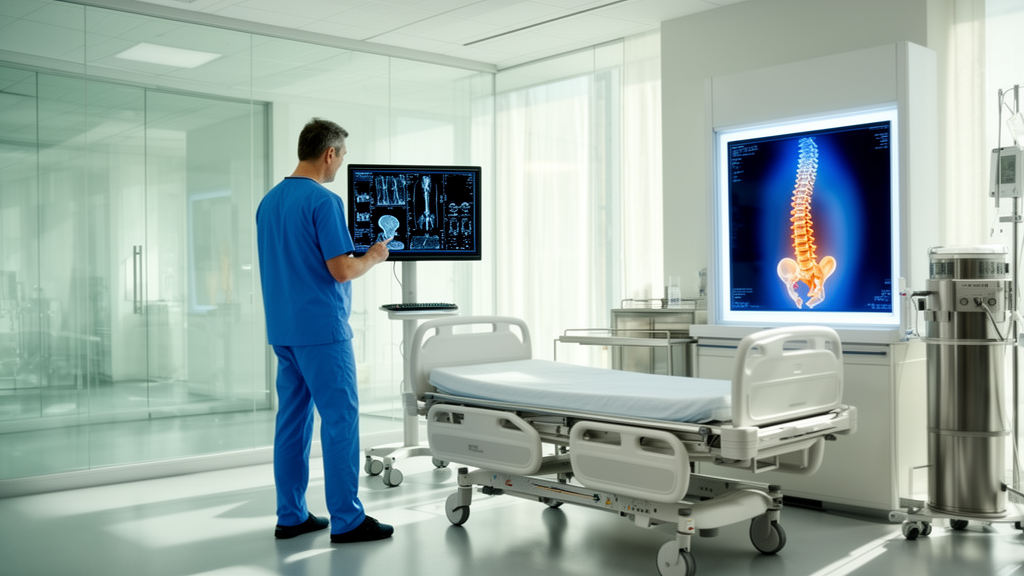
The study, published in BMC Medical Informatics and Decision Making, aimed to identify key clinical predictors that could help healthcare systems manage postoperative resource allocation more effectively. By analyzing medical records from 400 patients across three medical centers in Tabriz, the team sought to understand how specific clinical and surgical parameters influence the duration of hospitalization following this common spine procedure.
The research focused on postoperative length of stay, a factor that significantly impacts both patient recovery and hospital resource management. Discectomy is one of the most frequent spine procedures, and extending the stay can place a burden on healthcare systems. The authors gathered potential factors influencing length of stay from existing literature and verified them with a clinical expert panel.
To address data quality issues, the team applied simple imputation for missing data, which accounted for less than 3.5% of the dataset. Cases with high levels of missingness were removed before analysis. The data were then partitioned into an 80% training set containing 320 patients and a 20% independent hold-out test set with 80 patients. Five-fold cross-validation was applied strictly during the training phase to further validate the model development process.
Six different predictive algorithms were developed and evaluated in the study: Linear Regression, LASSO Regression, Random Forest, XGBoost, Multilayer Perceptron (MLP), and Deep Neural Network (DNN).
The results indicated that postoperative blood loss, intraoperative blood loss, body mass index, age, duration of surgery, surgical instrumentation, and procedure location emerged as the highest-ranked predictors of hospital stay duration. In contrast, blood transfusion had the lowest impact on the predictions. These findings highlight the importance of perioperative factors in determining how long a patient remains in the hospital after discectomy. The identification of these key drivers can support clinical discharge planning and optimize bed capacity allocation.
On the unseen test dataset, tree-based ensemble models achieved superior predictive accuracy compared to linear and deep learning approaches. The Random Forest model demonstrated the best overall performance, with a Mean Squared Error of 0.452, an Explained Variance Score of 0.874, and an R-squared value of 0.874. XGBoost followed closely with an R-squared value of 0.858. These results suggest that complex, non-linear relationships between clinical features and hospital stay duration are better captured by ensemble methods than by simpler linear models.
In comparison, LASSO Regression and linear baseline models yielded lower performance, with LASSO achieving an R-squared value of only 0.129. The authors attributed this lower performance to the non-linear clinical feature interactions that linear models struggle to capture.
The study concludes that tree-based machine learning models, particularly Random Forest, offer promising capabilities for predicting hospital length of stay after discectomy. By identifying key perioperative drivers, these models can support clinical discharge planning, optimize bed capacity allocation, and improve hospital resource management.
Subject of Research: Machine learning prediction of postoperative hospital stay after discectomy
Article Title: Predicting Length of Hospital stay for patients undergoing discectomy surgery using clinical and surgical parameters via machine learning
Article References: Mehdipour, F., Imani, B., Jafarkhani, A., Moslehi, S., & Rafiei, E. (2026). Predicting Length of Hospital stay for patients undergoing discectomy surgery using clinical and surgical parameters via machine learning. BMC Medical Informatics and Decision Making. https://doi.org/10.1186/s12911-026-03915-1
Image Credits: AI Generated
DOI: 10.1186/s12911-026-03915-1
Keywords: machine learning, discectomy, hospital stay, spine surgery, clinical prediction, Random Forest, XGBoost, healthcare resource management, postoperative recovery, BMC Medical Informatics, Predicting, Length
News Source: Teresa Odom. (November 10, 2026). Machine Learning Predicts Hospital Stay After Discectomy. Scienmag.