The study, published in Clinical and Experimental Medicine, evaluates the feasibility of using salivary digital PCR, corrected for epigenetic cell counting, as a longitudinal monitoring platform. The team found that the saliva-based method achieved high concordance with standard blood measurements, suggesting it could serve as a rigorous alternative for decentralized clinical studies.
The central research question addressed the lack of formal benchmarking for salivary digital PCR against whole blood and plasma cell-free DNA as quantitative monitoring tools. Intensive longitudinal monitoring of variant allele frequency is necessary to characterize clonal dynamics in myeloproliferative neoplasms. The study specifically tested whether saliva, which contains DNA from buccal epithelial cells, could provide reliable data when corrected for this contamination.
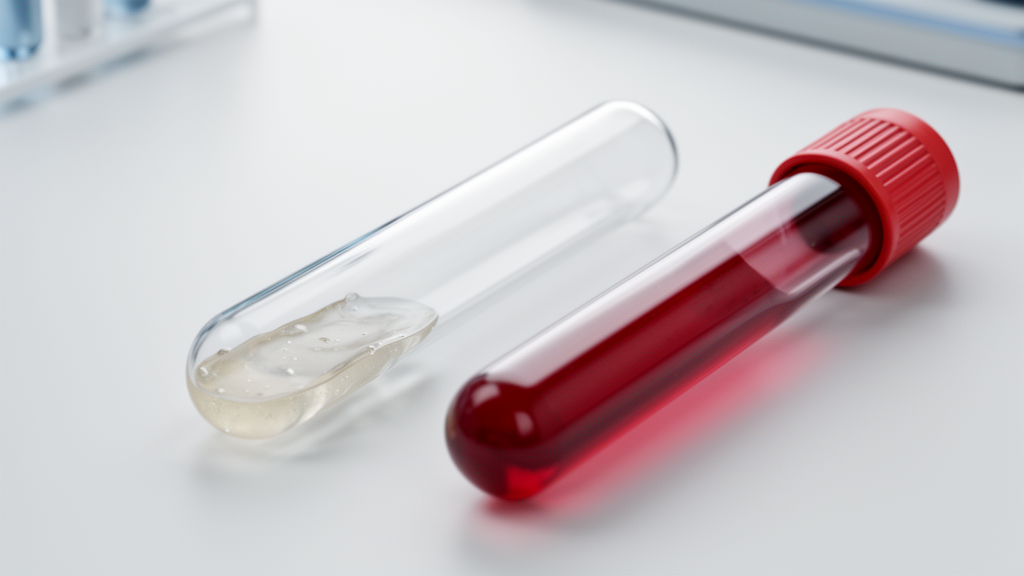
The study design involved a prospective cohort of 12 patients with myeloproliferative neoplasms who were being treated with interferon-alpha. These patients were monitored weekly over a period of 12 months. For each participant, four biospecimens were collected simultaneously: whole blood, ACK-lysed white blood cells, saliva, and plasma cell-free DNA. This multi-sample approach allowed the researchers to directly compare the performance of the salivary assay against whole blood and plasma cell-free DNA.
A key technical challenge in using saliva for genetic monitoring is the presence of DNA from buccal epithelial cells, which can contaminate the sample and skew results. The study evaluated the feasibility of mail-based at-home collection by tracking the sample return rate and the yield of DNA from the collected saliva.
The main results indicated that the ECC-corrected salivary variant allele frequency achieved a correlation coefficient of r = 0.990 with whole blood measurements across 33 samples. This level of concordance approached the agreement observed between two different blood-derived sources, which had a correlation coefficient of r = 0.988 across 69 samples. In contrast, plasma cell-free DNA showed a lower correlation with whole blood, with an r value of 0.817 across 40 samples. These findings suggest that the saliva-based method not only performs comparably to blood but substantially outperforms plasma cell-free DNA in terms of quantitative agreement. The high correlation coefficients indicate that the salivary assay can reliably reflect the mutation burden in the blood, which is the standard reference for these measurements.
Feasibility metrics further supported the potential of this non-invasive platform. The study reported a 90% sample return rate for the mail-based at-home collection, indicating that the majority of participants successfully completed the required sampling steps. Additionally, 96% of participant-months met the minimum DNA threshold of 5 ng/µL required for digital PCR analysis. This high rate of adequate DNA yield suggests that the collection protocol is robust and that most samples contain sufficient material for accurate testing.
The study establishes proof of concept for ECC-corrected salivary digital PCR as a feasible and analytically rigorous non-invasive platform for longitudinal mutation monitoring. The ability to achieve high concordance with blood while maintaining high sample return rates and DNA adequacy supports the use of this approach in larger decentralized studies. However, the authors note that formal validation in adequately powered cohorts will be required before this method can be deployed in clinical settings. The current study size of 12 patients, while sufficient for proof of concept, limits the generalizability of the findings to broader populations with different disease severities or treatment regimens.
The integration of epigenetic cell counting correction with digital PCR provides a technical solution to the challenge of DNA contamination in saliva. Future research will need to confirm these results in larger, more diverse cohorts to establish the clinical utility of this non-invasive monitoring platform.
Subject of Research: Non-invasive salivary digital PCR for longitudinal JAK2V617F monitoring in myeloproliferative neoplasms
Article Title: Salivary Digital PCR With Epigenetic Cell Counting Correction as a Feasible Non-Invasive Platform for Longitudinal JAK2V617F Monitoring in Myeloproliferative Neoplasms
Article References: Soyfer, E. M., Heidmann, J. C., Huang, H., Rangel, V., Jung, Y., Arora, E., Chen, L., Amin, A., Qamar, A., Tsai, K., Okoji, A., Wadley, W. L., Fitzsimmons, M., Fujiwara, M., Chen, W.-P., Qavi, A. J., Ziogas, A., Hwang, S. M., Sworder, B. J., … Fleischman, A. G. (2026). Salivary Digital PCR With Epigenetic Cell Counting Correction as a Feasible Non-Invasive Platform for Longitudinal JAK2V617F Monitoring in Myeloproliferative Neoplasms. Clinical and Experimental Medicine. https://doi.org/10.1007/s10238-026-02345-7
Image Credits: AI Generated
DOI: 10.1007/s10238-026-02345-7
Keywords: myeloproliferative neoplasms, JAK2V617F, saliva test, digital PCR, epigenetic cell counting, non-invasive monitoring, variant allele frequency, clinical research, at-home collection, genetic monitoring, Salivary, Digital
News Source: Juliet Wilcox. (November 10, 2026). Saliva PCR Matches Blood for JAK2 Mutation Tracking. Scienmag.