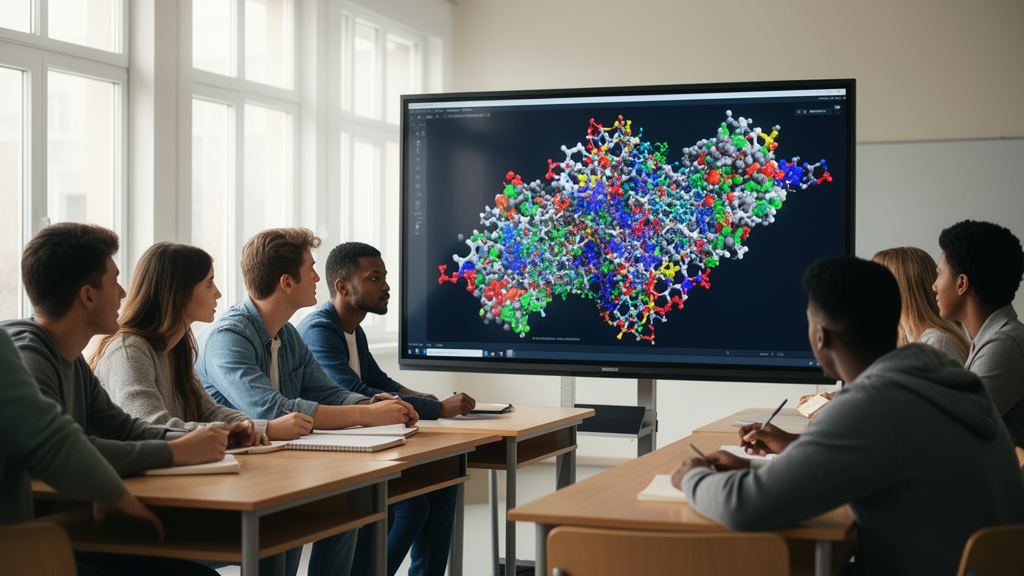
A cross-sectional study published in BMC Medical Education reports on the development and empirical assessment of AI-enabled digital resources designed for biochemistry and molecular biology education. The research team, led by Shuai Tan and colleagues, applied the Technological Pedagogical Content Knowledge framework to create a suite of teaching tools aimed at addressing the substantial learning challenges medical students face in preclinical courses. The study relied entirely on self-reported perceptual data from a multi-stakeholder perspective, including medical students, preclinical teachers, and clinical practitioners, to evaluate the utility and limitations of these integrated resource suites.
The development phase produced three distinct categories of AI-enabled resources. The first was an intelligent curriculum platform, the second was an AI learning agent, and the third was a preclinical-to-clinical case library. These tools were intended to enhance teaching and learning by leveraging artificial intelligence to organize routine knowledge and support auxiliary teaching tasks.
To gather data, the researchers used convenience sampling to distribute four self-developed questionnaires based on a 5-point Likert scale. The participants included medical students, preclinical teachers, and clinical practitioners. Reliability of the survey instruments was assessed using Cronbach’s alpha coefficient, while content validity was evaluated by five subject experts. These experts rated each item to compute item-level and scale-level content validity index values. Additionally, the team recorded production time for three specific teaching outputs under both manual and AI-supported workflows to compare efficiency.
The results indicated that students responded favorably to the basic functions of the AI resources, with ratings ranging from 4.35 to 4.60 out of 5. However, students identified significant limitations in the tools’ ability to handle complex knowledge interpretation and generate personalized learning plans. Teacher scores varied substantially, ranging from 2.82 to 4.50 out of 5. Within the various modules, the question bank received the most positive feedback, whereas the AI micro-lesson production function received the lowest ratings.
Regarding the AI-generated clinical cases, users evaluated them as acceptable, though they perceived gaps in the simulation of atypical scenarios and the inclusion of frontier knowledge updates. The AI learning agent recorded 1,575 valid accesses over the course of the month studied. When comparing workflows, AI-supported processes demonstrated shorter observed creation cycles for teaching outputs.
User feedback highlighted several recurring themes regarding the limitations of the current AI tools.
The study concludes that participants reported satisfactory subjective experiences with routine knowledge organization and auxiliary teaching tasks. However, notable deficiencies were identified in high-level personalized services, teacher-end operability, clinical scenario authenticity, and technical support. Given the study design and the absence of objective learning outcome measures, the observed time-saving potential cannot be interpreted as proven objective benefits.
Based on these findings, the authors proposed four tentative optimization strategies to inform the iterative improvement of intelligent teaching practice.
Subject of Research: Empirical assessment of AI-enabled digital resources for biochemistry and molecular biology education
Article Title: AI-enabled digital resources for biochemistry and molecular biology education: development and empirical assessment via teacher-student surveys
Article References: Tan, S., Zhu, G., Zhang, K., Yang, Y., Xie, J., Zuo, L., Wang, L., Li, L., Sun, Y., & Peng, Q. (2026). AI-enabled digital resources for biochemistry and molecular biology education: development and empirical assessment via teacher-student surveys. BMC Medical Education. https://doi.org/10.1186/s12909-026-10743-4
Image Credits: AI Generated
DOI: 10.1186/s12909-026-10743-4
Keywords: AI education, Biochemistry, Medical education, Digital resources, Teacher-student surveys, Cross-sectional study, Learning outcomes, Technological Pedagogical Content Knowledge, AI-enabled, digital, resources, molecular
News Source: Courtney Benton. (November 10, 2026). Study Evaluates AI Biochemistry Teaching Tools. Scienmag.