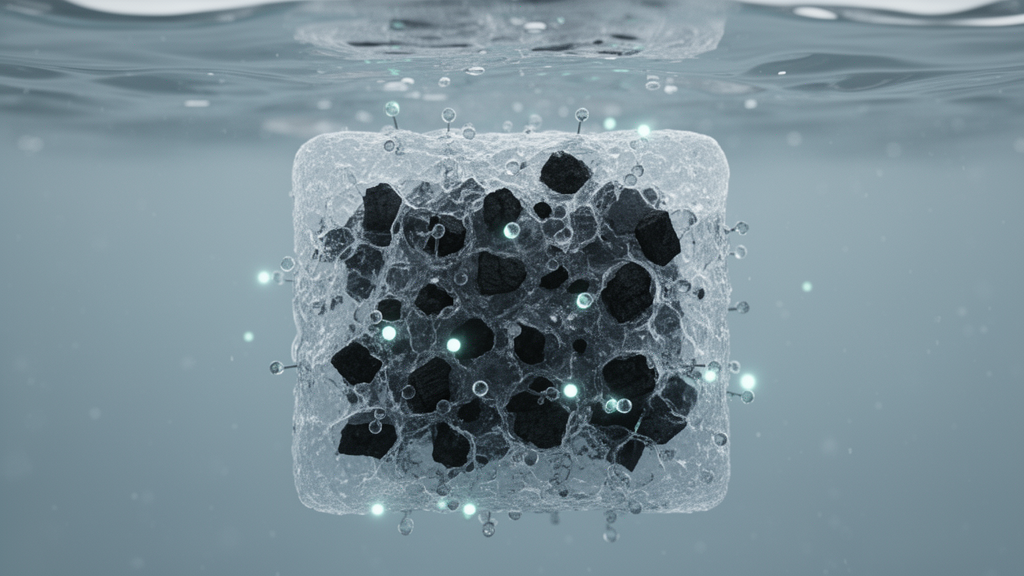
A systematic review in Carbon Research examines how integrating pyrolyzed carbon into crosslinked polymer hydrogels significantly improves water and wastewater remediation. Pristine biochars, produced through biomass pyrolysis at temperatures below 1000 degrees Celsius, offer an environmentally sustainable avenue for valorizing renewable feedstocks, including agricultural residues, industrial processing byproducts, animal manure, and sewage sludge. However, unmodified biochars typically achieve only moderate contaminant removal and frequently suffer from restricted operational pH adaptability, low adsorption capacities toward specific pollutants, and rapid efficiency losses when exposed to competitive ions or dissolved organic matter. While pristine biochars display modest sequestration, engineered variants such as chemically activated or metal-impregnated formulations routinely achieve high removal efficiencies ranging between 92% and 97%. This performance disparity underscores that exceptional contaminant uptake is not an inherent trait of all pyrolyzed biomass, but an engineered outcome governed by material architecture, surface chemistry, and deliberate functionalization.
To evaluate the structural determinants governing composite performance, the authors conducted a structured literature review across primary scientific databases, including Web of Science, Scopus, and ScienceDirect, examining peer-reviewed publications from 2010 through 2025. The investigation applied rigorous selection standards, incorporating original studies that featured explicit spectroscopic or elemental characterization of functional groups, quantitative adsorption capacities, and formal kinetic, isotherm, or mechanistic interpretations. While earlier reviews by researchers such as Siryk, Zhao, and Chame surveyed biochar-filled hydrogels from broad application viewpoints, those studies addressed material properties generally without isolating surface chemical groups as the core operational determinants. The authors isolated functional group chemistry as the fundamental factor controlling adsorption kinetics, thermodynamic favorability, matrix resilience, and long-term reusability, synthesizing evidence across inorganic metals, synthetic dyes, and persistent pharmaceuticals to demonstrate how surface moieties dictate water remediation efficacy.
The performance advantage of biochar-hydrogel composites stems directly from the functional divergence between raw carbon substrates and hybrid polymer networks. Pristine biochar carries intrinsic oxygenated functional groups formed during biomass pyrolysis, such as hydroxyl, carboxyl, and carbonyl groups. However, their spatial accessibility, surface density, and chemical reactivity remain constrained by feedstock composition and thermal conditions, leading to heterogeneous distribution and hindered availability in aquatic environments. In contrast, embedding biochar particles within hydrophilic three-dimensional hydrogel matrices introduces a complementary and customizable array of polymer-derived functional groups, including amine, sulfonate, and amide moieties. The hydrated polymer framework expands in water, facilitating rapid contaminant diffusion into internal domains that would otherwise remain inaccessible. Furthermore, the combination of biochar surfaces and polymer chains enables cooperative mechanisms, such as simultaneous electrostatic attraction, complexation, and hydrogen bonding, that are absent or poorly expressed in pristine biochar.
Among the diverse chemical species identified across composite surfaces, oxygen-containing functionalities play a dominant role in governing pollutant uptake and swelling dynamics. Carboxyl groups, enriched via oxidative treatments or ultraviolet exposure, undergo deprotonation under neutral to alkaline conditions, generating negatively charged surface sites that bind cationic heavy metals through electrostatic attraction and coordination complexation. Hydroxyl groups, abundant in biopolymers such as alginate and lignocellulosic biochar, enhance composite hydrophilicity and promote hydrogel swelling, expanding pore networks to facilitate mass transfer while participating in pH-dependent binding. Thermal conditions during pyrolysis directly dictate the balance between aliphatic and aromatic domains: high pyrolysis temperatures exceeding 500 degrees Celsius generate condensed aromatic structures with low hydrogen-to-carbon ratios that favor nonpolar organic pollutant adsorption through pi-pi stacking. Conversely, pyrolysis temperatures below 400 degrees Celsius preserve polar aliphatic functionalities that sustain matrix flexibility and support hydrogen bonding.
Surface functionalization strategies further enhance adsorption affinity and selectivity through the targeted introduction of nitrogen, sulfur, and phosphorus heteroatoms. Nitrogen-bearing moieties, such as amine, amide, and imine groups, are widely incorporated through nitrogen-rich biopolymers like chitosan, acting as electron donors and acceptors that coordinate heavy metal ions and bind synthetic dyes. Sulfur-containing groups, including thiol and sulfonic acid moieties, introduce specific coordination and redox behaviors targeting soft metals and organic contaminants, whereas phosphorus-containing groups like phosphate and phosphonate enable robust binding of metal cations and radionuclides. These functionalities can be established inherently during composite synthesis—such as crosslinking carboxymethyl cellulose and chitosan with citric acid at 120 degrees Celsius to generate a three-dimensional porous network—or introduced through post-synthetic chemical modifications, including the incorporation of 2-acrylamido-2-methylpropane sulfonic acid or graft copolymerization onto polyacrylamide frameworks to enhance active site density.
Kinetic modeling provides vital quantitative frameworks for determining the rate-limiting steps and physical-chemical pathways that control pollutant uptake in composite systems. Experimental data compiled across remediation studies indicate that biochar-hydrogel composites predominantly adhere to pseudo-second-order kinetic models rather than pseudo-first-order models, as demonstrated by consistently higher correlation coefficients. While pseudo-first-order kinetics characterize physisorption where rates depend on unoccupied sites—exemplified by phosphate uptake onto SA@Fe@MOF-Al composites following Langmuir monolayer equilibrium—the prevalence of pseudo-second-order kinetics indicates that chemisorption governed by electron sharing or exchange represents the primary rate-controlling mechanism. This chemical control is clearly observed during the adsorption of divalent metal ions like copper and zinc, where surface functional groups drive rapid, stable sequestration through coordination complexation, ion exchange, and chelation within the hydrated, interconnected pore architecture.
Thermodynamic investigations clarify the energetic feasibility, spontaneity, and binding intensity of composite-pollutant interactions across varying operational temperatures. Calculations based on the van’t Hoff relationship determine standard Gibbs free energy change, enthalpy change, and entropy change across experimental systems. Negative standard Gibbs free energy changes confirm the thermodynamic spontaneity of contaminant adsorption, with values frequently becoming more negative at elevated temperatures in endothermic systems. Enthalpy values provide a clear physical distinction between binding modes, as physisorption processes display enthalpy changes below 40 kilojoules per mole, whereas chemisorption mechanisms driven by chemical bonding exhibit significantly higher enthalpy magnitudes. Concurrently, positive entropy changes point to increased randomness at the solid-liquid interface, resulting from the displacement of coordinated water molecules and structural rearrangements as target contaminants bind to reactive surface sites.
The remediation performance of biochar-hydrogel composites relies on multiple, interconnected adsorption mechanisms that operate simultaneously across complex pollutant mixtures. Surface complexation serves as a predominant binding route, where carboxyl, hydroxyl, and amine functionalities establish coordination bonds with heavy metals like trivalent chromium and divalent copper. Ion exchange represents another major pathway, wherein metal cations displace protons from hydroxyl and carboxyl groups or exchange with sodium ions on sulfonate groups, while quaternary ammonium and heterocyclic nitrogen groups can impart anion exchange capabilities. In addition, composites facilitate redox transformations that degrade or immobilize hazardous contaminants, such as the catalytic reduction of 4-nitrophenol by biochar nanocatalysts or the generation of reactive peroxide species. Embedding transition metal nanoparticles, such as copper within carboxymethyl cellulose and polyacrylamide networks, provides robust catalytic centers that are stabilized by neighboring amine and carbonyl groups to degrade persistent organic pollutants.
In complex aquatic environments, composite performance is heavily influenced by matrix background components, including high ionic strength, water hardness, and dissolved natural organic matter. Oxygen-rich carboxyl and hydroxyl groups are particularly vulnerable to electrostatic screening and divalent-cation bridging, where competing calcium and magnesium ions block carboxylate binding sites and reduce target metal uptake. Conversely, nitrogen-functionalized groups provide greater operational resilience in saline and organic-rich matrices due to stable coordination interactions that remain active across wider pH intervals. Sulfur- and phosphorus-containing groups similarly preserve target selectivity through inner-sphere complexation and ligand exchange, which resist electrostatic shielding. Incorporating metal oxide phases, such as iron, manganese, or zinc species, provides alternative redox-mediated and precipitation pathways, although excessive background species can foul metal centers, underscoring the importance of engineering hybrid network architectures with tuned zero-charge points that resist organic fouling.
Cyclic regeneration and long-term reusability represent essential criteria for the practical implementation of biochar-hydrogel adsorbents, dictating both process economics and environmental sustainability. Acidic eluents, such as hydrochloric or nitric acid, are particularly effective for regenerating composites dominated by carboxyl and amino groups, as protonation displaces bound cationic contaminants while preserving the underlying polymer matrix. For instance, cellulose, guar gum, and biochar hydrogels maintained 82% adsorption efficiency for copper and cobalt after five regeneration cycles using 1 M hydrochloric acid, while calcium alginate composites retained approximately 80% lead removal over seven cycles with 0.1 M hydrochloric acid. Similarly, phosphorus-doped biochar hydrogels maintained at least 95% uranium removal over three cycles using 0.5 M nitric acid, and curcumin-grafted composites sustained over 80% malachite green removal after seven cycles without eluents, confirming that proper chemical compatibility between eluents and surface groups preserves cyclic performance.
Despite these favorable regeneration outcomes, progressive deactivation and environmental safety considerations pose critical hurdles to commercial implementation. Exposure to harsh regeneration agents like sodium hydroxide can induce ester and amide hydrolysis, triggering polymer backbone scission, swelling fatigue, and mechanical weakening, while repetitive cycling often leads to functional group leaching and pore collapse. Furthermore, large-scale application requires strict evaluation of secondary environmental risks, including the release of impregnated metals under acidic conditions, residual synthesis reagents such as unreacted monomers or crosslinkers, and mechanical fragmentation that generates bioavailable microgel particles. To overcome these barriers, future investigations must transition from empirical testing to standardized benchmarks, targeting at least 80% capacity retention over 10 to 20 cycles, maintaining at least 70% capacity in complex wastewater matrices, and establishing full life-cycle toxicity evaluations before field deployment.
Subject of Research: Surface functional groups in biochar-hydrogel composites for water remediation
Article Title: Enhancing water remediation using biochar-hydrogel composites: the critical role of surface functional groups
Article References: Uddin, M. N., Badsha, M. A. H., Yang, Y., Hunter, J. G., Sherchan, S., Talukder, B., Samwini, A., & Kang, D. H. (2026). Enhancing water remediation using biochar-hydrogel composites: the critical role of surface functional groups. Carbon Research, 5(1), Article 35. https://doi.org/10.1007/s44246-026-00260-w
Image Credits: AI Generated
DOI: 10.1007/s44246-026-00260-w
Keywords: biochar-hydrogel composites, water remediation, surface functional groups, adsorption mechanisms, wastewater treatment, chemisorption, heavy metal removal, environmental engineering, Enhancing, water, remediation, biochar-hydrogel
News Source: Bethany Barker. (November 9, 2026). Engineered Biochar Hydrogel Composites Advance Water Remediation Through Targeted Surface Functional Groups. Scienmag.