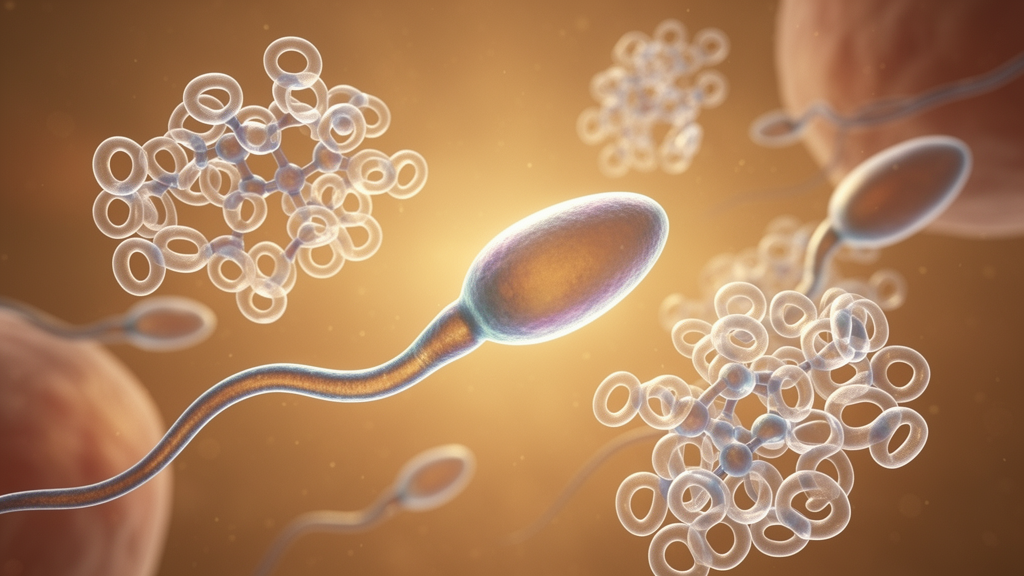
Researchers at Kermanshah University of Medical Sciences in Iran have demonstrated that supplementing human sperm culture media with the amino acid L-proline significantly protects sperm function from heat stress-induced oxidative damage. Published in the journal Amino Acids, the study provides the first evidence that 2 mmol/L L-proline enhances sperm functional parameters by attenuating nitro-oxidative stress and augmenting antioxidant defenses during both short-term and long-term incubation periods. The findings suggest that incorporating L-proline into sperm preparation protocols may offer a promising strategy to enhance clinical outcomes in assisted reproductive technologies, particularly where maintaining sperm quality under thermal stress is critical.
Male infertility is a critical global health concern, affecting approximately 50 million reproductive-aged couples worldwide. Over recent decades, a notable decline in sperm quality, encompassing sperm concentration, volume, and motility, has emerged as a primary contributor to male infertility. While genetic defects account for some of these changes, lifestyle factors, psychological stress, exposure to exogenous chemicals, and elevated temperatures are also key contributors. Heat stress has garnered growing attention as a significant factor influencing male reproductive health, with elevated testicular temperatures linked to lifestyle habits, occupational exposures, and the broader impact of climate change. These conditions disrupt spermatogenesis and trigger the overproduction of reactive oxygen species, resulting in testicular tissue damage, reduced sperm count, motility, and morphology, as well as DNA fragmentation.
The process of sperm incubation, integral to ART cycles, involves maintaining sperm in a controlled environment, typically at 37 °C, to optimize its readiness for use. The incubation period, ideally under 1.5 hours, is critical for preserving sperm motility and viability, as prolonged exposure may impair these parameters. Although some studies suggest that extended incubation up to 24 hours prior to intracytoplasmic sperm injection can enhance pregnancy rates, prolonged incubation at 37 °C with 5% CO2 has been shown to negatively affect sperm DNA integrity. Given that prolonged sperm incubation remains a common laboratory practice for various diagnostic and therapeutic purposes in fertility clinics, evaluating antioxidant supplementation at different doses and incubation intervals appears necessary to counteract oxidative stress.
L-proline, a nonessential amino acid also known as 2-pyrrolidinecarboxylic acid, is synthesized endogenously from amino acids such as L-glutamic acid and is readily available as a dietary supplement. It plays a pivotal role in mitigating osmotic and oxidative stress, regulating carbon and nitrogen metabolism, and modulating cell signaling pathways to support cellular survival. Recent findings underscore L-proline’s potential to enhance sperm function, with documented improvements in motility, viability, and DNA integrity. L-proline appears to exert its effects through multiple mechanisms, including functioning as an osmolyte to stabilize cellular volume, acting as an energy substrate to enhance motility, and exhibiting antioxidant properties that neutralize free radicals and bolster antioxidant defenses.
To evaluate these protective effects, the study recruited 30 healthy men, all partners of infertile couples, from the Andrology Division and IVF Clinic at Motazedi Hospital in Kermanshah, Iran. The study was conducted from July 2023 to July 2024 and received ethical approval from the Institutional Review Board of Kermanshah University of Medical Sciences. Semen samples were obtained via masturbation following an abstinence period of 2–7 days. Sperm analysis was carried out according to World Health Organization guidelines, evaluating semen volume, sperm concentration, total motility, and morphology. Only samples meeting specific inclusion criteria were considered, ensuring high-quality samples for subsequent analysis using a discontinuous double-layered density gradient centrifugation method.
The experimental design involved dividing each semen sample into two equal aliquots: a control group supplemented with Ham’s F-10 medium only and a treatment group supplemented with 2 mmol/L L-proline. Both aliquots were pre-incubated at 37 °C with 6% CO₂ and 95% humidity for 30 minutes. Following this initial incubation, each sample was further divided into three portions and incubated at three distinct temperatures: 25 °C, 37 °C, and 42 °C, with 42 °C serving as a heat stress condition. The samples were maintained at these temperatures for durations of 3 hours and 24 hours. Sperm evaluations were conducted at two time points, immediately after the 3-hour incubation and again after 24 hours of incubation, to assess the effects of the treatments on sperm parameters.
Sperm parameters, including motility, viability, morphology, and biochemical markers of oxidative stress, were comprehensively assessed. Results indicated that heat stress exposure significantly impaired sperm function and disrupted redox homeostasis. Supplementation with 2 mmol/L L-proline significantly preserved sperm motility and viability during heat stress conditions compared to the control group. At 42 °C after 3 hours of incubation, the addition of L-proline significantly preserved sperm progressive motility. More importantly, L-proline supplementation effectively maintained sperm motility at various temperatures after 24 hours of incubation. Mixed-effects modeling revealed a significant three-way interaction, indicating that the protective efficacy of L-proline on progressive motility is pronounced under compounded thermal and temporal stress.
Regarding sperm viability, the study found that viability was markedly compromised under heat stress, with a significant decline observed after 24 hours of incubation. The inclusion of L-proline in the sperm medium substantially preserved sperm viability across different temperatures at both 3-hour and 24-hour incubation periods. However, heat stress also had a detrimental impact on sperm morphology, particularly after 24 hours of incubation. Supplementation with 2 mmol/L L-proline did not significantly protect sperm morphology across different temperature conditions. This suggests that the morphological defects induced by heat are less a consequence of acute oxidative damage and more the result of irreversible structural injury, such as protein denaturation, membrane collapse, or cytoskeletal disruption, that cannot be readily reversed by a single extracellular antioxidant treatment within 24 hours.
The study also measured biochemical markers of oxidative stress, including catalase, superoxide dismutase, total antioxidant capacity, malondialdehyde, and nitric oxide. A downward trend in total antioxidant capacity was observed with rising temperatures. Supplementation with 2 mmol/L L-proline significantly enhanced total antioxidant capacity levels compared to the control group at different temperatures after 3 hours of incubation. This effect was further amplified at 24 hours, where total antioxidant capacity levels remained significantly higher than in the control group, indicating a time-dependent protective effect of L-proline. A similar significant three-way interaction was observed across the oxidative markers, indicating that L-proline’s enhancement of antioxidant capacity dynamically scales with increasing environmental stress.
Exposure to heat stress led to a significant reduction in superoxide dismutase activity at both 3-hour and 24-hour incubation time points compared to the control group, indicating elevated oxidative stress in human spermatozoa. Supplementation with 2 mmol/L L-proline markedly attenuated this decline, maintaining superoxide dismutase activity at significantly higher levels under all thermal conditions. Similarly, exposure to elevated temperatures significantly diminished catalase activity in human spermatozoa after both 3 and 24 hours of incubation. The inclusion of L-proline effectively counteracted this reduction, maintaining catalase activity at levels significantly higher than those observed in the heat-stressed control group. The protective effect of L-proline was particularly pronounced at 42 °C, underscoring its potential role in preserving enzymatic antioxidant capacity under extreme thermal conditions.
Heat stress also significantly elevated malondialdehyde levels, an established marker of lipid peroxidation, highlighting oxidative damage to sperm membrane lipids under thermal stress. Co-incubation with 2 mmol/L L-proline markedly attenuated this increase, resulting in significantly lower malondialdehyde concentrations compared to the heat-stressed control group. The protective effect of L-proline was especially evident at the 24-hour time point, suggesting its sustained efficacy in limiting lipid peroxidation during prolonged exposure to elevated temperatures. L-proline’s unique mechanism includes direct reactive oxygen species scavenging and the formation of electrostatic interactions with phospholipid membranes, thereby reinforcing membrane structure and shielding sperm from oxidative injury.
Nitric oxide levels increased significantly in response to elevated temperatures, particularly at 42 °C during both 3- and 24-hour incubation periods, indicating the induction of nitrosative stress under heat stress conditions. This elevation was most prominent following 24 hours of exposure, reflecting a time-dependent accumulation of reactive nitrogen species. Supplementation with L-proline significantly attenuated the heat-induced rise in nitric oxide levels, suggesting a protective role in modulating nitrosative stress and preserving the redox balance within the sperm medium. Although low nitric oxide levels are essential for sperm capacitation and motility, elevated concentrations impair mitochondrial respiration, motility, and DNA integrity. L-proline offers the added advantage of acting as an osmolyte, further stabilizing cell volume and enhancing structural resilience under thermal stress.
Despite these promising findings, several limitations must be acknowledged. The study population was restricted to normozoospermic men with healthy lifestyle profiles to minimize confounding variables; consequently, these results may not fully generalize to subfertile populations or individuals with underlying pathologies. The study’s in vitro design focuses on laboratory parameters rather than clinical endpoints. While the observed improvements in motility and viability are encouraging, future research is essential to determine if these benefits translate to functional outcomes, such as fertilization capacity and embryo development. Finally, while the findings demonstrate the mitigation of nitro-oxidative stress, the precise molecular signaling pathways underlying L-proline’s protective effects remain to be fully elucidated. Future studies, including clinical trials, are warranted to explore synergistic effects with other antioxidants and to validate these benefits for ART outcomes.
Subject of Research: Protective effects of L-proline on human sperm quality and oxidative status under heat stress during in vitro incubation.
Article Title: L-Proline protects human sperm from heat stress-induced oxidative damage
Article References: Moradi, M., Shayestehyekta, M., Hashemian, A. H., & Faramarzi, A. (2026). L-Proline protects human sperm from heat stress-induced oxidative damage. Amino Acids, 58(1), Article 43. https://doi.org/10.1007/s00726-026-03524-2
Image Credits: AI Generated
DOI: 10.1007/s00726-026-03524-2
Keywords: L-proline, human sperm, heat stress, oxidative damage, assisted reproductive technology, antioxidant, sperm motility, sperm viability, nitro-oxidative stress, in vitro incubation, protects, human
News Source: Drew Townsend. (November 9, 2026). L-Proline Preserves Human Sperm Quality Under Heat Stress. Scienmag.