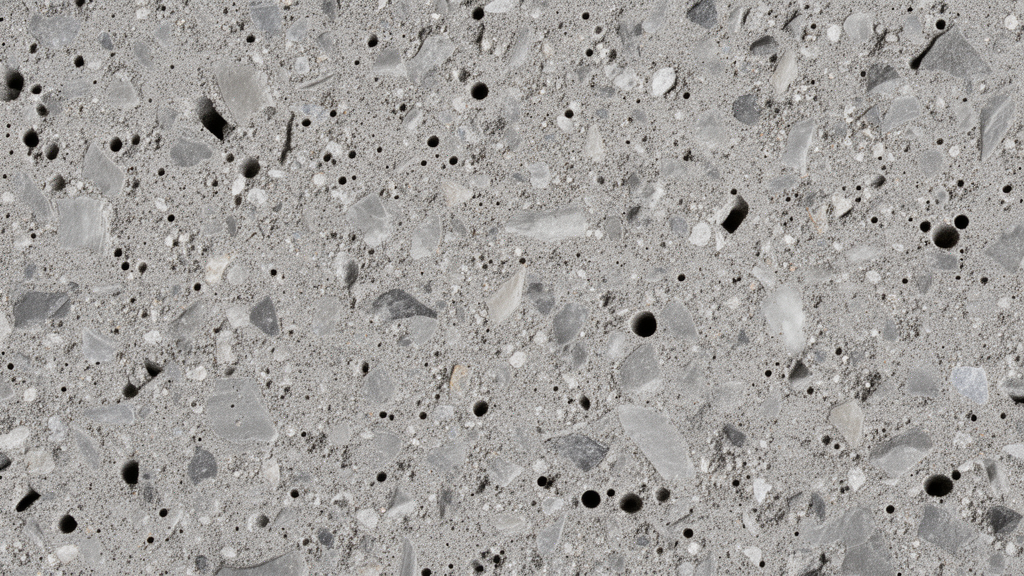
An integrated deep learning architecture combining convolutional autoencoders, transformer-based self-attention, and long short-term memory networks can predict concrete compressive strength directly from high-resolution microstructural images while outperforming baseline computational models. According to findings published in AI in Civil Engineering by Prashant T. Dhorabe and colleagues, the framework achieved a mean absolute error of 3.7 megapascals, a root mean squared error of 4.9 megapascals, and an R-squared of 0.87 on held-out test data. These results reflect a twenty percent reduction in mean absolute error, an eighteen percent reduction in root mean squared error, and a seven percent improvement in R-squared compared to baseline models. Furthermore, the hybrid framework accelerated prediction speeds by approximately twenty percent, offering a non-destructive alternative for continuous strength evaluation.
Evaluating concrete compressive strength represents a critical concern in civil engineering because this parameter directly governs structural integrity and safety. Concrete undergoes continuous internal changes over time, influenced by hydration chemistry, curing regimes, and environmental exposure conditions. Traditionally, assessing load-bearing capacity requires extracting core specimens from structures and conducting destructive crushing tests. Although core drilling and laboratory crushing yield dependable results, they physically damage tested materials, demand substantial labor, incur high costs, and remain impractical for routine, large-scale structural health monitoring across operational infrastructure. Consequently, civil engineering research has focused extensively on developing reliable non-destructive evaluation techniques capable of delivering accurate, real-time strength assessments during curing while fully preserving material integrity.
Recent advancements in microscopic imaging allow researchers to acquire high-resolution visual documentation of concrete’s internal structural organization. Detailed scanning electron microscopy images unveil material distribution patterns, hydration products, and compositional features that serve as critical inputs for mechanical property prediction models. However, the high dimensionality of microstructural image data poses substantial analytical challenges that conventional methods struggle to resolve. While convolutional neural networks specialize in automated hierarchical feature extraction from visual inputs, conventional architectures demonstrate notable limitations when applied to concrete microstructures. Specifically, the restricted receptive fields of standard convolutional filters constrain their capacity to capture long-range spatial dependencies and complex spatial relationships distributed throughout the material’s heterogeneous internal structure.
The paper reviews existing computational methods for concrete strength forecasting, summarizing their respective merits and shortcomings. Prior studies have implemented Bayesian networks to predict compressive strength and slump flow in self-compacting mixes, yet their architectural complexity hinders field implementation. Artificial neural networks deliver high predictive precision but require intensive data preprocessing that increases overfitting risks. Support vector regression performs effectively under limited sample conditions, but its efficacy diminishes with high-dimensional image data. Meanwhile, ensemble techniques such as extreme gradient boosting paired with metaheuristic optimization improve learning capacity at the cost of elevated computational demands. Gene expression programming models complex nonlinear behavior but generates difficult-to-interpret results, and conventional regression algorithms frequently struggle to generalize across diverse concrete mix proportions.
To overcome these limitations, the researchers developed an integrated deep learning framework combining convolutional autoencoders, transformer-based self-attention mechanisms, and long short-term memory networks into a cohesive analytical pipeline. This architecture simultaneously addresses spatial and temporal complexities in predicting concrete strength from high-resolution imagery. While convolutional autoencoders compress high-dimensional micrographs into compact latent representations without significant information loss, the transformer blocks dynamically identify and prioritize structurally significant regions, linking distant spatial cues that standard convolutional networks overlook. Concurrently, long short-term memory recurrent layers model the chronological evolution of concrete strength during curing. By unifying unsupervised feature compression, spatial attention, and sequence modeling, the proposed system delivers superior predictive accuracy, interpretability, and generalizability for non-invasive structural monitoring.
The convolutional autoencoder operates as the framework’s primary feature extraction and compression engine, targeting the high-dimensional visual complexity of scanning electron microscopy. The architecture comprises an encoder that reduces input dimensionality and a decoder that reconstructs the original image from the compressed latent state. Mathematically, the encoder applies a series of convolutional operations with weight matrices, biases, and non-linear rectified linear unit activations to transform raw image inputs into a compact latent vector z. The decoder replicates this structure using transposed convolutional layers to produce reconstructed outputs approximating the original image. During training, the autoencoder minimizes reconstruction error by optimizing weights and biases via mean squared error loss calculated across all image pixels. This unsupervised training strategy achieves an eighty percent reduction in dimensionality without significant information loss, isolating salient structural patterns while eliminating visual redundancy.
Within the transformer component, self-attention mechanisms analyze structural relationships across image subregions. Processing begins by segmenting each high-resolution microstructural image into consecutive, non-overlapping patches, which are subsequently mapped into a higher-dimensional embedding space through learnable linear projections. The embedded patches then advance through self-attention layers that compute attention weights quantifying the relative importance between individual patches. For each patch, the system generates query, key, and value vectors via linear transformations with dedicated learnable weight matrices. Scaled dot-product operations calculate attention weights across patches, and each patch’s output is formed as a weighted combination of value vectors. By dynamically weighting critical image regions, the self-attention mechanism captures global patterns and long-range spatial dependencies overlooked by standard convolutional networks, generating interpretable attention maps that clearly highlight structurally pivotal zones.
To capture the temporal dynamics of concrete strength development during curing, the architecture incorporates long short-term memory recurrent neural networks. Concrete strength evolves continuously as hydration progresses, making sequence modeling essential for accurate forecasting. The recurrent cells function through distinct mathematical gating operations: a forget gate governs the proportion of prior cell state information retained using a sigmoid activation function, while an input gate regulates the introduction of candidate cell state information through complementary sigmoid and hyperbolic tangent operations. The cell state is updated by combining retained historical data with newly weighted candidate information. Finally, an output gate modulates cell emission to produce a hidden state vector that serves as the predictive output for compressive strength. By tracking sequential microstructural modifications across curing stages, the recurrent network models hardening trajectories, improving strength forecasting accuracy by fifteen percent.
The experimental evaluation was conducted using a hybrid dataset combining public repository benchmarks with laboratory-acquired microscopic imagery. The researchers integrated the Concrete Compressive Strength dataset from the University of California, Irvine Machine Learning Repository with custom image collections gathered at the YCCE Laboratory. The repository supplied one thousand and thirty records of concrete mix compositions, each described across eight input variables: cement, blast furnace slag, fly ash, water, superplasticizer, coarse aggregate, fine aggregate, and curing age. These compositional entries were matched with high-resolution scanning electron microscopy images captured across curing stages and normalized to one thousand and twenty-four by one thousand and twenty-four pixels. Measured compressive strength readings collected from standardized destructive tests ranged between ten and sixty megapascals across curing intervals from one to twenty-eight days, encompassing diverse mix formulations and curing regimes.
To prevent overly optimistic performance estimates and hyperparameter overfitting, the methodology coupled nested cross-validation with Bayesian optimization. In the nested structure, outer cross-validation folds evaluated generalizability while inner loops executed Bayesian search to optimize key model parameters, including learning rate, attention-head count, long short-term memory hidden sizes, and latent-space dimensionality. The Bayesian optimization procedure utilized a probabilistic surrogate model to approximate the objective function, which was evaluated through mean absolute error, and applied an acquisition function to balance exploration and exploitation across successive iterations. By maintaining strict separation between hyperparameter selection and validation subsets across all folds, this optimization protocol eliminated data leakage risks. The combination of nested cross-validation and Bayesian search achieved approximately a ten percent reduction in mean absolute error variance compared to traditional validation schemes.
Empirical benchmark analyses demonstrated that the proposed framework consistently surpassed established baseline methods reported in recent literature. On the held-out test dataset, the architecture recorded a mean absolute error of 3.7 megapascals, outperforming baselines from Albostami and colleagues at 4.6 megapascals, Gogineni and collaborators at 4.9 megapascals, and Omer and co-authors at 5.0 megapascals. The model likewise achieved a root mean squared error of 4.9 megapascals, markedly lower than the baseline errors of 6.1, 6.4, and 6.6 megapascals reported by the respective benchmark studies. For explanatory variance, the proposed approach attained an R-squared of 0.87, exceeding the baseline scores of 0.81, 0.78, and 0.77. In addition to securing lower mean absolute percentage error across training, validation, and testing sets, timing analyses confirmed that the framework reduced prediction time by approximately twenty percent.
Despite these empirical advancements, the authors identified several practical limitations that currently restrict field deployment of the system. First, the framework depends on high-resolution scanning electron microscopy, an imaging modality that remains predominantly laboratory-based and unavailable for direct jobsite use. Second, the recurrent network requires sequential microstructural images collected across multiple curing stages, which are rarely obtained in conventional civil engineering inspection workflows. Third, the combined transformer and recurrent architecture demands significant computational processing power, presenting potential hurdles for real-time deployment in resource-constrained environments without model compression or edge computing adaptations. Finally, the framework requires broader validation across alternative binders such as geopolymers and sulfur concrete, as well as under severe environmental exposure scenarios like freeze-thaw cycles and chemical attacks, while real-world measurement uncertainties including sample preparation artifacts must be addressed.
Subject of Research: Deep learning framework for non-destructive prediction of concrete compressive strength using microstructural image analysis
Article Title: Computational prediction of concrete strength via microstructure image analysis: a hybrid machine learning framework
Article References: Dhorabe, P. T., Chandak, M. A., Bahoria, B. V., Patil, T. R., Jaiswal, A., Shelke, N., & Vairagade, V. S. (2025). Computational prediction of concrete strength via microstructure image analysis: a hybrid machine learning framework. AI in Civil Engineering, 4(1), Article 26. https://doi.org/10.1007/s43503-025-00075-5
Image Credits: AI Generated
DOI: 10.1007/s43503-025-00075-5
Keywords: Concrete Compressive Strength, Deep Learning, Microstructure Analysis, Convolutional Autoencoders, Transformers, Long Short-Term Memory, Scanning Electron Microscopy, Non-Destructive Testing, Computational, prediction, concrete, strength
News Source: Blake Davidson. (November 9, 2026). Hybrid Machine Learning Framework Predicts Concrete Compressive Strength from Microscopic Imagery. Scienmag.