Direct experimental heating of living foliage across six native Florida woody plant species produced no statistically significant changes in internal fungal endophyte richness or overall community composition, challenging prevailing scientific expectations that rising leaf temperatures rapidly reshape foliar microbial assemblages. Endophytic fungi inhabit internal tissues across all major plant lineages, providing vital biological functions ranging from abiotic drought tolerance and physiological optimization to pathogen defense and chemical herbivore deterrence. Despite their recognized importance in sustaining the extreme biodiversity of tropical and subtropical ecosystems, empirical knowledge regarding how endophytes respond to climate warming has remained sparse. In a novel investigation conducted under controlled greenhouse conditions, researchers directly manipulated branch-level leaf temperatures by an average increment of 2.1 degrees Celsius over a two-week period. Rather than observing widespread community collapse or thermal turnover, the investigators discovered that foliar mycobiomes exhibited notable resistance to short-term thermal stress, with host botanical identity remaining the dominant factor governing community architecture.
The critical scientific rationale behind this experiment rests upon the physical distinction between ambient macroclimatic conditions and the microclimatic realities experienced inside living leaves. Most prior ecological studies investigating climatic effects on plant microbiomes have relied almost exclusively on ambient air temperatures or whole-plant warming manipulation, demonstrating that combined historical precipitation and temperature explain approximately sixty-eight percent of the variation in fungal endophyte richness. Nevertheless, ambient measurements overlook the proximate microclimate within foliar tissue compartments where fungal hyphae establish and persist. Leaf temperatures can diverge dramatically from surrounding air temperatures as a consequence of plant morphological adaptations, leaf coloration, orientation, and active thermoregulatory behaviors. Co-occurring plants under identical air conditions can display leaf temperature differences reaching up to eleven degrees Celsius, and substantial thermal divergence routinely occurs between exposed sun leaves and shaded lower canopy foliage. Consequently, testing endophyte vulnerability requires manipulating the microenvironment of the leaf itself rather than inferring microbial responses from macroscale weather patterns.
A substantial body of indirect empirical evidence had long suggested that internal leaf temperatures act as an ecological filter governing microbial community assembly. Previous studies established correlations between functional leaf traits that modify internal temperature—such as leaf mass per area, cuticle thickness, chlorophyll concentration, and heat-shock-induced terpenoid metabolites—and the growth, abundance, and species richness of endophytic fungi. Thicker, mechanically resistant leaves with elevated leaf mass per area frequently exhibit lower endophyte diversity and reduced fungal abundance relative to softer, thinner foliage. Because ongoing anthropogenic climate change is projected to elevate both ambient and surface leaf temperatures worldwide, ecologists hypothesized that acute thermal stress would favor thermotolerant fungal taxa while suppressing temperature-sensitive strains. Such selective filtering was predicted to contract overall species richness and induce profound shifts in community composition across subtropical plant species, potentially destabilizing mutualistic associations that help hosts survive environmental stress.
To subject this hypothesis to direct experimental testing, researchers selected six woody plant species native to Florida spanning diverse environmental niches, physiological adaptations, and stress tolerances. The study cohort comprised Hamelia patens, known commonly as firebush; Conocarpus erectus, or buttonwood; Ernodea littoralis, golden creeper; Psychotria nervosa, wild coffee; Myrcianthes fragrans, Simpson’s stopper; and Guaiacum sanctum, the tree of life. For each botanical species, six individual plants less than one year old were procured from commercial nurseries and the Fairchild Tropical Botanic Garden in Miami-Dade County. Plants were cultivated in one-gallon or three-gallon nursery containers filled with standard commercial potting substrate within the greenhouse facility at the University of Miami in Coral Gables. Environmental conditions inside the greenhouse were tracked continuously throughout the trial, maintaining mean ambient air temperatures of 27.1 degrees Celsius with a standard deviation of 1.4 degrees, accompanied by an average relative humidity of 66.9 percent under natural daylight regimes.
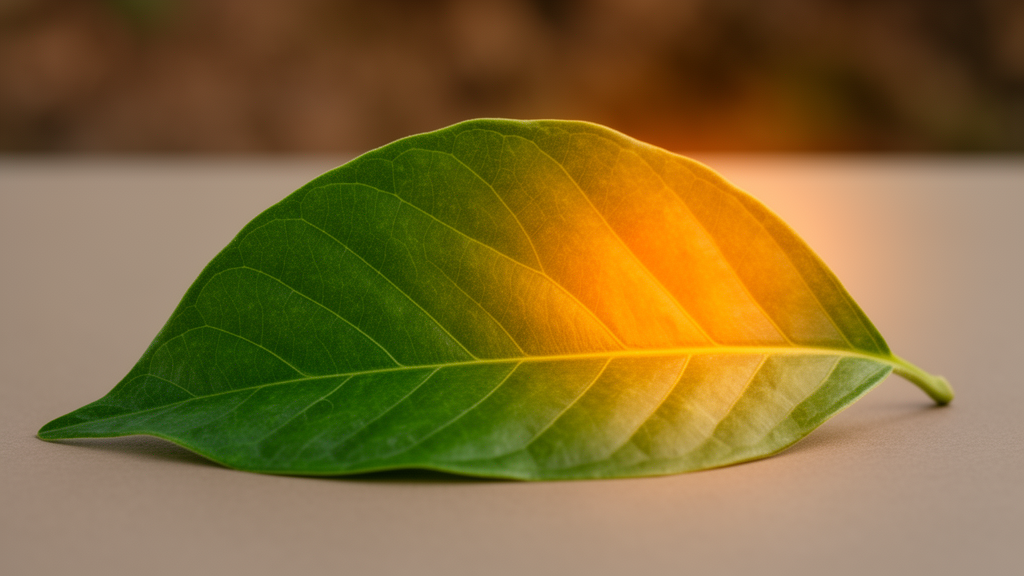
The experimental apparatus was configured to warm target foliage without subjecting entire plants or root systems to artificial heating. Investigators positioned fifteen by twenty centimeter electric warming pads operating at constant temperatures between 40 and 50 degrees Celsius approximately five centimeters beneath a single designated branch on each sapling. An unheated branch on the exact same plant served as the concurrent within-plant control, allowing researchers to control rigorously for host genetics, plant age, and individual micro-environmental history. A preliminary pilot trial confirmed that the heating pads raised leaf temperatures by one to three degrees Celsius above unheated controls, reaching steady thermal levels within three days. Throughout the two-week experiment, thermal measurements were captured three times per week across twelve leaves per plant using a calibrated FLIR E95 thermal imaging camera configured with thermal sensitivity and emissivity set at 0.95. Daytime leaf heating averaged 2.1 degrees Celsius above controls, ranging from 0.1 degree in Hamelia patens to 5.4 degrees in Myrcianthes fragrans.
Foliar tissue sampling followed a balanced two-phase temporal design to distinguish thermal impacts from pre-existing baseline microbial variability. Researchers harvested six baseline leaves from both designated branches prior to warming, and gathered post-treatment leaves after two weeks of steady heating, yielding 144 total samples across the six species, six individual plants, two branch treatments, and two collection intervals. Harvested leaves were flash-frozen and preserved at minus eighty degrees Celsius prior to molecular extraction. To overcome challenging leaf attributes such as thickened waxy cuticles that typically impede fungal lysis, the researchers executed an intensive physical and chemical isolation protocol. Frozen tissue was pulverized in a Qiagen TissueLyser II bead mill at twenty-five hertz for five minutes with chilled stainless steel beads, followed by lysis in a specialized cetyltrimethylammonium bromide buffer solution. Samples underwent four alternating rounds of fifteen-minute heating at 65 degrees Celsius and high-speed mechanical homogenization before processing through Qiagen DNeasy Plant Pro columns, with Qubit fluorometer assays verifying the complete absence of extraction contaminants.
Molecular identification of the endophytic community relied on high-throughput amplicon sequencing and modern bioinformatic workflows. Fungal internal transcribed spacer regions ITS1 and ITS2 were targeted for polymerase chain reaction amplification using universal tail primers, cleaned with magnetic beads, verified via agarose gel electrophoresis, and sequenced on an Illumina MiSeq instrument producing 300-base-pair paired-end reads. Sequence processing in QIIME2 paired reads and executed DADA2 denoising to eliminate chimeric artifacts and define exact sequence variants. Taxonomic affiliations were assigned by querying the UNITE fungal database at a ninety-nine percent sequence identity threshold using a Bayesian machine-learning classifier. Following quality control, sequencing depth was rarefied to two thousand reads per sample, resulting in the exclusion of twenty-one low-depth samples distributed evenly across treatments and host taxa. To protect against artificial taxonomic inflation, rare variants representing less than 0.25 percent relative abundance were filtered from downstream statistical evaluations, ensuring that retained sequences represented authentic endophytic taxa.
Statistical evaluation of endophyte richness revealed that temperature had no discernible impact on fungal community diversity. In a global linear mixed-effects model evaluating treatment, sampling time, host species, and their interactions, experimental warming produced an F-statistic of 0.023 with a non-significant p-value of 0.88. Instead, host botanical species identity served as the primary determinant of exact sequence variant richness, yielding an F-value of 5.332 and a highly significant p-value of 0.001. A marginal interaction appeared between host species and sampling time, registering a p-value of 0.054, but treatment interactions remained non-significant. Separate paired t-tests evaluating pre-treatment versus post-treatment richness changes within individual host species likewise detected no significant heating effects in any of the six plants. Furthermore, a mixed-effects regression examining branch-level richness change as a continuous function of measured leaf temperature confirmed the absence of a detectable association, though researchers cautioned that imprecise continuous estimates preclude concluding that temperature exerts zero effect under all scenarios.
Analyses of overall community composition mirrored the richness findings, demonstrating remarkable community-wide resilience across experimental treatments. Using Bray-Curtis dissimilarity matrices, distance-based redundancy analysis revealed that host plant identity explained thirty-three percent of compositional variation among foliar fungal assemblages with strong statistical significance. Permutational multivariate analysis of variance reinforced this observation, attributing 35.4 percent of total compositional variation to host species with an F-value of 6.365 and a p-value of 0.001. In stark contrast, warming treatment accounted for merely 1.3 percent of the variation, generating an F-value of 1.147 and a non-significant p-value of 0.274. This compositional resistance to warming manifested consistently across all six host plants, irrespective of baseline divergence. For example, Psychotria nervosa and Hamelia patens harbored the most distinct fungal assemblages in the study, yet their endophyte profiles proved just as resilient to elevated temperatures as those inhabiting Conocarpus erectus, Ernodea littoralis, Guaiacum sanctum, and Myrcianthes fragrans.
Although overall community diversity remained stable, Boruta random forest machine-learning classification identified three individual exact sequence variants predictive of heated foliage with 70.3 percent accuracy: Zasmidium citrigriseum and a Kondoa yeast declined under warming, whereas an unclassified Cystobasidiomycetes yeast increased. These discrete responses suggest that temperature may act as a subtle ecological filter on particular sensitive taxa without destabilizing whole communities. This observed community resilience mirrors findings from long-term twenty-three-year grassland warming trials and root endophyte studies where host identity and edaphic conditions outweighed heating, contrasting with multi-decadal continental surveys that documented steep fungal declines. For subtropical trees, stable endophyte associations preserve critical mutualisms during acute heatwaves, though persisting without turnover could restrict long-term adaptation if plants cannot acquire novel thermotolerant symbionts. Because warming was localized to single branches over two weeks, investigators emphasized that multi-year, whole-canopy studies remain necessary to evaluate plant-microbe symbioses under ongoing climate warming.
Subject of Research: Thermal microclimate effects on foliar fungal endophyte diversity in native subtropical plants
Article Title: Do Leaf Temperatures Determine Endophyte Composition and Richness in Florida Native Plant Species?
Article References: Tserej, O., Hernandez, D. J., Rawstern, A. H., Kiesewetter, K. N., Almeida, B. K., Afkhami, M. E., & Feeley, K. J. (2026). Do Leaf Temperatures Determine Endophyte Composition and Richness in Florida Native Plant Species?. Ecology and Evolution, 16(11), Article e74615. https://doi.org/10.1002/ece3.74615
Image Credits: AI Generated
DOI: 10.1002/ece3.74615
Keywords: foliar endophytes, leaf microclimate, climate warming, fungal diversity, Florida native plants, microbial ecology, Illumina sequencing, Exact Sequence Variants, Leaf, Temperatures, Determine, Endophyte
News Source: Morgan Morrow. (November 9, 2026). Direct Leaf Warming Does Not Alter Fungal Endophytes in Florida Native Plants. Scienmag.