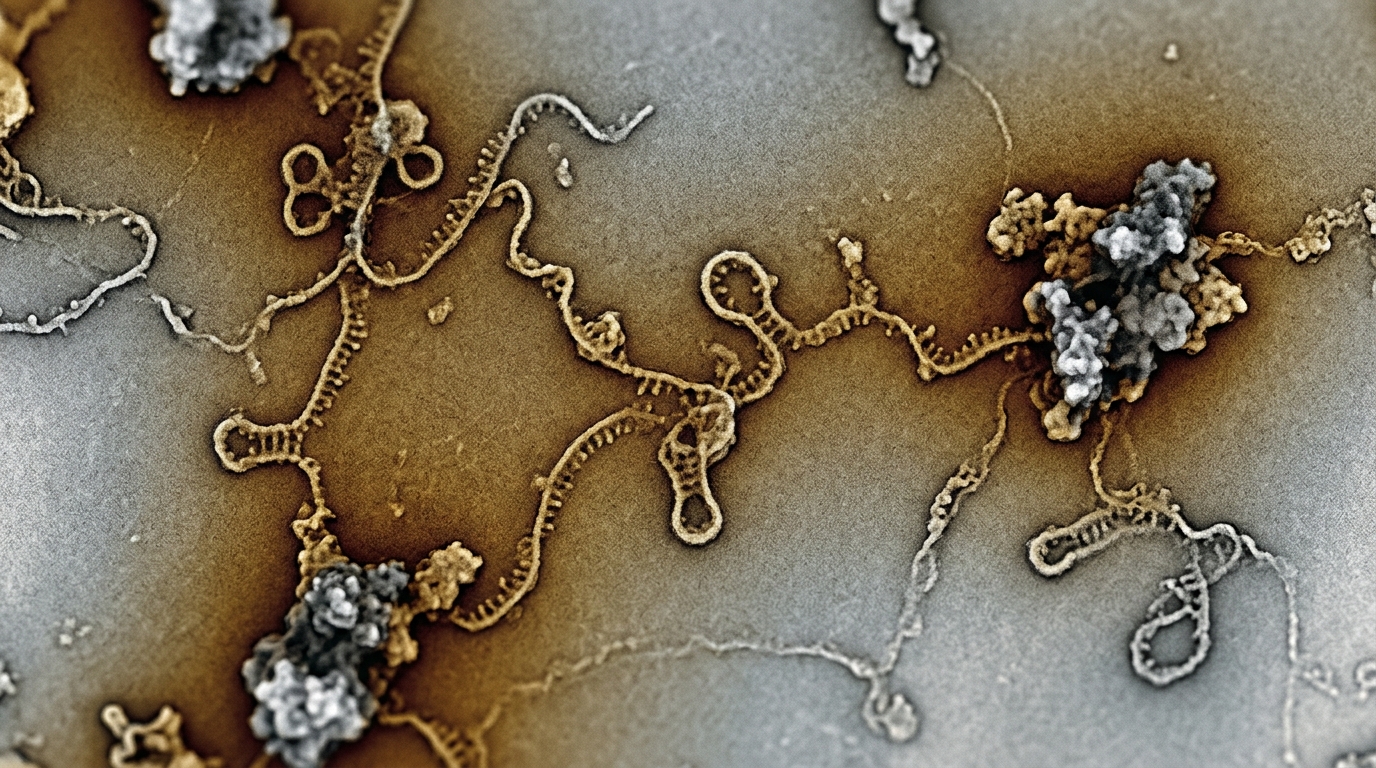
A novel heterogeneous deep learning architecture called TriTower-m6Am outperforms existing methods in predicting cap-proximal mRNA N6,2′-O-dimethyladenosine (m6Am) sites by integrating semantic, sequential, and structural information from identical RNA windows, according to findings reported by Kaifeng Xiong and Jianhua Jia. The m6Am modification is deposited by phosphorylated C-terminal domain (CTD)-interacting factor 1 (PCIF1) at the first transcribed nucleotide of eukaryotic messenger RNAs. Mapping the precise locations where m6Am sites occur helps explain how biological cells tune mRNA stability and translation. Nevertheless, conventional computational predictors typically depend on an isolated single representation and fail to jointly model multiple complementary views of the same RNA sequence.
To overcome this limitation, TriTower-m6Am incorporates three distinct analytical towers to evaluate each candidate RNA window. The semantic tower extracts contextual representations using RNA-FM, a pretrained RNA foundation model coupled with BellPooling. Simultaneously, the sequential tower captures linear sequence patterns using a one-hot bidirectional long short-term memory (One-Hot BiLSTM) network. The structural tower models local geometry through a relational graph convolutional network (RGCN) constructed across a 41-nucleotide window. Predictions from all three modules are merged using an area under the ROC curve (AUC)-weighted voting scheme, which preserves interpretability by keeping the specific contribution of every individual tower fully transparent and readable for any individual prediction without requiring a post-hoc explainer.
In rigorous benchmark evaluations on an independent test dataset comprising 640 sequences, TriTower-m6Am demonstrated superior predictive accuracy over the baseline model DTC-m6Am. The architecture attained an area under the receiver operating characteristic curve (AUC) of 0.776 and a Matthews correlation coefficient (MCC) of 0.425, exceeding the AUC of 0.765 and MCC of 0.411 recorded for DTC-m6Am. Notably, TriTower-m6Am achieved these performance gains while utilizing 4.4 times fewer trainable parameters than DTC-m6Am. Across every matched specificity threshold between 0.40 and 0.70, the proposed ensemble consistently recovered 1 to 7 more true positive modification sites out of 320 compared to the competing predictor.
Detailed analyses of the structural graph tower further clarified how structural data influenced model predictions. The authors performed an edge-type ablation, a node-feature ablation, and a structure-permutation control, all of which converged to show that specific secondary folds predicted by the RNAfold algorithm carried no attributable predictive signal. Instead, the performance benefit of the graph tower was delimited strictly to the relational aggregation of local backbone adjacency over sequence-derived node features. In addition, a probing analysis demonstrated that per-base base-pairing status is largely recoverable directly from sequence-derived RNA-FM embeddings, yielding an AUC of 0.72 compared to an AUC of 0.65 derived from raw sequence data, indicating that predicted fold annotations are substantially redundant with the semantic representations already captured by the ensemble.
The investigators concluded that unifying semantic, sequential, and structural views of the same RNA sequence provides a measurable performance advantage over any single representation for m6Am site prediction, while the weighted voting framework maintains full auditability for individual predictions. Xiong and Jia also noted an important scope limitation in their study: whether the triple-tower heterogeneous deep learning framework transfers effectively to other RNA modification prediction tasks remains untested and must be evaluated in future research.
Subject of Research: Computational prediction of mRNA N6,2′-O-dimethyladenosine modification sites using deep learning
Article Title: TriTower-m6Am: A triple-tower heterogeneous deep learning architecture integrating semantic, sequential, and structural information for mRNA N6,2′-O-dimethyladenosine site prediction
Article References: Xiong, K., & Jia, J. (2026). TriTower-m6Am: A triple-tower heterogeneous deep learning architecture integrating semantic, sequential, and structural information for mRNA N6,2′-O-dimethyladenosine site prediction. PLOS Computational Biology, 22(11), e1014939. https://doi.org/10.1371/journal.pcbi.1014939
Image Credits: AI Generated
DOI: 10.1371/journal.pcbi.1014939
Keywords: m6Am modification, deep learning, computational biology, RNA modifications, messenger RNA, RNA foundation models, bioinformatics, graph convolutional networks, TriTower-m6Am, triple-tower, heterogeneous, deep
News Source: Blake Davidson. (November 9, 2026). TriTower-m6Am Deep Learning Architecture Improves RNA Modification Site Prediction. Scienmag.