Straight-line motion of the head, measured by linear acceleration, is more predictive of sports-related concussions than turning motion, measured by rotational acceleration, according to a study by Stanford Medicine researchers and collaborators published in the Annals of Biomedical Engineering. Analyzing kinematic data gathered from motion-sensing mouthguards worn by athletes across seven sports, the investigation established that peak linear acceleration served as the single most predictive factor for whether an impact resulted in a concussion, challenging an 85-year-old consensus in head injury biomechanics.
Concussions, which are classified as mild traumatic brain injuries, are among the most frequent injuries occurring in athletic competition, accounting for an estimated 3.8 million sports-related cases annually in the United States. Lead author Jessica Towns, a graduate student in bioengineering at Stanford Medicine, reported that not only does linear acceleration predict concussion occurrence, but the threshold at which impacts become dangerous is also significantly lower than previously recognized in sports safety standards.
Linear acceleration tends to dominate when collision forces are directed through the head’s center of mass. The study authors noted that this occurs during specific athletic impacts, such as a direct punch between the eyes in mixed martial arts, a lacrosse stick striking the side of the head, a direct collision to the crown of a lowered head in football, or a backward fall where the head impacts the playing surface.
These findings run counter to an enduring biomechanical hypothesis established during the World War II era by Scottish physicist A.H.S. Holbourn. Holbourn theorized that rotational head impacts, such as an uppercut delivered to the chin in boxing, cause severe brain injury through tissue shearing as different areas of the gelatinous brain rotate at varying velocities. Because pure linear motion does not induce tissue shearing, historical biomechanical models deemed it far less hazardous, prompting decades of animal studies that reinforced the Holbourn hypothesis and leading modern athletic helmet rating systems to prioritize mitigating rotational forces.
David Camarillo, PhD, senior author of the study and associate professor of bioengineering at Stanford Medicine, noted that Holbourn’s framework was formulated purely on mechanical principles rather than biological observations. Camarillo highlighted that human head impact measurements have historically relied on helmet-mounted sensors, which shift independently relative to the cranium during impacts and therefore fail to record precise, direct measurements of head kinematics.
The newly published research evaluated the largest and most diverse mouthguard dataset compiled to date, tracking 203 male and female athletes across sports including football, lacrosse, and mixed martial arts. The dataset captured 3,851 total impacts, comprising 47 concussions and 3,804 non-injurious collisions, with all impacts recorded on video and clinical diagnoses confirmed by on-site medical staff or subsequent video review of visual symptoms such as balance disturbances and disorientation.
When the researchers evaluated the kinematic data, their mathematical model demonstrated that peak linear acceleration alone provided the strongest prediction of concussion risk. Incorporating peak rotational acceleration failed to improve the predictive capacity of the model, whereas adding peak rotational velocity yielded only a slight precision increase. The investigators suggested this modest improvement reflects the brief duration of typical athletic collisions, noting that rotational acceleration might remain a larger contributing factor in longer-duration mechanisms such as whiplash.
Camarillo emphasized that because nearly all real-world head collisions generate a combination of linear and rotational movement, the findings do not imply that rotational acceleration is harmless, but rather that it was less predictive of concussion than linear acceleration within the observed data. The authors also noted the possibility that the specific sporting impacts captured in the dataset may have exhibited larger linear components than rotational components.
The quantitative results indicate that existing safety guidelines for protective headgear in activities ranging from football to cycling may substantially underestimate the risks posed by linear acceleration. The study determined that impacts delivering 100 g of linear acceleration—equivalent to 100 times the acceleration of gravity—carry a 50 percent risk of concussion, whereas the average football impact measures approximately 25 g. Prior helmet sensor literature frequently cited a 50 percent injury threshold of 192 g, whereas the new mouthguard data showed that linear impacts reaching 150 g produced a concussion probability exceeding 99 percent.
A preliminary analysis of concussive impacts sustained by athletes under the age of 14 indicated that injury thresholds are likely considerably lower in pediatric populations. Camarillo stated that expanding data collection among youth athletes represents an urgent priority, noting that pediatric susceptibility may prove to be the most critical concern in sports safety.
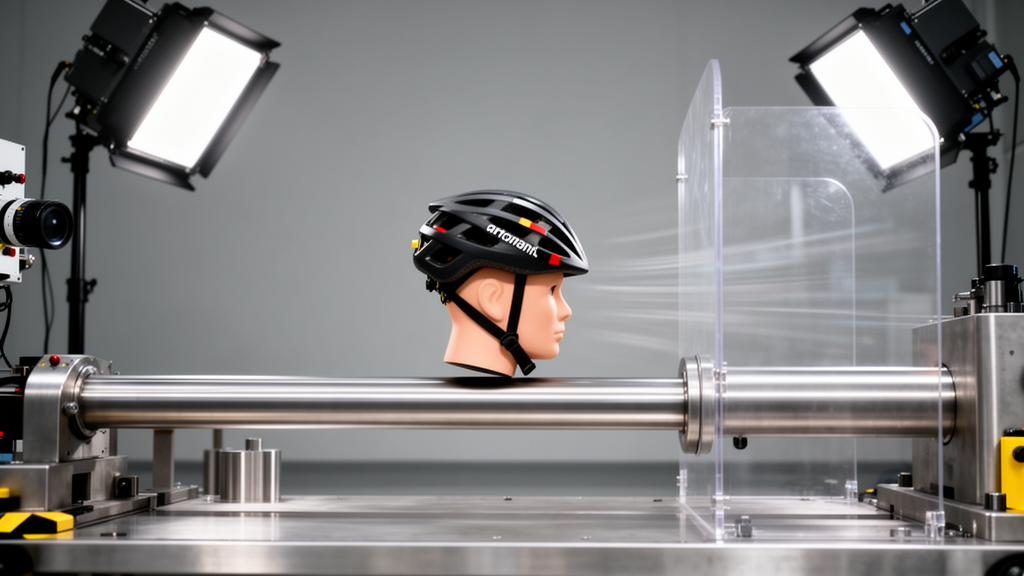
In laboratory testing designed to evaluate potential protective countermeasures, the researchers compared standard football helmets against helmets equipped with experimental liquid-filled padding on crash test dummies. The liquid pad technology reduced concussion risk across all impact severities by dampening peak linear acceleration, lowering the predicted concussion risk at the highest impact level from 73.3 percent with standard helmets to 55.7 percent with the liquid-filled pads. The technology was licensed by SoftShox, an entity co-founded by Camarillo.
The biological mechanisms by which linear forces injure brain tissue remain subject to ongoing investigation, with candidate mechanisms including direct brain contact against the interior skull or cavitation caused by localized intracranial pressure shifts that produce collapsing microbubbles. Supported by co-authors from SoftShox, Monash University, Deakin University, Duke University, and Alfred Health, Camarillo noted that while the 47 recorded concussions represent a relatively small sample requiring wider confirmation, the findings provide a foundational rationale to re-evaluate athletic head protection standards.
When the Stanford research team initiated their multi-sport investigation, they set out with the expectation that their data would affirm the Holbourn hypothesis rather than overturn it. For more than a decade, David Camarillo’s laboratory had dedicated its efforts to engineering motion-sensing mouthguards, guided by a foundational inquiry: determining the exact magnitude and nature of the mechanical forces that produce concussive injuries. Camarillo noted that establishing those precise forces and charting the structural tolerances of the human brain represent the essential scientific pathway toward preventing athletic head injuries. Yet when the mathematical evaluation was completed, bioengineering graduate student Jessica Towns and the research team discovered the exact opposite of what they had anticipated, finding that straight-line linear motion proved far more predictive of traumatic brain injury than rotational acceleration.
Towns emphasized that these empirical findings carry direct implications for athletic equipment standards, noting that an impact producing 100 g of linear acceleration corresponds to an estimated 50 percent risk of concussion. In concrete terms, if 100 individuals were each subjected to a 100 g head strike, approximately half of them would sustain a concussion. This observed threshold contrasts sharply with existing commercial safety regulations, as the performance thresholds currently required for protective helmets to be sold on the consumer market are routinely set far higher than 100 g. Camarillo observed that this disparity addresses an enduring paradox in modern athletics: why concussions remain frequent even among players wearing helmets. The linear acceleration levels that regulatory bodies and helmet manufacturers previously treated as safe are now shown to be substantially more hazardous.
While addressing rotational force remains valuable, Camarillo noted that identifying linear acceleration as a widespread, independent concussion mechanism provides an optimistic new lever for player safety. Because headgear engineering has not traditionally prioritized optimizing for linear deceleration, recognizing straight-line force as a primary contributor creates an unexploited design opportunity for engineers to develop advanced helmet technologies that specifically dampen linear impacts.
To better characterize how straight-line impacts alter intracranial biomechanics, the Stanford researchers are actively building physical and computational models to track brain tissue responses. Camarillo described the current publication as the beginning rather than the culmination of this scientific effort, noting that this investigation is the first study to directly challenge an 85-year-old dogma that has governed the field of head injury biomechanics since World War II. Overturning such entrenched theory will require extensive replication by independent research teams across broader athlete cohorts to verify the findings, satisfy scientific skeptics, and ultimately reshape sports safety regulations and athletic protocols.
The peer-reviewed paper, published in the Annals of Biomedical Engineering under the title “Limitations of Rotational Acceleration for Predicting Concussion: A New Injury Risk Function,” was supported by diverse research grants and public institutions. Primary funding was provided by the National Institutes of Health under grants R24NS098518, R43NS119134, and R44NS119134. Additional financial support came from the Office of Naval Research, the National Science Foundation Graduate Research Fellowship Program, the Taube Stanford Children’s Concussion Initiative, the Pac-12 Conference’s Student-Athlete Health and Well-Being Initiative, and the Maternal and Child Health Research Institute at Stanford Medicine, an integrated academic health system combining the Stanford School of Medicine with adult and pediatric healthcare networks.
Subject of Research: Biomechanics of sports concussions and head acceleration forces
Article Title: Concussion study upends understanding of what makes head impacts dangerous
Article References: Concussion study upends understanding of what makes head impacts dangerous. Original publication (Bibliographic details unavailable.)
Image Credits: AI Generated
DOI: Not provided
Keywords: concussions, traumatic brain injury, biomechanics, linear acceleration, rotational acceleration, mouthguard sensors, helmet safety, sports medicine, Concussion, upends, understanding, makes
News Source: Cassandra Pierce. (November 9, 2026). Linear Head Motion Outperforms Rotational Acceleration in Predicting Concussion Risk. Scienmag.