• HOME
  • NEWS
  • EXPLORE
    • CAREER
      • Companies
      • Jobs
    • EVENTS
    • iGEM
      • News
      • Team
    • PHOTOS
    • VIDEO
    • WIKI
  • BLOG
  • COMMUNITY
    • FACEBOOK
    • INSTAGRAM
    • TWITTER
Wednesday, November 11, 2026
BIOENGINEER.ORG
No Result
View All Result
  • Login
  • HOME
  • NEWS
  • EXPLORE
    • CAREER
      • Companies
      • Jobs
        • Lecturer
        • PhD Studentship
        • Postdoc
        • Research Assistant
    • EVENTS
    • iGEM
      • News
      • Team
    • PHOTOS
    • VIDEO
    • WIKI
  • BLOG
  • COMMUNITY
    • FACEBOOK
    • INSTAGRAM
    • TWITTER
No Result
View All Result
Bioengineer.org
No Result
View All Result
Home NEWS Science News Chemistry

Chiral Self-Sorting Programs Polymer Network Topology and Suppresses Primary Loops

by
November 9, 2026
in Chemistry
Reading Time: 2 mins read
0
Chiral Self-Sorting Programs Polymer Network Topology and Suppresses Primary Loops

Chiral Self-Sorting Programs Polymer Network Topology and Suppresses Primary Loops

Share on FacebookShare on TwitterShare on LinkedinShare on RedditShare on Telegram

Researchers have demonstrated that homochiral self-sorting can be harnessed to suppress primary loops in end-linked polymer networks, establishing stereochemical recognition as an effective design handle to program network topology.

While stereochemistry has long exerted a strong influence over polymer structure and molecular assembly, its utilization as a design handle to regulate polymer network topology has remained unexplored. The authors developed a design principle specifically aimed at employing homochiral self-sorting to overcome this limitation and suppress primary loop formation.

To validate this topological strategy, the authors synthesized linear polymers terminated with bi-2-naphthol-based ligands designed for coordination assembly. The experimental design relied on preparing and isolating polymer ligands with specifically configured chain ends, encompassing both homochiral and heterochiral ligand terminations.

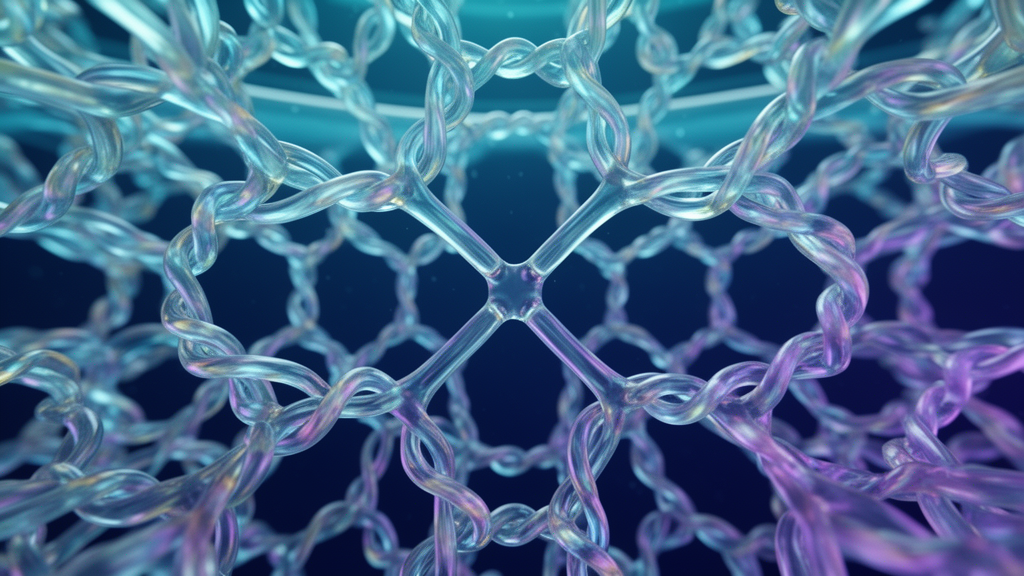
Cross-linking in this system is driven by coordination chemistry, specifically palladium(II)-mediated assembly of metal–organic cages (MOCs) with a Pd2L4 formulation.

The core operating principle of this design exploits a distinct thermodynamic preference for homochiral MOCs during coordination assembly. When linear polymers are terminated with heterochiral ligands, the thermodynamic favoring of homochiral cages enforces a pronounced bias against intramolecular cyclization.

The researchers conducted comparative evaluations between networks formed from heterochiral polymers and those assembled from homochiral polymers. Networks formed from homochiral polymers can form primary loops through MOC formation. Consequently, networks formed from heterochiral polymers exhibited lower primary loop densities than their homochiral counterparts, resulting in enhanced mechanical properties. Mechanical property comparisons of M and M–P-polyMOC networks were measured at 4 rad s−1 and 3% strain.

Beyond suppressing loop defects during initial assembly, the team discovered that the presence of sacrificial loops at low polymer concentrations enables post-assembly network topology editing. Adding functionalized free ligands enables topology editing with minimal impact on network integrity. This work establishes chiral self-sorting as a versatile approach to controlling polymer topology and provides a generalizable strategy for designing robust and functional polymer networks.

Subject of Research: Regulation of supramolecular polymer network topology through homochiral self-sorting

Article Title: Programming supramolecular polymer network topology via homochiral self-sorting

Article References: Wang, Y., Bobylev, E. O., Wang, K., Kulik, H. J., & Johnson, J. A. (2026). Programming supramolecular polymer network topology via homochiral self-sorting. Nature Chemistry. https://doi.org/10.1038/s41557-026-02282-8

Image Credits: AI Generated

DOI: 10.1038/s41557-026-02282-8

Keywords: polymer topology, supramolecular polymers, homochiral self-sorting, metal-organic cages, stereochemistry, primary loops, intramolecular cyclization, polymer networks, Programming, supramolecular, polymer, network

News Source: Neil Sanderson. (November 9, 2026). Chiral Self-Sorting Programs Polymer Network Topology and Suppresses Primary Loops. Scienmag.


Tags: homochiral self-sortingintramolecular cyclizationmetal-organic cagesnetworkpolymerpolymer networkspolymer topologyprimary loopsprogrammingStereochemistrySupramolecularsupramolecular polymers
Share12Tweet7Share2ShareShareShare1

Related Posts

Review Outlines Liquid Droplet Mechanisms Driving Alpha Synuclein Pathology in Parkinson's Disease

Review Outlines Liquid Droplet Mechanisms Driving Alpha Synuclein Pathology in Parkinson’s Disease

November 11, 2026
Thin-Film Optical Reflections Mimic Molecular Signals in Perovskite Solar Materials

Thin-Film Optical Reflections Mimic Molecular Signals in Perovskite Solar Materials

November 11, 2026

Fungal Glucan Derived From Dairy Lactose Shows Prebiotic Benefits in Obese Rats

November 11, 2026

Machine Learning Model Predicts Plant Chloride Transport Proteins Using Reduced Amino Acids

November 11, 2026

POPULAR NEWS

  • Low-Dose Everolimus Reduces Unresectable Giant Cardiac Rhabdomyoma in Preterm Infant

    Low-Dose Everolimus Reduces Unresectable Giant Cardiac Rhabdomyoma in Preterm Infant

    29 shares
    Share 12 Tweet 7
  • Frontal Lobe EEG Signals Accurately Detect Cognitive Load Across Multiple Datasets

    29 shares
    Share 12 Tweet 7
  • Five-Gene Anoikis Resistance Signature Predicts Pulmonary Metastasis in Osteosarcoma

    29 shares
    Share 12 Tweet 7
  • ApoE Epsilon 4 Genotype Linked to Severe Coronary Lesions and Infarction

    29 shares
    Share 12 Tweet 7

About

We bring you the latest biotechnology news from best research centers and universities around the world. Check our website.

Follow us

Recent News

Meta-Analysis Estimates Seven Percent Reported Expulsion Rate for Adenomyosis Intrauterine Systems

Preventive Dental Care Claims Remain Low Among Insured Saudi Children

Left Atrial Reservoir Strain Linked to Hospitalization in HFpEF and Atrial Fibrillation

Subscribe to Blog via Email

Enter your email address to subscribe to this blog and receive notifications of new posts by email.

Join 87 other subscribers
  • Contact Us

Bioengineer.org © Copyright 2023 All Rights Reserved.

Welcome Back!

Login to your account below

Forgotten Password?

Retrieve your password

Please enter your username or email address to reset your password.

Log In
No Result
View All Result
  • Homepages
    • Home Page 1
    • Home Page 2
  • News
  • National
  • Business
  • Health
  • Lifestyle
  • Science

Bioengineer.org © Copyright 2023 All Rights Reserved.