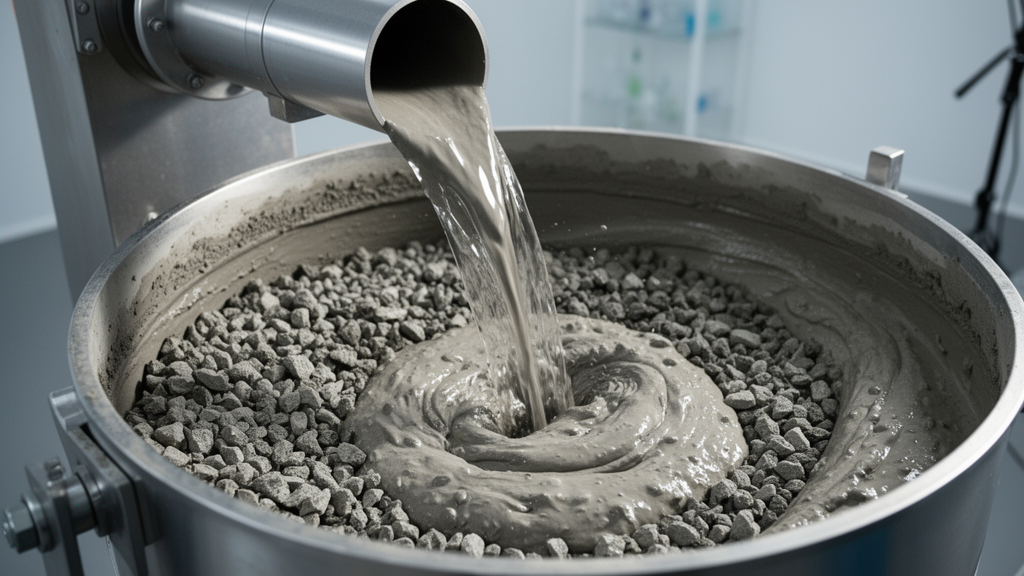
The study, published in Discover Materials, addresses the dual global challenges of improving concrete durability and reducing the carbon footprint of the cement industry. Magnetic water emerges as a promising non-chemical and sustainable additive. The research focuses specifically on the effects of magnetic field strengths ranging from 0.5 Tesla to 1.8 Tesla on the resulting concrete mix.
The central premise of the study is that magnetic field treatment restructures water molecules, thereby enhancing their percolation into cementitious matrices. This improved permeability is hypothesized to accelerate hydration kinetics and efficiency, leading to stronger concrete. While previous research has documented benefits at lower magnetic field strengths, the outcomes at higher intensities, specifically those exceeding 1.5 Tesla, have remained inconsistent. This study seeks to clarify these inconsistencies by systematically testing multiple intensity levels to identify the optimal conditions for concrete production.
The experimental design involved mixing M20 grade concrete with water treated at four distinct magnetic field intensities: 0.5 Tesla, 1 Tesla, 1.5 Tesla, and 1.8 Tesla. The researchers compared these magnetized water concrete samples against non-magnetized water concrete to quantify the differences in performance. Water plays a crucial role in concrete quality by helping resist corrosion and contributing to overall strength, so it should be salt-free and have characteristics comparable to potable water.
The results indicated a significant improvement in workability when using the highest magnetic field intensity. Specifically, slump workability increased by 51% at 1.8 Tesla compared to the control group.
In terms of mechanical strength, the concrete specimens produced with magnetized water exhibited notable gains. Compressive strength increased by 18 to 23 percent across the tested intensities, while split tensile strength rose by 8 to 10 percent.
To understand the underlying mechanisms, the researchers employed several characterization methods on both non-magnetized water concrete and the optimized magnetized water concrete produced at 1.8 Tesla. These methods included thermogravimetric analysis, X-ray diffraction, scanning electron microscopy, and energy-dispersive X-ray spectroscopy. These advanced analytical techniques were used to quantify the hydrated products within the concrete matrix.
The study highlights the potential of magnetic water as a sustainable alternative to chemical additives in concrete production. As the civil engineering sector continues to seek environmentally friendly building materials, non-chemical solutions that improve durability and strength are of particular interest. The findings suggest that magnetic field treatment can be a viable strategy for enhancing concrete properties without introducing additional chemical compounds. This approach aligns with broader goals of reducing the environmental impact of the construction industry.
Despite the positive results, the study acknowledges that outcomes at higher field strengths have historically been inconsistent. The specific focus on intensities above 1.5 Tesla helps to address this gap in the literature.
Subject of Research: Effects of magnetic field intensity on the mechanical properties of M20 grade concrete
Article Title: Assessing the properties of concrete produced with magnetized water at different magnetic field intensities
Article References: Narayanan, K., Ramalingam, M., Arunvivek, G. K., Kumar, P., & Gadisa, W. (2026). Assessing the properties of concrete produced with magnetized water at different magnetic field intensities. Discover Materials. https://doi.org/10.1007/s43939-026-01055-x
Image Credits: AI Generated
DOI: 10.1007/s43939-026-01055-x
Keywords: concrete, magnetic water, civil engineering, compressive strength, workability, sustainable construction, cement, hydration, M20 grade, non-chemical additive, Assessing, properties
News Source: Denise Maddox. (November 9, 2026). Magnetized Water Boosts Concrete Strength and Workability. Scienmag.