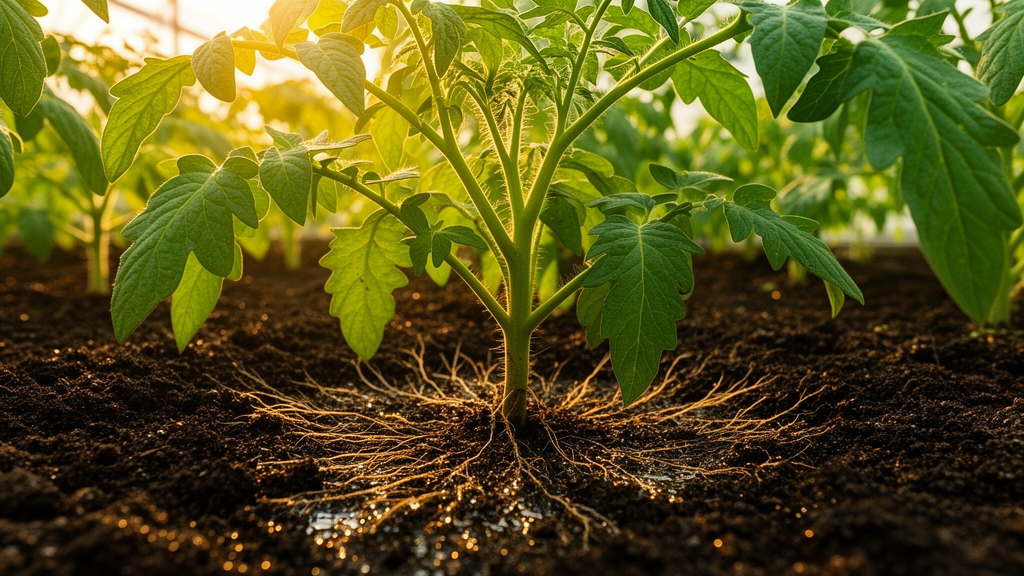
Researchers at the Universidad de Chile have demonstrated that transplanting rhizosphere microbial communities from drought-tolerant tomato plants can significantly enhance the recovery of susceptible tomato varieties following a drought event. Published in the journal Environmental Microbiome, the study introduces a “dual legacy” framework, suggesting that both the inherent water-deficit tolerance of the donor plant and its specific watering history jointly shape the functional potential of the soil microbiome. This finding offers a new perspective on agricultural resilience, moving beyond simple genetic traits to consider the complex ecological interactions between plants and their associated microbial communities.
The study addressed the critical challenge of maintaining crop yields in the face of intensifying climate change, which has led to more frequent and severe drought events. While plant tolerance to water deficit is well-studied, the capacity to recover after stress release is equally vital for long-term yield stability. The authors hypothesized that microbial communities conditioned by both a tolerant host phenotype and a history of water deficit would be most effective at promoting post-drought recovery in susceptible plants. This approach leverages the “holobiont” concept, treating the plant and its microbiota as a single functional unit capable of modulating stress responses.
To test this hypothesis, the team utilized four distinct rhizosphere microbial donor treatments derived from two tomato cultivars: a water-deficit-tolerant cultivar (cv. 449) and a susceptible cultivar (cv. Advantage). Each cultivar was subjected to either full irrigation or deficit irrigation in a prior characterization study, resulting in four donor groups: susceptible-full irrigation (SFI), susceptible-deficit irrigation (SDI), tolerant-full irrigation (TFI), and tolerant-deficit irrigation (TDI). These microbial communities were harvested and used to inoculate seeds of the susceptible cv. Advantage, which were then grown in sterile semi-arid soil in a controlled greenhouse environment.
The experimental design involved a 120-day growth period at field capacity, followed by a 12-day drought stress treatment. After the drought, plants were re-watered, and a post-drought recovery period of eight days was monitored. Physiological parameters, including net photosynthetic rate (Pn), relative water content (RWC), and stem water potential, were measured at the start of the drought and at the end of the recovery period. This rigorous design allowed the researchers to isolate the specific contribution of the transplanted microbiota to plant recovery, as all recipient plants shared the same genotype and environmental conditions.
The results revealed a clear hierarchy in recovery outcomes. Plants inoculated with the TDI microbial community, derived from the tolerant cultivar previously exposed to water deficit, exhibited the strongest post-drought recovery. In contrast, plants inoculated with the SFI community, from the susceptible cultivar under full irrigation, showed the weakest recovery. The intermediate treatments, SDI and TFI, displayed moderate responses. This pattern supports the dual legacy hypothesis, indicating that neither host tolerance nor watering history alone is sufficient to maximize recovery; rather, their synergistic interaction is key to enhancing plant resilience.
High-throughput metabarcoding sequencing of the rhizosphere communities at the initial and final time points revealed significant temporal shifts in microbial composition. Bacterial alpha diversity increased significantly in the TDI treatment at the end of the recovery period, whereas fungal diversity remained relatively stable across conditions. Beta-diversity analyses showed clear separation between the initial and final communities for both bacteria and fungi, indicating that the recovery process drove substantial restructuring of the microbial assemblages. These shifts were most pronounced in the treatments that produced the most contrasting physiological outcomes, specifically TDI and SFI.
Differential abundance analysis identified specific bacterial and fungal taxa associated with the enhanced recovery in the TDI treatment. Bacterial families such as Bacillaceae, Burkholderiaceae, and Pirellulaceae were enriched at the end of the recovery phase. Functionally, these communities showed an increase in nitrate reduction and anoxygenic photoautotrophy, suggesting heightened nutrient cycling activity. Among fungi, saprotrophic guilds, including dung and leaf saprotrophs, were enriched, pointing to increased decomposition of organic matter and nutrient availability for the recovering plant. These functional shifts align with the physiological improvements observed in the TDI-inoculated plants.
Co-occurrence network analysis further illuminated the structural differences between the microbial communities associated with high and low recovery. The SFI network was larger and more densely connected, while the TDI network was more compartmentalized, with a higher proportion of fungal nodes and more positive fungi-fungi interactions. This modular organization in the TDI network may contribute to ecosystem resilience by allowing different microbial groups to perform specialized functions under stress. Hub taxa in the TDI network included methylotrophic bacteria like Hyphomicrobiaceae and the fungal family Aspergillaceae, which was also identified as a key taxon enriched during recovery.
The study acknowledges several limitations, including the use of sterilized soil, which simplifies the ecological context and may not fully reflect field conditions where native microbiota compete with introduced communities. Additionally, the relatively low number of biological replicates (n=3 per treatment) may have limited the statistical power to detect subtle differences. The lack of microbial sampling at the end of the drought period also prevents a clear distinction between shifts occurring during stress and those specific to recovery. Future research should focus on validating these findings in non-sterile soils and under field conditions to assess the practical applicability of these microbial transplants.
Despite these limitations, the study provides compelling experimental evidence that the legacy of rhizosphere microbiomes shaped by host tolerance and irrigation history is associated with enhanced post-drought recovery. The dual legacy framework offers a valuable tool for understanding microbiome-mediated plant resilience and could inform future agricultural strategies. By pre-conditioning soils with microbial communities from tolerant, drought-exposed plants, farmers may be able to improve crop resilience against the increasing frequency of drought events driven by climate change.
The experimental substrate was derived from local semi-arid soil gathered in Las Cardas within Chile’s Coquimbo Region, representing the transition zone toward the Limarí Valley. Classified as a sandy loam originating from marine sediments of the tambillo series, this typic halodurid soil contained less than one percent organic matter and reflected the native low-moisture environment where donor communities assembled. Researchers prepared inoculants by washing root systems in a sodium chloride solution to collect rhizosphere soil tightly bound to root surfaces. Five grams of donor rhizosphere were mixed with sterile water to create slurries for two-hour seed soaking and subsequent soil irrigation. The substrate underwent three autoclave cycles separated by forty-eight-hour resting periods, with sterility confirmed through culture controls before recipient seeds were planted in twenty-liter greenhouse pots.
Physiological testing relied on threshold monitoring using portable photosynthesis equipment under controlled carbon dioxide concentrations of 380 parts per million at saturating light. Drought stress was tracked every other day until photosynthetic rates dropped below fifty percent of baseline values. Following rewatering, the recovery phase concluded when approximately half the plants regained more than seventy percent of pre-drought photosynthetic performance. Concurrently, relative water content was evaluated by measuring leaf fresh weight, dry weight after oven drying at seventy degrees Celsius, and saturated weight after eighteen hours of hydration. Stem water potential was assessed using pressure chamber measurements on bagged, non-transpiring leaves. Inoculation from fully irrigated donors led to significant declines in relative water content between baseline and recovery, whereas stem water potential changes occurred exclusively in plants receiving susceptible fully irrigated donor inoculant.
High-throughput sequencing targeted the bacterial 16S rRNA gene across V1 to V3 hypervariable regions and the fungal internal transcribed spacer region, yielding more than 2.3 million bacterial and 2.5 million fungal raw reads on an Illumina MiSeq platform. Following denoising with DADA2, sequence variants detected in at least two of three replicates were retained, establishing 880 bacterial and 607 fungal amplicon variants. Datasets were rarefied to 18,000 bacterial and 28,000 fungal sequences per sample. Functional predictions mapped 72.2 percent of bacterial variants via FAPROTAX and 43.3 percent of fungal variants using FUNGuild. In the tolerant deficit-irrigation treatment, baseline communities were characterized by chemoheterotrophic bacteria and lichen parasite fungi, whereas post-recovery communities exhibited significant enrichment of bacterial nitrate reduction and anoxygenic photoautotrophy, alongside fungal leaf and dung saprotrophic guilds.
Linear discriminant analysis revealed six bacterial families enriched after recovery in plants treated with the tolerant water-deficit inoculant: Bacillaceae, Pirellulaceae, Burkholderiaceae, Reyranellaceae, Opitutaceae, and the uncharacterized lineage NS11-12. No bacterial families served as discriminant markers at baseline, reflecting targeted enrichment during recovery. Among fungi, Aspergillaceae, Sporormiaceae, and Piskurozymaceae marked the recovered stage, while Ascobolaceae, Aureobasidiaceae, Cladosporiaceae, Nectriaceae, and Bolbitiaceae characterized the initial community. This taxonomic succession corresponded closely with functional predictions. Members of Bacillaceae and Burkholderiaceae aligned with elevated nitrate transformation, whereas Sporormiaceae matched the dung saprotroph guild, and Aspergillaceae matched both leaf and dung saprotrophic profiles.
Co-occurrence network modeling based on abundance differences between final and initial sampling points exposed distinct architectural properties. The susceptible full-irrigation network was larger and denser, containing 240 nodes, 10,101 edges, an average degree of 84, and a maximum node degree of 144 across two clusters. In contrast, the tolerant deficit-irrigation network comprised 159 nodes, 3,384 edges, an average degree of 43, and a maximum degree of 67, divided into three modular clusters. In both networks, bacteria-bacteria connections displayed higher positive-to-negative ratios than the overall community, whereas bacteria-fungi connections showed reduced positive ratios. Fungi-fungi associations exhibited elevated positive-to-negative ratios solely in the tolerant deficit-irrigation community. Hub taxa, defined by the highest thirteen percent of node degrees, included Hyphomicrobiaceae and Methylophilaceae exclusively in the tolerant deficit network, pointing to methylotrophic pathways and sulfur cycling during recovery.
Subject of Research: Dual legacy of plant water-deficit-tolerance and watering history shapes rhizosphere microbial transplant outcomes in tomato post-drought recovery
Article Title: Dual legacy of plant water-deficit-tolerance and watering history shapes rhizosphere microbial transplant outcomes in tomato post-drought recovery
Article References: Pulgar, R., Gaete, A., Mejías, M., Madrid, R., Chávez, I., Pino, L., Talamilla-Espinoza, A., Moscote, J., Pastenes, C., & Mandakovic, D. (2026). Dual legacy of plant water-deficit-tolerance and watering history shapes rhizosphere microbial transplant outcomes in tomato post-drought recovery. Environmental Microbiome, 21(1), Article 115. https://doi.org/10.1186/s40793-026-00953-0
Image Credits: AI Generated
DOI: 10.1186/s40793-026-00953-0
Keywords: Dual, legacy, plant, water-deficit-tolerance, watering, history, shapes, rhizosphere, microbial, transplant, outcomes, tomato
News Source: Morgan Morrow. (November 9, 2026). Tomato Microbiome Transplants Boost Drought Recovery. Scienmag.