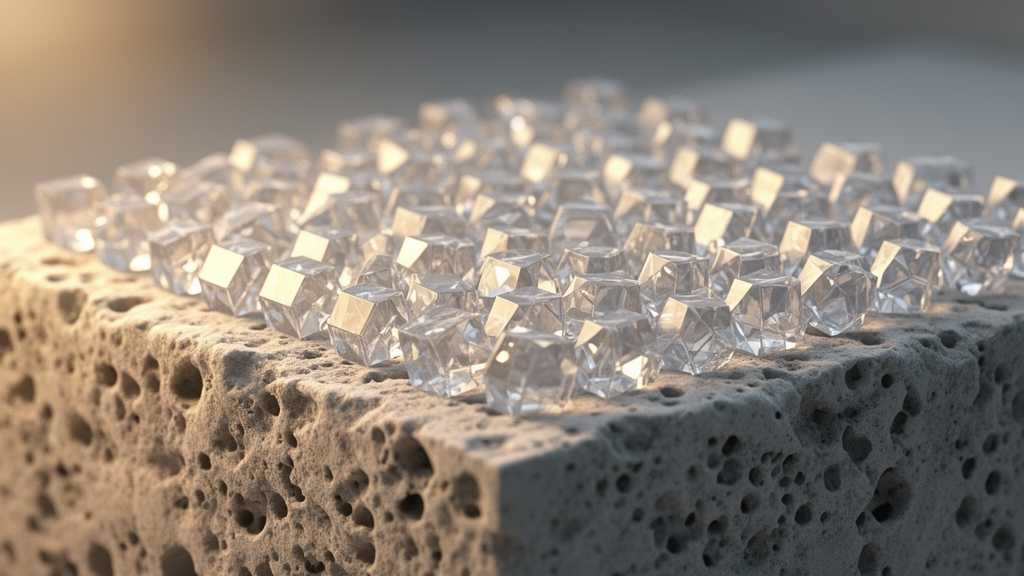
The study, published in October 2026, addresses the significant economic and technical barriers associated with the large-scale application of zeolite membranes, which are currently constrained by the high cost and strict pore-uniformity requirements of conventional ceramic supports.
The investigation focused on the fabrication and evaluation of two specific types of ceramic composites: dolomite-kaolinite and dolomite-alumina.
Initial testing revealed that the dolomite-alumina supports were unsuitable for the intended dehydration applications. In contrast, the dolomite-kaolinite supports showed more promising characteristics. Among the various formulations tested, the DK80 composite, consisting of 20 wt% dolomite and 80 wt% kaolinite, emerged as the best-performing candidate. This specific mixture demonstrated a flexural strength of 36.29 ± 1.80 MPa and an open porosity of 32.25 ± 0.76%, along with excellent hydration and chemical resistance, making it a robust foundation for further membrane development.
Despite the favorable mechanical properties of the DK80 composite, its surface pore structure presented a significant challenge. The mean surface pore size was measured at 4.03 µm, and the presence of pores exceeding 10 µm posed a risk to the formation of a defect-free membrane. To address this issue, the researchers employed a cross-flow seeding technique to improve the uniformity of the zeolite layer on the support surface.
The cross-flow seeding process involved the application of zeolite seed crystals to the surface of the DK80 support before the hydrothermal synthesis of the membrane. The study found that using 510.05 nm zeolite seed crystals at a concentration of 0.02 g per 100 mL provided the most uniform coverage and effective pore sealing. This method successfully mitigated the pore-uniformity limitations of the macroporous support, allowing for the formation of a continuous zeolite layer. The cross-flow technique was critical in ensuring that the seed crystals were distributed evenly across the surface, preventing the formation of defects that could compromise the membrane’s performance.
The resulting NaA zeolite membranes were evaluated for their performance in methanol dehydration. The membranes achieved a total permeate flux (Jt) of 135.25 g m⁻² h⁻¹.
The findings of this study highlight the potential of using natural raw materials for the fabrication of zeolite membranes. These results demonstrate the potential of cross-flow seeding for fabricating NaA zeolite membranes on low-cost ceramic supports with non-uniform porosity.
Subject of Research: Fabrication of NaA zeolite membranes on low-cost dolomite-kaolinite ceramic supports via cross-flow seeding for methanol dehydration.
Article Title: Macroporous dolomite composites as low-cost ceramic supports for NaA zeolite membranes via cross-flow seeding
Article References: Siddique, M. S., Hashim, N. A., Junaidi, M. U. M., Ullah, A., & Mohammed, M. G. (2026). Macroporous dolomite composites as low-cost ceramic supports for NaA zeolite membranes via cross-flow seeding. Journal of Materials Science. https://doi.org/10.1007/s10853-026-14025-8
Image Credits: AI Generated
DOI: 10.1007/s10853-026-14025-8
Keywords: NaA zeolite membranes, methanol dehydration, dolomite-kaolinite composites, cross-flow seeding, ceramic supports, membrane separation, low-cost materials, hydrothermal synthesis, Macroporous, dolomite, composites, low-cost
News Source: Denise Maddox. (November 9, 2026). Dolomite Composites Enable Low-Cost NaA Zeolite Membranes. Scienmag.