A screening of Escherichia coli single-gene knockout mutants revealed that bacterial genetic variation directly regulates social aggregation in Caenorhabditis elegans through metabolic and signaling interactions. Published in Cell Death Discovery, the study demonstrates that microbial genes influence host behavioral traits by modulating metabolite levels that act on host neurological pathways.
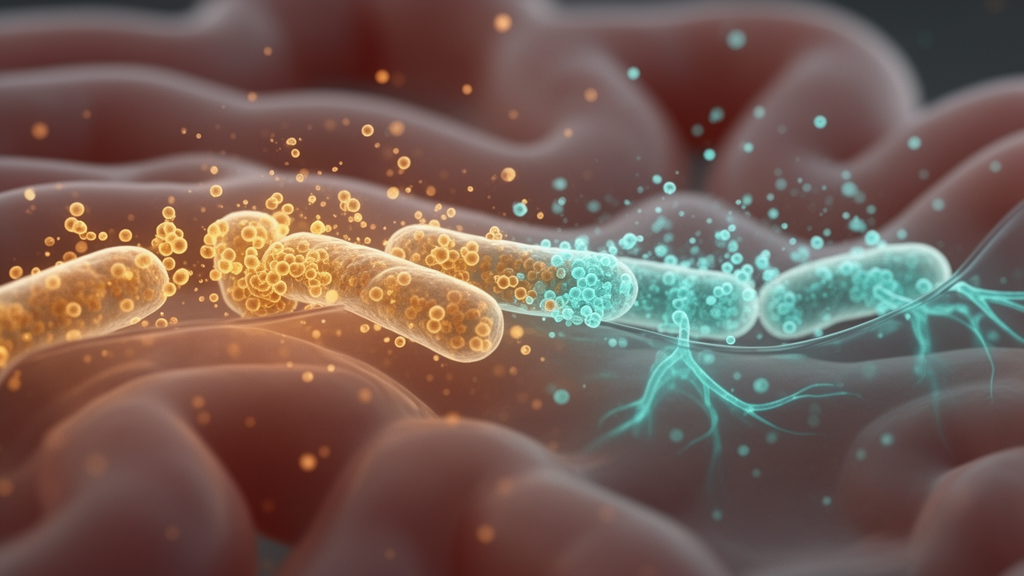
Although the gut microbiota plays a recognized role in regulating host physiology and behavior along the microbiota-gut-brain axis, the genetic and molecular mechanisms governing microbial control of social behavior have remained largely uncharacterized. To investigate these mechanisms, researchers screened knockout strains of E. coli to identify bacterial genes whose disruption altered aggregation behaviors in the nematode host.
The screen identified speB and narG as key bacterial genes controlling C. elegans aggregation. Loss of the speB gene increased the bacterial production and secretion of agmatine, which promoted worm aggregation by suppressing the host cGMP-PKG pathway. In contrast, the narG knockout mutant reduced nitric oxide levels in C. elegans, establishing that nitric oxide counteracts agmatine-induced aggregation.
These findings highlight a dynamic interplay between microbial metabolites and host signaling pathways, showing that bacterial genetic variation modulates social behaviors through the cGMP-PKG pathway. The authors report that these results deepen understanding of the molecular basis of host-microbe interactions and the regulation of host social traits by the gut microbiome.
In detailing the screening strategy, the researchers systematically evaluated individual single-gene knockout strains of Escherichia coli to pinpoint specific bacterial genetic disruptions that stimulated social behaviors in Caenorhabditis elegans. This targeted genetic assessment identified the bacterial gene speB as a critical regulator of host aggregation. Functional analysis of the speB mutant revealed that the deletion led to marked elevations in both the synthesis and subsequent secretion of agmatine into the extracellular environment. The secreted agmatine directly influenced the host by suppressing signaling through the cGMP-PKG pathway, thereby driving the observed increase in aggregation behavior across the nematode population.
Alongside the speB findings, the screening isolated narG as another fundamental bacterial gene governing Caenorhabditis elegans social dynamics. Exposure to the narG knockout strain resulted in a measurable reduction of nitric oxide levels within the host worms. This decrease in nitric oxide revealed an opposing regulatory action, as normal levels of nitric oxide serve to counteract the aggregation effects triggered by agmatine exposure. Together, these observations illustrate a reciprocal balance between distinct bacterial metabolic products, wherein agmatine promotes social aggregation while nitric oxide acts to suppress or limit that response.
At the mechanistic core of these host-microbe interactions, agmatine and nitric oxide converge upon the host cGMP-PKG pathway to modulate social aggregation in the nematode model. While prior research has broadly established the significance of gut microbiota diversity in influencing host physiology and behavior via the microbiota-gut-brain axis, the precise microbial genes and downstream signaling events controlling specific social traits have remained largely elusive. By demonstrating that single bacterial gene variations can alter metabolite production and govern host behavioral pathways, the study provides concrete evidence for how specific gut microbial genetics regulate host social behavior.
Subject of Research: Bacterial genetic regulation of host social behavior
Article Title: Microbial genetic variation drives host social traits via agmatine and NO-mediated cGMP-PKG pathways
Article References: Li, Y., Wang, T., Bai, R., Xu, S., Zhang, J., Zhu, Y., Zhou, D., Zhang, X., Zhu, T., Shi, P., Gu, R., Cai, Y., Chen, J., Wang, X., & Zhu, Z. (2026). Microbial genetic variation drives host social traits via agmatine and NO-mediated cGMP-PKG pathways. Cell Death Discovery. https://doi.org/10.1038/s41420-026-03449-5
Image Credits: AI Generated
DOI: 10.1038/s41420-026-03449-5
Keywords: gut microbiota, host-microbe interactions, social behavior, Escherichia coli, Caenorhabditis elegans, agmatine, nitric oxide, cGMP-PKG pathway, Microbial, genetic, variation, drives
News Source: Juliet Wilcox. (November 9, 2026). Bacterial Genes Regulate Host Social Behavior Through Gut Metabolite Signaling Pathways. Scienmag.