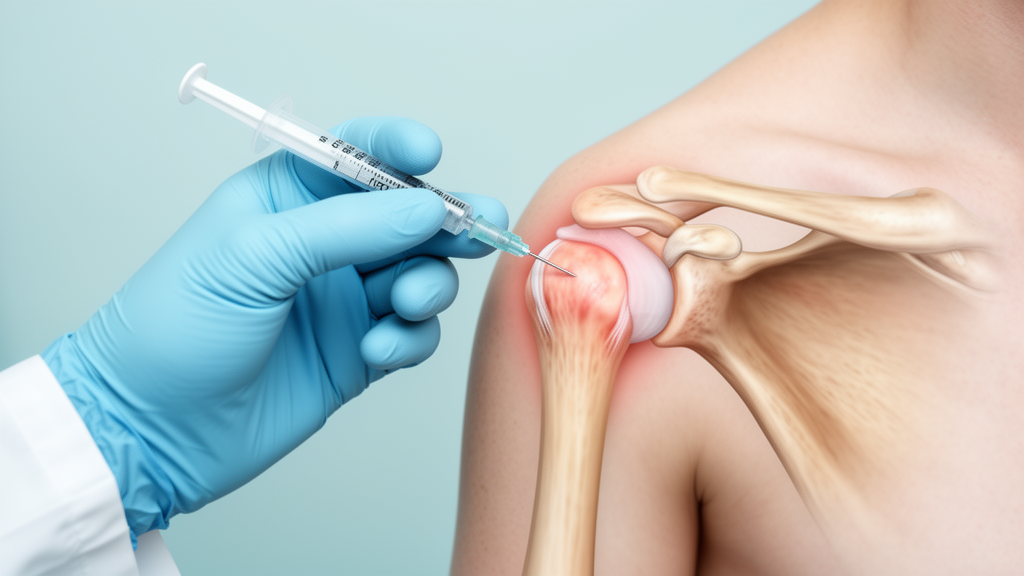
A prospective randomized clinical trial conducted at Zagazig University Hospitals has demonstrated that combining oral gabapentin with an ultrasound-guided continuous suprascapular nerve block yields superior pain reduction, increased mobility, and higher patient satisfaction compared to nerve blockade alone in individuals suffering from refractory adhesive capsulitis. The investigation, carried out within the Pain Management Unit of the Anesthesia Department alongside the Rheumatology and Rehabilitation outpatient clinics, evaluated forty adult patients with persistent unilateral frozen shoulder that had failed to improve after three months of conventional medical management or physical therapy. By evaluating participants across a six-week timeline, the trial established that administering a daily bedtime dose of three hundred milligrams of oral gabapentin alongside catheter-based local anesthetic infusions produced significant improvements in Visual Analog Scale scores during both rest and active movement, alongside pronounced functional gains in shoulder abduction and internal rotation.
Adhesive capsulitis represents a chronic, painful, and profoundly disabling orthopedic disorder that affects between two and five percent of the general population, exhibiting a markedly higher prevalence among middle-aged individuals. The pathology is characterized by an insidious onset of shoulder discomfort and progressive restriction of both active and passive ranges of motion across all planes, often developing without an identifiable inciting cause, though occasionally precipitated by minor physical trauma or extended joint immobilization. Clinically, the disease classically progresses through three distinct phases: an initial freezing phase marked by escalating pain and progressive stiffness; an intermediate frozen phase dominated by substantial motion restriction accompanied by gradually diminishing baseline pain; and a final thawing phase during which patients experience a gradual resolution of joint restriction and a spontaneous restoration of shoulder mobility over a course that can span several months to more than two years.
Managing adhesive capsulitis remains an ongoing therapeutic dilemma because the shoulder joint functions as the most mobile articulation in the human body, facilitating expansive ranges of movement including abduction, adduction, flexion, extension, internal rotation, external rotation, and circumduction, while coordinating scapular elevation, depression, retraction, and protraction. Because this extensive physiological range of motion renders the glenohumeral joint inherently unstable, dynamic and static structural integrity depends upon the coordinated stabilizing actions of the rotator cuff musculature, tendons, ligaments, and the fibrous glenoid labrum. While established conservative modalities have historically encompassed nonsteroidal anti-inflammatory drugs, anti-neuropathic agents, intra-articular corticosteroid injections, physical therapy regimens, systemic opioids, and manipulation under anesthesia, continuous peripheral neural blockade has emerged as an increasingly targeted regional technique designed to manage severe shoulder discomfort while bypassing systemic adverse drug effects.
The anatomical framework underpinning this intervention relies on the specific innervation of the glenohumeral complex provided by the suprascapular nerve, a mixed motor and sensory nerve arising from the upper trunk of the brachial plexus with primary contributions from the fifth and sixth cervical nerve roots. Travelling beneath the superior transverse scapular ligament into the suprascapular notch while the companion suprascapular artery courses above the ligament, the nerve provides motor branches to the supraspinatus muscle before curving around the lateral border of the scapular spine through the spinoglenoid notch beneath the inferior transverse scapular ligament alongside the suprascapular vein. Critically, the suprascapular nerve delivers approximately seventy percent of the total sensory innervation to the shoulder joint, supplying the posterior and superior aspects of the glenohumeral joint capsule as well as portions of the acromioclavicular joint, while providing no cutaneous innervation to the overlying skin.
To rigorously test whether multimodal analgesia could optimize this regional block, the clinical trial screened fifty-two candidate patients aged twenty-one to sixty years who had a body mass index of thirty or higher and documented unilateral frozen shoulder refractory to three months of conservative care. Following the exclusion of eight individuals due to criteria such as local injection site infection, underlying bleeding disorders, psychiatric conditions, substance abuse histories, or known drug allergies, alongside four patients who declined interventional injection, forty enrolled participants were formally randomized into two parallel cohorts of twenty. The control group received continuous ultrasound-guided suprascapular nerve blockade supplemented by a daily oral placebo, while the active intervention group received identical nerve blockade combined with three hundred milligrams of oral gabapentin administered once daily at bedtime.
The interventional protocol was executed using a standardized high-frequency six to thirteen megahertz linear transducer connected to a SonoSite M-Turbo ultrasound system in B-mode. With the patient seated and the ipsilateral elbow flexed along the scapular spine, clinicians transversally positioned the transducer across the spine and swept it caudally along the lateral aspect to sonographically visualize the supraspinatus muscle and supraspinous fossa until identifying the suprascapular nerve as a distinct hyperechoic oval structure approximately four centimeters deep within the suprascapular notch. After local infiltration using one milliliter of two percent lidocaine, an eighteen-gauge Tuohy needle was advanced in-plane under real-time guidance toward the notch, confirmed via an initial test injection of two milliliters of two percent lidocaine, followed by forty milligrams of methylprednisolone diluted in five milliliters of half-percent bupivacaine. A perineural catheter was then threaded, verified with another two milliliters of lidocaine, and secured via subcutaneous tunneling, after which patients self-administered ten milliliters of quarter-percent bupivacaine every twelve hours for five consecutive days.
Baseline assessments established demographic equivalence between the two trial arms, with no statistically significant differences regarding mean age, recorded as 31.12 plus or minus 2.71 years in the gabapentin cohort versus 31.15 plus or minus 2.61 years in the control cohort, nor in sex distribution or anatomical laterality, with right-sided blocks administered to sixty-five percent of gabapentin patients and fifty percent of controls. Following initiation of therapy, pain levels recorded using the standard zero-to-ten Visual Analog Scale demonstrated significant divergences between the groups across the full six-week observation window. While both cohorts achieved initial pain relief from continuous local anesthetic administration, patients receiving adjunct oral gabapentin maintained statistically significantly lower Visual Analog Scale pain scores both at rest and during active joint motion from the first post-procedure week continuously through the conclusion of the sixth week, with rest scores reaching notable significance at week two and week three.
Objective goniometric measurement of joint kinematics revealed pronounced functional disparities between the treatment groups across active and passive movement axes. Patients in the gabapentin cohort achieved statistically significant improvements in active abduction and passive abduction across every single post-procedure checkpoint from week one through week six, alongside marked enhancements in active and passive internal rotation documented at one hour, one week, two weeks, and four weeks post-intervention. In contrast, neither active external rotation nor passive external rotation demonstrated statistically significant differences between the two cohorts at the evaluated intervals. Importantly, patient satisfaction assessed along a ten-centimeter horizontal rating scale diverged completely: one hundred percent of participants in the gabapentin cohort reported an excellent outcome, defined as a score between eight and ten, whereas one hundred percent of participants in the control cohort reported merely fair satisfaction, falling between four and 5.9 points.
The authors attributed these substantial clinical differences to the synergistic physiological convergence of peripheral and central pain pathways. Gabapentin, a structural analogue of gamma-aminobutyric acid featuring a cyclohexane ring, does not bind GABA receptors but instead selectively binds to the alpha-2-delta auxiliary subunit of voltage-gated calcium channels within the central nervous system, thereby suppressing inward calcium influx and attenuating the downstream release of excitatory neurotransmitters. In adhesive capsulitis, where peripheral nociceptive signaling from capsule inflammation regularly couples with central sensitization, pairing continuous regional blockade of peripheral afferents with central calcium-channel modulation successfully mitigated hyperalgesia and dramatically diminished the requirement for rescue intramuscular diclofenac sodium analgesia. This sustained analgesia directly facilitated patient tolerance of scheduled home exercise regimens that incorporated self-mobilization, joint stretching, and isometric rotator cuff strengthening.
In contextualizing their results with existing medical literature, the researchers highlighted that their continuous ultrasound-guided catheter protocol aligned with findings by Børglum and colleagues demonstrating marked mobility gains following continuous suprascapular blockade, while contrasting with single-injection blind techniques reported by Shanahan and colleagues that failed to reliably improve active range of motion. The team emphasized that high-resolution sonographic visualization guaranteed accurate local anesthetic spread around the nerve while continuous infusion maintained persistent neural suppression over multiple days. While the multimodal strategy showed clear rehabilitative utility without reported catastrophic events such as pneumothorax, the investigators formally noted several study limitations, specifically the modest cohort size of forty patients, the single-center setting, and the relatively brief six-week monitoring horizon, calling for larger extended investigations to define optimal dosing durations.
Subject of Research: Ultrasound-guided continuous suprascapular nerve block combined with oral gabapentin for refractory adhesive capsulitis pain management and mobility restoration
Article Title: Synergistic analgesia: ultrasound-guided continuous suprascapular nerve block combined with oral gabapentin in managing frozen shoulder pain
Article References: Kotb, L. I., Elshafei, A. S., Nada, E. N., Ibrahim, M., & Rabie, M. (2026). Synergistic analgesia: ultrasound-guided continuous suprascapular nerve block combined with oral gabapentin in managing frozen shoulder pain. Egyptian Rheumatology and Rehabilitation, 53(1), Article 61. https://doi.org/10.1186/s43166-026-00429-6
Image Credits: AI Generated
DOI: 10.1186/s43166-026-00429-6
Keywords: adhesive capsulitis, frozen shoulder, suprascapular nerve block, gabapentin, pain management, regional anesthesia, shoulder rehabilitation, randomized controlled trial, Synergistic, analgesia, ultrasound-guided, continuous
News Source: Ophelia Keating. (November 8, 2026). Adding Gabapentin to Nerve Block Improves Frozen Shoulder Relief and Mobility. Scienmag.