A qualitative descriptive study led by Bilal Awad and colleagues, published in the open-access journal BMC Medical Education, demonstrates that fair reporting environments for nursing students facing needlestick and sharps injuries in the West Bank function primarily through interpersonal relationships rather than institutional frameworks. Needlestick and sharps injuries represent severe occupational hazards for nursing trainees during clinical education, yet underreporting remains the established norm on a global scale. In the West Bank, this persistent challenge is compounded by acute structural pressures, including military checkpoints, institutional resource shortages, and ongoing conflict-related disruptions, which simultaneously intensify the baseline risk of sustained injuries and create formidable barriers to disclosure. The investigation specifically explored how undergraduate nursing trainees experience, interpret, and manage these occupational incidents, evaluating how frontline supervisory responses and broader structural context interact to shape reporting behavior.
To examine these clinical realities, the research team implemented a qualitative descriptive design utilizing in-depth, semi-structured interviews with 18 undergraduate nursing students who had personally sustained a needlestick or sharps injury during their hospital placements. The participating students were drawn from clinical rotations across ten distinct hospitals situated in the Hebron, Bethlehem, Nablus, and Yatta areas of the West Bank. All interviews were conducted in Arabic, transcribed verbatim, and systematically evaluated using Braun and Clarke’s six-phase thematic analysis methodology with independent double-coding. Theoretical interpretation was guided by the Just Culture framework alongside the Health Belief Model, while study reporting conformed strictly to the 32-item Consolidated Criteria for Reporting Qualitative Research guidelines.
Thematic analysis generated five distinct themes detailing student post-injury decision-making. In the first theme, titled self-triage, students described performing covert, informal risk assessments to construct personal justifications for non-disclosure, privately weighing the perceived danger of an exposure rather than initiating established institutional protocols. Under the second theme, academic surveillance and the “careless student” label, participants highlighted the fear of being judged incompetent and penalized academically as the most consistently cited obstacle to disclosure. Nursing trainees expressed deep anxiety that reporting a needlestick injury would damage their professional reputations, invite critical scrutiny from academic evaluators, and result in formal grading penalties during clinical evaluations.
Structural and organizational obstacles formed the core of the third and fourth themes identified in the investigation. The third theme, financial and bureaucratic deterrents, documented how student concealment was directly reinforced by anticipated out-of-pocket medical costs, fears over the loss of personal confidentiality, and diffuse institutional responsibility shared across universities and hospital training facilities. The fourth theme, structural and political strain, illuminated how wider geopolitical pressures directly affect student safety. Trainees explicitly linked checkpoint-related fatigue to heightened injury risk while observing that passage through checkpoints caused delays in accessing essential post-exposure medical care. Within this theme, one participant described sharps-safety equipment being relocated during a mass-casualty influx, an experience the researchers presented as an illustrative individual account rather than statistical evidence regarding the overall frequency of such logistical disruptions.
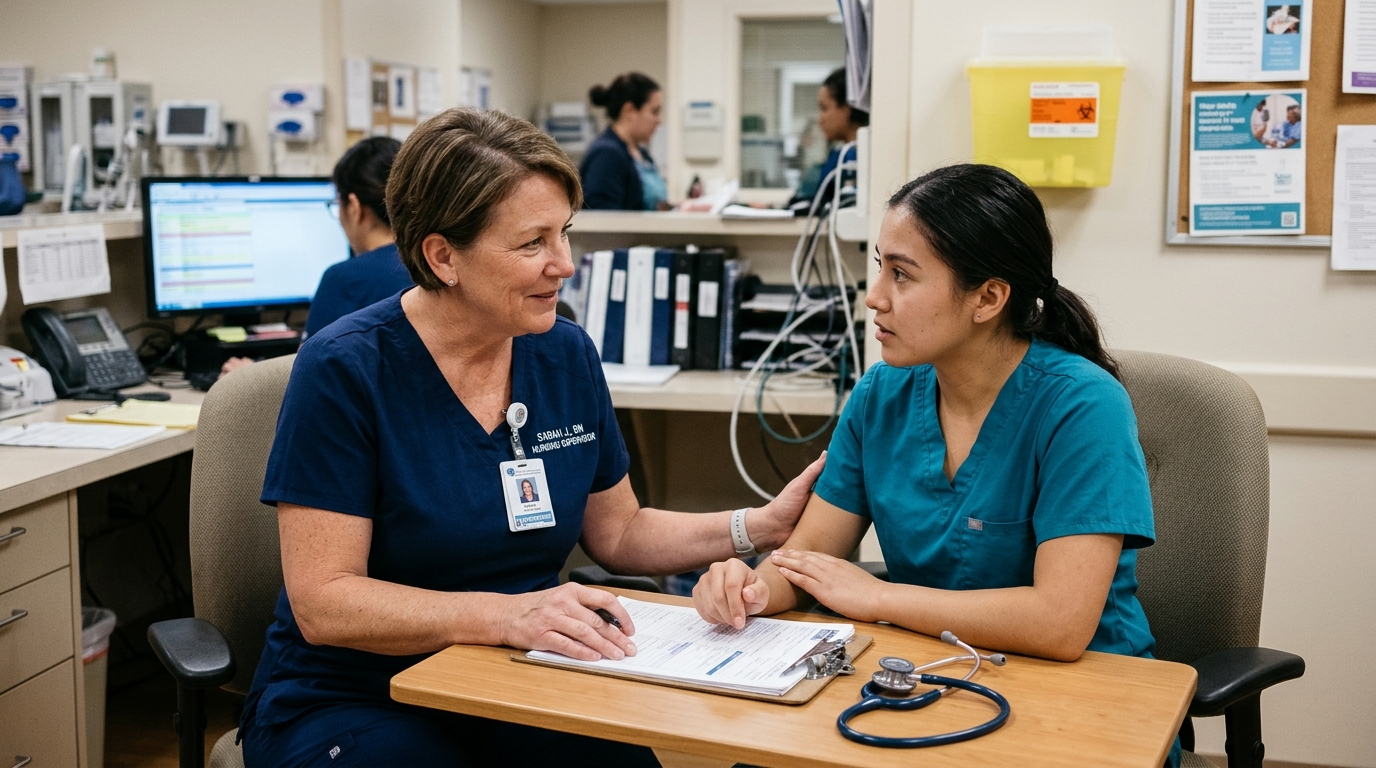
The fifth theme represented a divergent case categorized as relational Just Culture, exploring the supportive encounters described by students who chose disclosure. Among the ten participating nursing students who formally reported their needlestick or sharps injury, nine described receiving an encouraging and supportive first supervisory response from their immediate clinical supervisor upon reporting the event, although financial, bureaucratic, and structural barriers remained. However, the study observed that even when frontline supervisors demonstrated compassionate, non-punitive immediate assistance, relational support alone could not overcome broader institutional failures, as persistent financial liabilities, administrative hurdles, and systemic structural barriers continued to obstruct student safety and comprehensive post-exposure follow-up.
The researchers concluded that Just Culture within this clinical training environment currently exists as an interpersonal, relational achievement embodied in individual supervisors rather than an established institutional standard. The study emphasized that securing durable occupational safety will require systematically converting that interpersonal supervisory support into an institutionalized benchmark across healthcare facilities. To achieve sustainable trainee protection, the authors stated that clinical and academic institutions must guarantee post-exposure clinical care, establish clear confidential reporting pathways that eliminate academic surveillance fears, and construct conflict-resilient sharps safety infrastructure capable of maintaining workplace protection despite ongoing resource limitations, military checkpoints, and acute operational disruptions.
Subject of Research: Nursing student needlestick injury reporting and supervisory culture in the West Bank
Article Title: Supportive supervisors, unsupported systems: relational and structural just culture in nursing students’ needlestick injury reporting in Palestine — a qualitative study
Article References: Awad, B., Farajalla, F., Iskafi, I., Alsalamah, Y. S., Elcokany, N. M., Ghanayem, H., Abdelkader, A. M., Aldrees, B. N., Alshayhan, A. A., Haddad, R. H., & Almuqel, H. Y. (2026). Supportive supervisors, unsupported systems: relational and structural just culture in nursing students’ needlestick injury reporting in Palestine — a qualitative study. BMC Medical Education. https://doi.org/10.1186/s12909-026-10778-7
Image Credits: AI Generated
DOI: 10.1186/s12909-026-10778-7
Keywords: nursing students, needlestick injuries, occupational safety, just culture, West Bank, clinical supervision, thematic analysis, post-exposure care, Supportive, supervisors, unsupported, systems
News Source: Courtney Benton. (November 8, 2026). Nursing Student Needlestick Reporting Relies on Supervisor Support Rather Than Systems. Scienmag.